
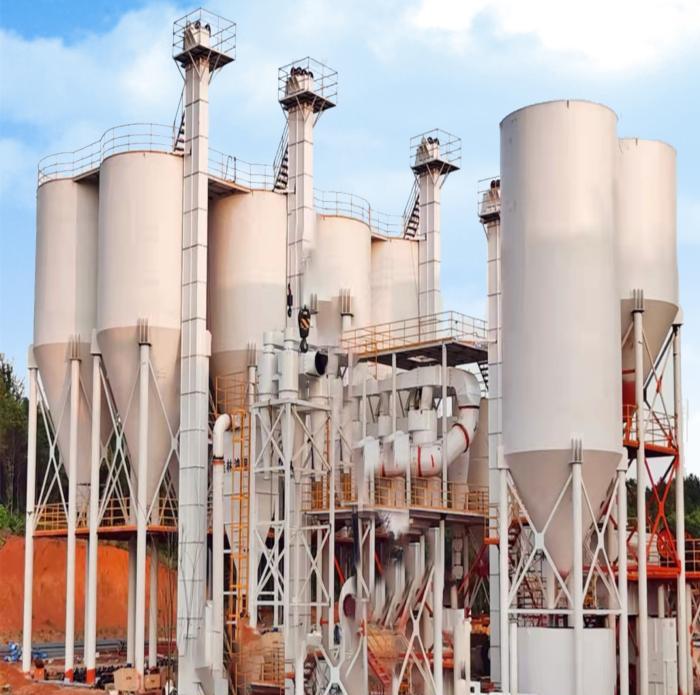
A carbonation reactor brings milk of lime into contact with carbon dioxide to produce precipitated calcium carbonate (PCC) in the precipitated calcium carbonate plant. It forms the carbonation stage between lime slurry preparation and downstream PCC processing.
Looking for a carbonation reactor for a new plant or an existing production line? Send AGICO your production requirements to discuss carbonation tower and stirred tank carbonation reactor options. Equipment selection starts with your feed conditions, target PCC product, and installation requirements.
Request a Carbonation Reactor QuoteCarbonation Reactor Types
Generally speaking, there are two types of carbonation reactor, one is carbonation towers, and the other is stirred tank carbonation reactors. Carbonation towers and stirred tank reactors provide different arrangements for gas–liquid contact and slurry mixing. The appropriate choice depends on the production process and site conditions.
Carbonation Tower
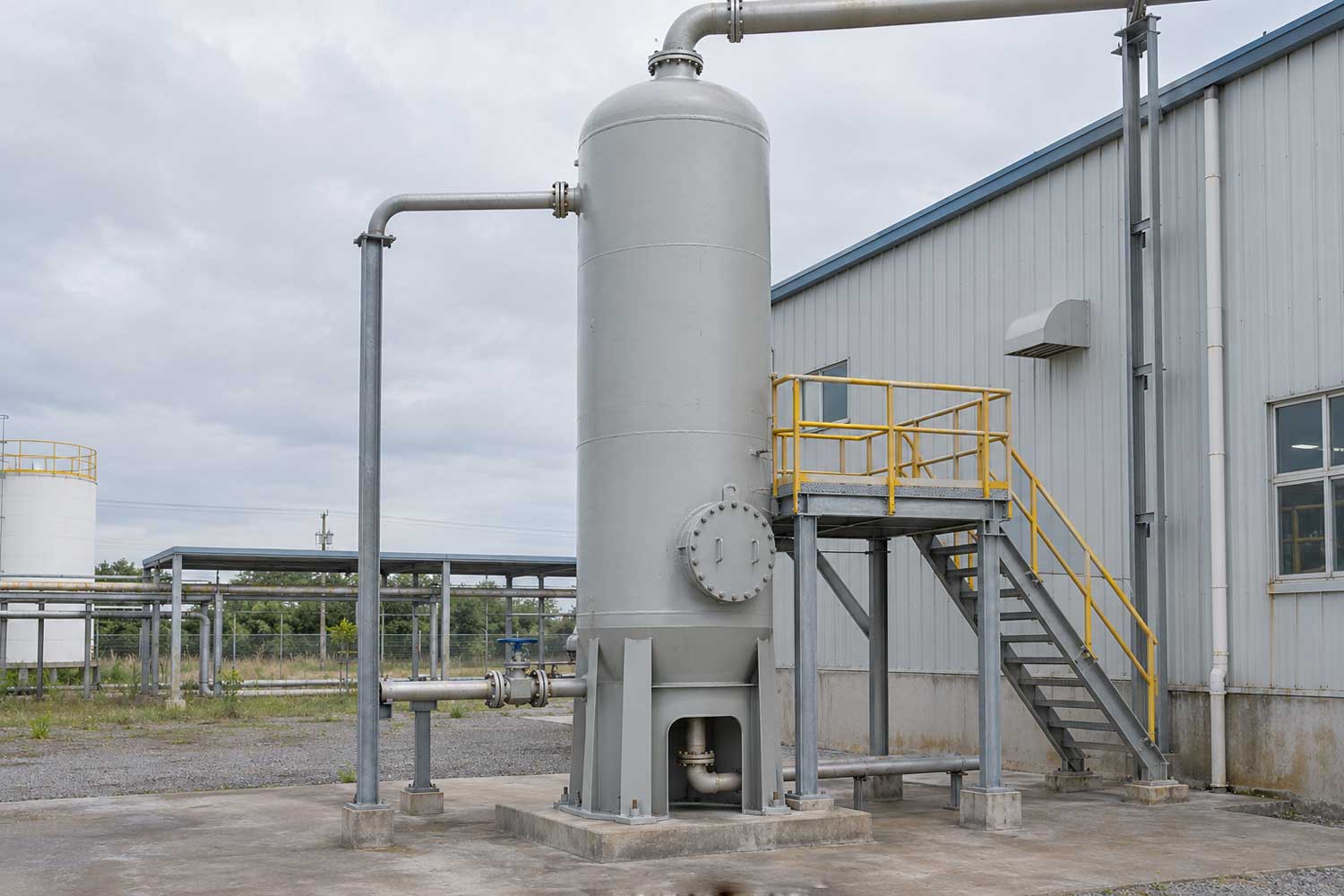
A carbonation tower uses a vertical vessel in which CO₂-containing gas contacts the lime slurry. Gas distribution and the internal contact arrangement are key considerations when evaluating a tower for PCC production.
For a tower-based system, the review should cover vessel dimensions, gas supply conditions, slurry movement, and access for cleaning and inspection. Available installation height, supporting structures, and maintenance space also need to be considered.
Key points should be paid attention to
- Tower height, diameter, and working volume.
- Gas distributor arrangement and access for cleaning.
- Slurry feed, discharge, and any circulation requirements.
- Temperature monitoring and cooling requirements.
- Installation access, platforms, and maintenance clearance.
A carbonation tower should be evaluated as part of the complete process arrangement. Its shape alone does not determine whether the system operates continuously or in batches.
Stirred Tank Carbonation Reactor
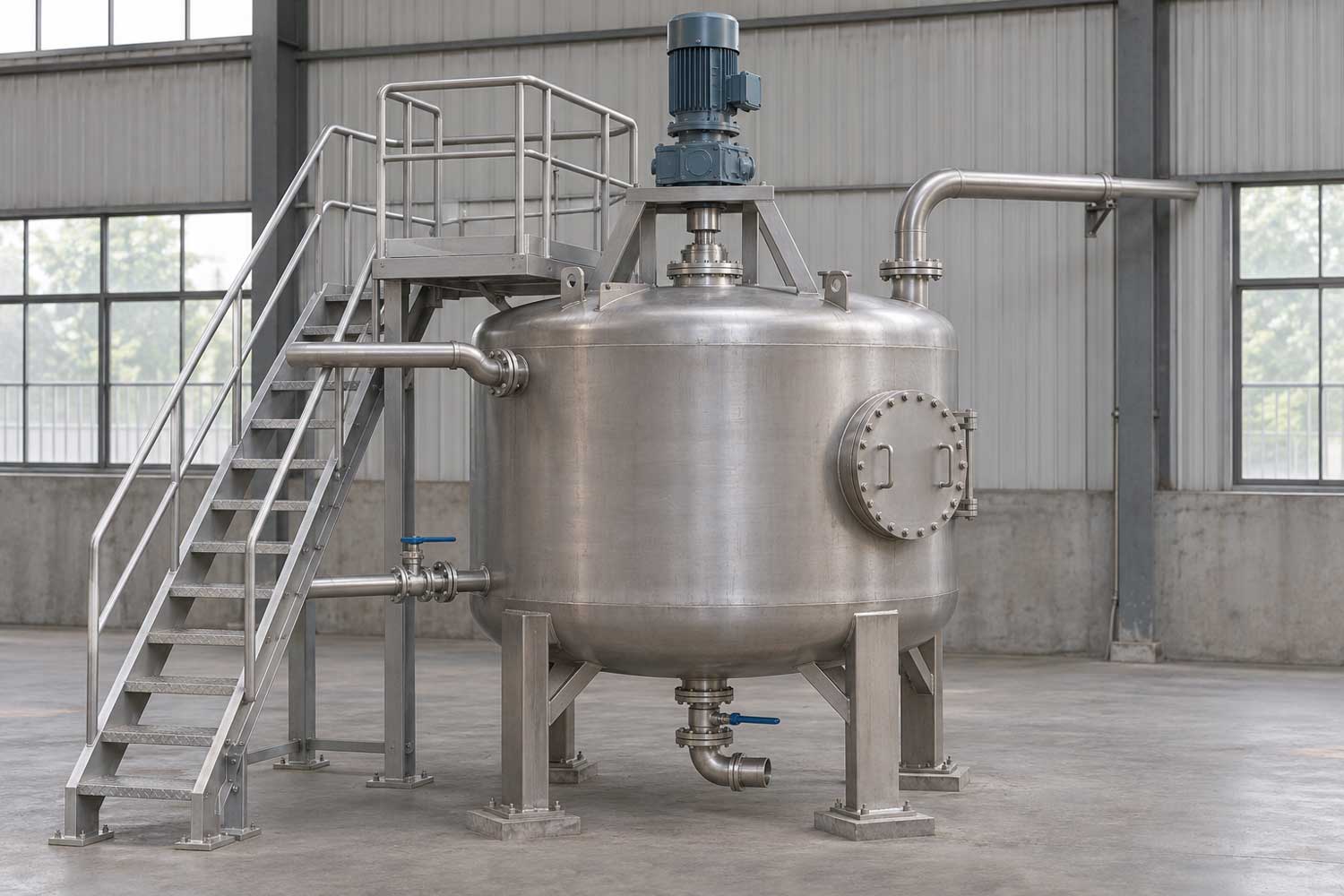
A stirred tank carbonation reactor combines mechanical agitation with gas introduction into the lime slurry. The agitator and gas distributor work together to support slurry mixing and gas–liquid contact.
For this type of carbonation reactor, selection involves more than choosing a tank volume. The agitator arrangement, slurry characteristics, gas flow, heat removal, and operating sequence must be considered together.
Key points should be paid attention to
- Tank working volume and operating level.
- Agitator type, drive arrangement, and shaft sealing.
- Gas inlet and distribution arrangement.
- Cooling method and available cooling utilities.
- Slurry discharge, cleaning access, and operating cycle.
Also described as an agitated carbonation reactor, this equipment can form part of different process arrangements. Batch or continuous operation must be specified for the particular project.
How the Carbonation Process Works
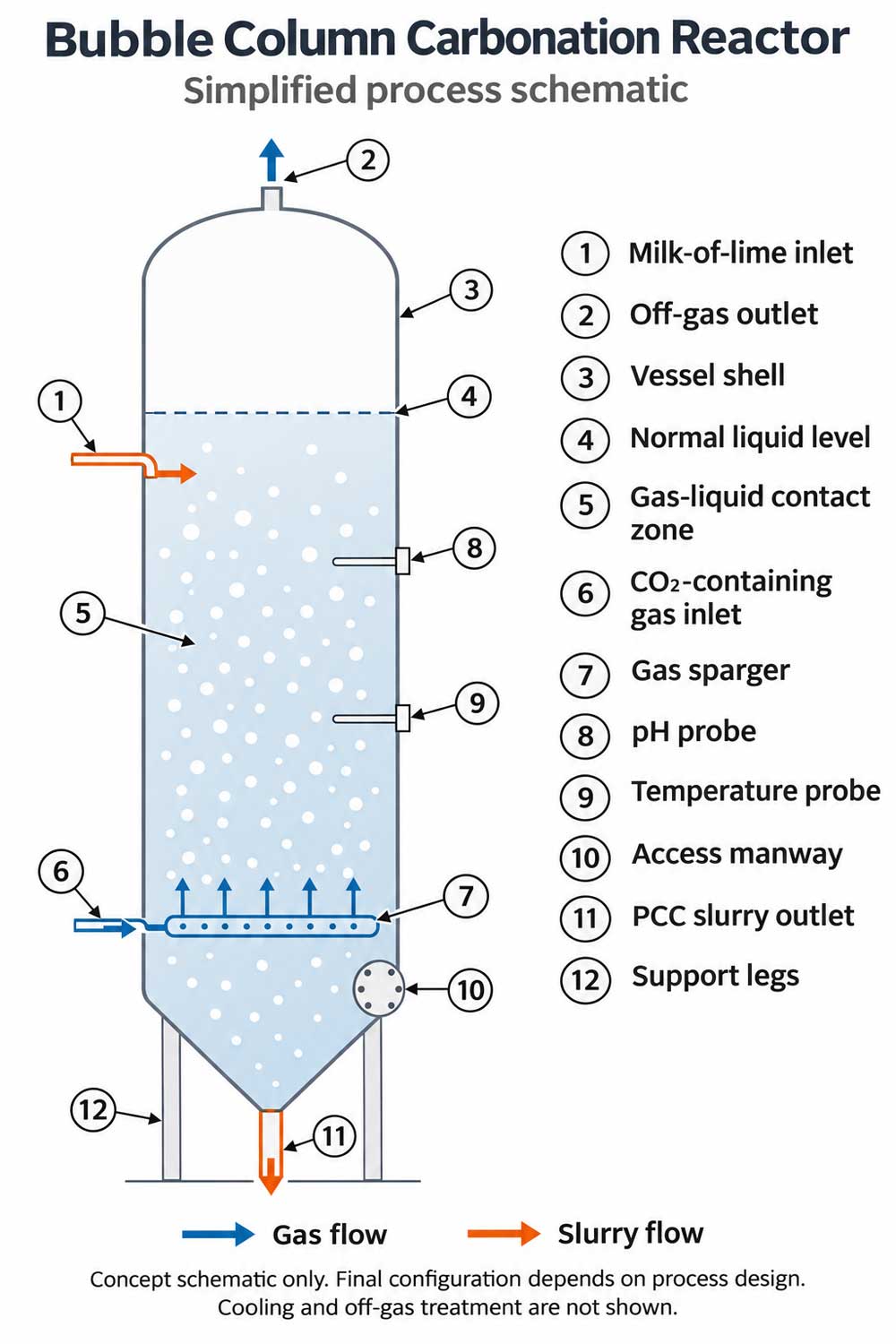
Milk of lime, a suspension containing calcium hydroxide, reacts with carbon dioxide to form calcium carbonate and water:
The carbonation stage generally involves four steps:
Feed the prepared lime slurry. Slurry enters the reactor after the upstream preparation and impurity-removal stages required by the process.
Introduce the CO₂-containing gas. Gas is distributed into the slurry to provide contact between the reactants.
Monitor the reaction. Temperature, pH, gas supply, and other process measurements help operators follow the carbonation conditions.
Transfer the PCC slurry. The slurry moves to the next processing stage according to the plant’s product route.
The reactor must suit the intended PCC grade. Product quality depends on raw materials and operating conditions as well as equipment design.
Configuration for Your Project
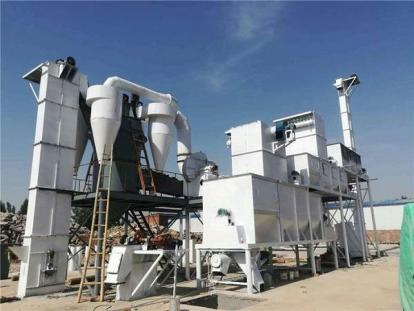
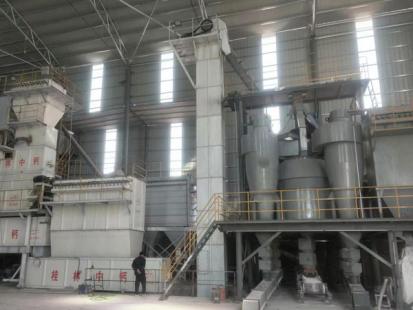
Carbonation reactor dimensions and equipment scope should be established from the process requirements. The following items provide a starting point for a technical discussion.
| Configuration item | What needs to be considered |
|---|---|
| Reactor type | Tower or stirred tank arrangement, based on the intended process |
| Working volume and quantity | Production target, slurry flow, reaction time, and operating schedule |
| Materials of construction | Process chemistry, wear conditions, cleanliness requirements, and maintenance |
| Gas distribution | CO₂ concentration, available gas flow and pressure, and distributor accessibility |
| Mixing arrangement | Mechanical agitation or the mixing arrangement associated with the selected tower design |
| Temperature control | Heat-removal requirements, cooling method, and site utilities |
| Instrumentation | Required measurements, control functions, and connection to plant controls |
| Operation and maintenance | Feed and discharge sequence, inspection access, cleaning, and servicing |
These are configuration items for review. The final equipment scope and specifications should be confirmed in the project quotation. AGICO Cement can customize carbonation reactors according to your projects.
Request a Carbonation Reactor Quote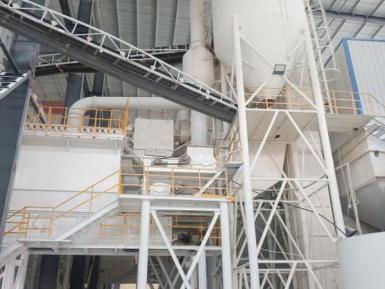
Integration with Your PCC Production Line
A carbonation reactor needs compatible upstream and downstream connections. For a new installation or replacement project, the equipment review should address the following aspects.
Lime slurry supply: feed concentration, flow, temperature, and upstream preparation.
CO₂ supply: gas source, composition, available flow and pressure, and any treatment requirements.
Utilities: electrical supply, cooling water, and other services required by the selected configuration.
Slurry transfer: discharge arrangement, pumps, pipework, and the receiving process.
Site layout: vessel location, installation route, support requirements, and maintenance access.
For a broader overview of the production process, explore our Precipitated Calcium Carbonate Plant page.
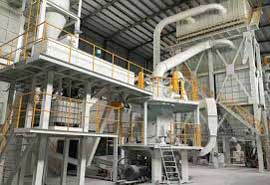
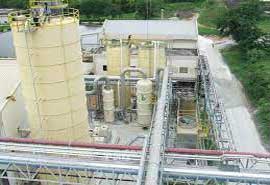
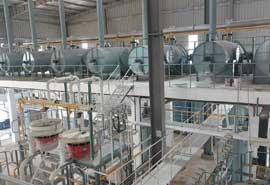
Customize Your Carbonation Reactors
Send the information you already have. A complete technical specification is not required to start an inquiry.
If you are at an early planning stage, start with your target output, PCC application, project location, and available CO₂ source. Include any questions about tower or stirred tank arrangements in your inquiry.
Contact AGICO to Discuss Your Carbonation Reactor Requirements| Project information | Details to provide |
|---|---|
| Production target | Required PCC output, stating whether the figure is based on dry product |
| PCC application | Intended end use and any available product quality requirements |
| Lime slurry | Concentration, feed rate, and temperature, if known |
| CO₂ supply | Gas source, CO₂ concentration, and available gas flow and pressure |
| Project type | New plant, equipment replacement, or capacity expansion |
| Installation conditions | Project location, available space, and height restrictions |
| Existing equipment | Process flow diagram, reactor drawings, or site photographs, if available |
Frequently Asked Questions
A carbonation reactor is the broader equipment category. A carbonation tower is a tower-type reactor used for the carbonation process. A stirred tank carbonation reactor uses a mechanically agitated vessel.
Compare the intended process, feed conditions, gas supply, mixing and cooling requirements, installation space, and maintenance needs. Neither type should be selected solely on vessel shape or an assumed advantage in energy use or particle size.
Yes. Send your production target, intended PCC application, project location, and any available feed or gas information. Identify unknown details so they can be addressed during the equipment discussion.
Yes. For replacement or expansion inquiries, provide the existing process arrangement, equipment dimensions, utility conditions, and the result you want to achieve. Compatibility and the required supply scope need to be reviewed before equipment is selected.
Reactor design is one factor. Feed quality, reactant concentrations, gas addition, temperature, mixing, and the operating procedure also affect the product. Specific particle size or crystal-form requirements need process evaluation and, where necessary, trials before a performance commitment can be made.