
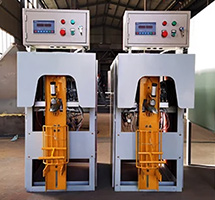
A lime packing machine turns finished quicklime powder or hydrated lime into a saleable, transport-ready product. The job looks simple until the material reaches the packing floor. Lime is dusty, alkaline and sensitive to moisture; freshly conveyed powder may also contain entrained air that makes a bag appear full before its weight is stable. If the packer, silo discharge and dust collection system are not matched, operators face slow filling, weight variation, blocked spouts, leaking bags and an unnecessarily dirty working area.
AGICO Cement supplies fixed-spout and rotary packing systems for integration with a lime calcination plant or a downstream hydrated-lime section. We select the filling method from the material, bag, target weight and hourly output, then coordinate the packer with the product silo, feeder, vibrating screen, conveyor, bag sealer, checkweigher and dust collector. The result is a practical line that operators can run, clean and maintain without treating every powder as if it behaved like cement.
The machine is intended for lime powder, not hot lump quicklime discharged directly from a kiln. Lump material must first be cooled and, where the product specification requires it, crushed or ground. Hydrated lime should be kept dry and protected from uncontrolled air exposure throughout storage and packing. Final performance therefore depends on the complete material path, not only the nominal capacity printed beside the packer model.
What AGICO Supplies
AGICO can supply a stand-alone bagging machine or a coordinated packing station. The typical equipment boundary includes a buffer hopper, level control, feed gate, filling mechanism, weighing controller, bag clamp, pneumatic components, dust-extraction connection and electrical controls. Depending on the bag and automation target, the line can also include an empty-bag placer, sewing or heat-sealing machine, bag conveyor, surface cleaner, checkweigher, reject device, palletizer and stretch wrapper.
Project engineering begins with a material questionnaire and representative sample data. We review bulk density, temperature, moisture, fineness, aeration, flowability and tendency to bridge. This matters because quicklime powder and hydrated lime can require different feeding speeds, venting arrangements and contact materials even when both are sold in 25 kg or 50 kg bags.
Why a Purpose-Built Lime Packer Matters
Controlled Bag Weight
A load cell and microcomputer controller continuously monitor the bag during filling. Coarse and fine-feed stages can be adjusted so the machine approaches the target quickly, then trims the final quantity without a large overshoot. Stable weight protects the producer from giveaway while helping finished bags meet the agreed commercial tolerance. Actual accuracy must be confirmed with the selected lime and bag during commissioning.
Cleaner Filling at the Spout
A close-fitting bag clamp, enclosed feed path and correctly sized extraction point capture displaced air and fine dust near the source. Connecting the packer to suitable dust collector bags reduces airborne powder, improves housekeeping and returns collected material to the process where the product-quality plan permits it. Dust collection air must be balanced carefully; excessive suction can pull saleable lime out of the bagging stream.
Stable Flow from Silo to Bag
The packing machine performs best when the upstream lime and limestone storage silo delivers a consistent head of material. Flow aids, aeration, a rotary valve or screw feeder may be required where powder compacts or bridges. AGICO checks the silo outlet, buffer hopper and packer inlet together so the weighing cycle is not starved or flooded.
Flexible Production Planning
Fixed packers provide a straightforward route for small and medium output, seasonal production or multiple specialty products. Each spout can operate independently, which helps maintenance planning. Rotary packers serve higher continuous output and can be combined with automatic bag placing and downstream palletizing when labor reduction is a priority.
Maintainable Mechanical and Control Design
Wear parts, bag clamps, pneumatic cylinders and weighing components remain accessible from the packing floor. Individual spout controls simplify fault finding, while alarms for low material level, missing bag, filling timeout and overweight bags help operators identify the real cause of lost capacity rather than repeatedly changing the weighing setpoint.
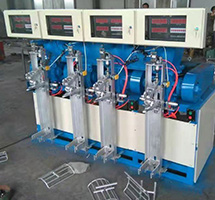
How the Lime Packing Machine Works
Product Conditioning and Screening
Finished lime powder leaves storage through a controlled discharge device. A compact screen can remove foreign material and agglomerates before they reach the filling mechanism. The buffer hopper maintains a steady material level, while a vent or filter manages displaced air.
Empty Bag Positioning
An operator or automatic placer fits the empty bag to the filling spout. The clamp closes only after the bag-presence signal is satisfied. Valve bags commonly seal themselves through the internal valve after discharge; open-mouth bags proceed to sewing or heat sealing, depending on the bag construction and product requirement.
Fast and Fine Filling
The feeding mechanism starts at a higher rate to build most of the target weight, then switches to a slower finishing stage. The weighing controller compensates for material still in flight between the shutoff point and the bag. Correct tuning is based on actual lime flow, not copied unchanged from another powder.
Automatic Cutoff and Bag Release
When the target is reached, the controller stops feeding and releases the bag at the discharge position. A conveyor carries it toward sealing, cleaning and inspection. Bags outside the accepted weight range can be rejected for controlled rework rather than entering the warehouse.
Dust Recovery and Line Control
Dust drawn from the spout and hopper is separated in the collector. The PLC coordinates material level, feeder, packer, conveyor and downstream equipment so one stopped machine does not continue receiving product. Production count, total packed weight and fault history can be made available to the plant control system.
Main Components
Feeding device
Meters lime from the buffer hopper into each filling channel. The mechanism is selected for the powder’s fluidity and aeration behavior.
Weighing frame and load cell
Carries the bag during filling and sends a continuous weight signal to the controller.
Bag clamp and drop mechanism
Holds the bag securely at the spout, limits leakage and releases it after the target weight is reached.
Pneumatic control
Operates gates, clamps and bag-release devices through cylinders, solenoid valves and conditioned compressed air.
Dust-collection interface
Captures displaced air and fine particles around the filling point without drawing excessive product from the bag.
Electrical control system
Provides recipe settings, weight calibration, alarms, counters and interlocks for the surrounding packing line.
Preliminary Technical Parameters
The following fixed-spout figures are AGICO product-family references for free-flowing non-metallic mineral powders, including lime powder. They provide a starting point for budget and layout work. Final output and weighing performance depend on the lime, bag, operator or bag placer, upstream feed stability, dust extraction and local electrical supply.
Additional reference data: AGICO fixed packers use approximately 1.5–2.2 kW for the feeding drive depending on configuration, with nominal set weight and electrical supply customized for the project. AGICO rotary packers are available in 6, 8, 10, 12 and 14-spout families with published reference capacities from 60 to 180 t/h. Rotary-machine values must be reconfirmed for lime rather than adopted directly from cement service.
| Model | Spouts | Capacity (t/h) | Bag Weight | Filling Power | Dust Air (m³/h) | Overall Size (mm) |
|---|---|---|---|---|---|---|
| AG-1 | 1 | 15 | 50 ± 0.35 kg | 4 kW | 2,000 | 580 × 1,300 × 1,780 |
| AG-2 | 2 | 30 | 50 ± 0.35 kg | 2 × 4 kW | 4,000 | 1,050 × 1,300 × 1,780 |
| AG-3 | 3 | 45 | 50 ± 0.35 kg | 3 × 4 kW | 6,000 | 1,640 × 1,300 × 1,780 |
| AG-4 | 4 | 60 | 50 ± 0.35 kg | 4 × 4 kW | 8,000 | 1,990 × 1,300 × 1,780 |
Fixed vs Rotary Lime Packing Machine
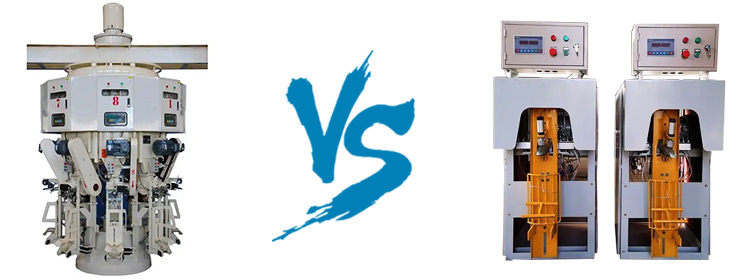
Choose a Fixed-Spout Packer When
The required output is modest, project investment must remain controlled, several products or bag sizes are packed in shorter campaigns, or the plant prefers simple manual bag placement. One to four independent spouts also allow production to continue at reduced capacity while one filling position is serviced.
Choose a Rotary Packer When
The plant needs high continuous throughput, uniform workflow around a central rotating machine and a clearer path toward automatic bag placing, bag cleaning and palletizing. A rotary system costs more and demands better upstream feed stability, but it can reduce handling labor and keep a high-output line compact.
Do Not Select by Throughput Alone
Bag type, target weight, lime fineness, aeration, available headroom, compressed-air quality, dust-collector capacity, maintenance skills and downstream conveyor speed can all determine the practical choice. For abrasive or difficult powder, a lower nominal output with stable filling may produce more saleable bags per shift than an oversized machine that repeatedly blocks or rejects bags.
Applications
Quicklime Powder Bagging
After cooling and size reduction, quicklime powder can be packed for steel, chemical, construction and environmental users. The line must minimize moisture pickup and use seals and extraction suited to caustic dust.
Hydrated Lime Packaging
A hydrated lime production line normally packs a fine, low-density powder after separation and finished-product storage. Stable deaeration and gentle product transfer help prevent false filling and dust escape.
Ground Limestone and Calcium Carbonate
The same product family can serve selected limestone powders produced by a limestone grinding mill. The filling mechanism and bag material should be selected from powder fineness and commercial presentation requirements.
Multi-Product Mineral Powder Plants
Fixed-spout machines are useful where one line packs several compatible powders in campaigns. Cleaning access, contamination control and recipe management should be agreed before equipment selection.
How to Select the Right Packing System
Material
Provide chemical identity, bulk density, moisture, temperature, particle-size distribution, flowability, aeration behavior and a representative sample where possible.
Bag
Confirm valve or open-mouth construction, material, dimensions, venting, target weight, closure method and required print orientation.
Capacity
State normal, peak and annual tonnage, operating hours, changeover frequency and acceptable operator involvement.
Accuracy
Define the contractual tolerance and the method used to test it. Stable upstream feeding and correct calibration are part of the result.
Environment
Specify dust limits, ambient humidity, hazardous-area requirements if any, compressed air, electrical standard and cleaning practice.
Automation
Decide whether the project includes manual or automatic bag placement, checkweighing, rejection, palletizing, wrapping and production-data reporting.
Installation and Maintenance
The packer needs a rigid level foundation, adequate headroom beneath the product bin, clear bag-handling space and safe access to calibration points. Flexible connections should isolate structural loads without allowing uncontrolled movement. Dust ducting must be supported independently, and compressed air should be clean and dry enough for reliable valve and cylinder operation.
Routine work includes cleaning the spout and clamp, checking flexible sleeves, inspecting pneumatic leaks, verifying load-cell freedom, testing emergency stops and confirming dust suction. Calibration should use certified test weights or the agreed site procedure. Operators should record repeated underweight, overweight and filling-time alarms because trends often reveal a developing feed or weighing problem before the machine stops.
Lifecycle Service and Quality Management
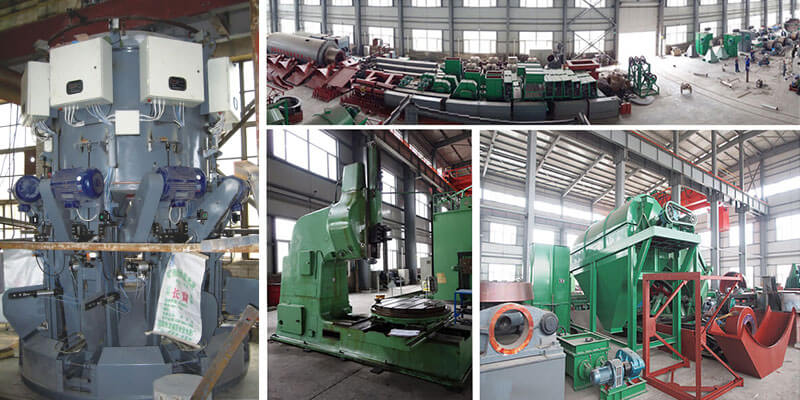
AGICO can provide layout coordination, equipment manufacture, factory inspection, shipping documentation, installation guidance, commissioning and operator training. During commissioning, the team establishes feeding stages, cutoff compensation, bag-release timing and dust-extraction balance with the customer’s actual lime and bags. Recommended spare parts can include sleeves, clamps, seals, solenoid valves, pneumatic cylinders, sensors and load-cell protection components.
Quality control covers incoming steel and purchased components, welding and fabrication, dimensional inspection, assembly, wiring checks and no-load functional testing. The final inspection and test plan, electrical standard, safety guarding and acceptance criteria are confirmed in the project specification. Local regulatory compliance and bagged-product metrology requirements remain the purchaser’s project-specific responsibility.
Energy and Responsible Operation
A well-matched packer reduces waste by limiting giveaway, damaged bags and uncontrolled dust loss. Variable-speed feeding and properly sized extraction avoid using more electrical power or air volume than the duty requires. Collected lime may be returned only when the quality plan confirms that it remains clean and suitable; otherwise it should be handled through an approved recovery or disposal route.
Enclosure, extraction and automatic bag transfer also reduce direct operator exposure to alkaline dust. These measures complement, rather than replace, site ventilation, housekeeping, personal protective equipment and safe procedures for clearing blockages. AGICO designs access and guarding around the agreed operating method so productivity does not depend on unsafe manual intervention.
Request a Lime Packing Machine Proposal
Send AGICO your lime type, bulk density, fineness, temperature, bag specification, target weight, required hourly output, operating schedule and plant layout. Include the upstream silo discharge arrangement and the downstream sealing, conveying and palletizing scope. Our engineers will prepare a preliminary process and equipment proposal around the complete packing duty, with the machine size, utilities and performance conditions stated clearly for review.
FAQ
It may be possible, but the powders can differ markedly in bulk density, aeration and flowability. AGICO reviews both materials and may recommend separate recipes, feeding parts or dedicated contact paths to maintain stable performance and product purity.
The published reference table uses 50 kg bags, while other commercial weights can be engineered after the bag dimensions, material and required accuracy are confirmed.
AGICO’s fixed-packer family lists a 50 ± 0.35 kg reference setting and a bag-weight pass rate of at least 95 percent for the stated service. The guaranteed result for lime must be verified with the actual powder, bag and test method.
Valve bags support compact filling and self-closing operation, while open-mouth bags allow sewing or heat sealing and may suit different product or market requirements. Material venting, moisture protection and customer preference determine the choice.
The bag clamp and enclosed filling path limit escape, while a local dust connection removes displaced air and fines. The collector air volume is balanced during commissioning to capture dust without pulling excessive product from the bag.
Provide lime analysis and physical properties, target bag weight, bag drawing, capacity, operating hours, upstream silo and feeder details, downstream equipment, layout, utilities, electrical standard and the required automation level.