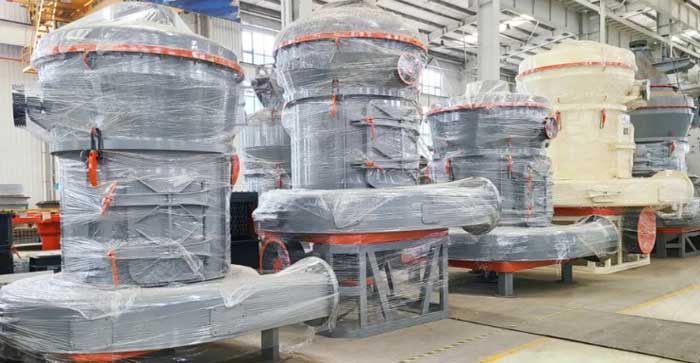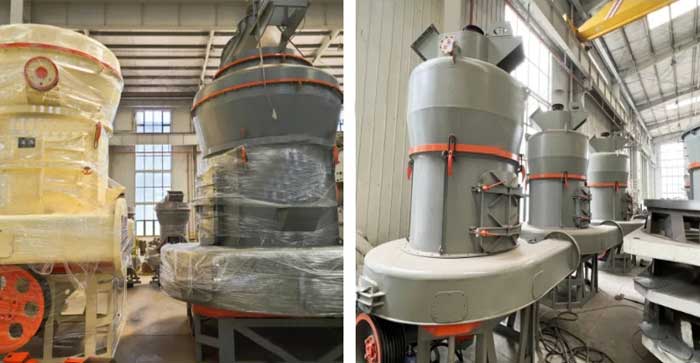

Product: Raymond Mill
Feed Size: ≤30 mm
Output Size: 0.173–0.033 mm (80–325 mesh)
Power: 18.5-132 kw
Agico Cement Raymond Grinding Mill Advantages
Raymond roller mill is a commonly used grinding mill in the process of ore grinding. It plays an important role in improving the grade of materials. With the continuous development of different countries’ industrial fields such as lime production line, dolomite calcination plant, etc, users have an increasing demand for Raymond mills. Raymond mill is suitable for non-metallic minerals with a particle size of less than 30 mm and a humidity of less than 8%, such as limestone, gypsum, calcium carbonate, barite, marble, kaolin, rocks, cement, coal, steel slag, and glass. The powder produced by Raymond mill can increase its activity. The finished product particle size can be adjusted arbitrarily within the range of 80-325 mesh, and some materials can reach up to 800 mesh.
AGICO cement Raymond mill adopts a three-dimensional structure, which occupies a small area and saves space.
The production system is independent and adopts gear overall transmission, with low energy consumption and high efficiency.
The finished powder has uniform fineness, the screening rate can reach 99%, and the blade can be replaced on the surface to increase the effective grinding area, make the grinding more uniform, and increase the output.
The transmission device of AGICO cement Raymond mill adopts sealed gearbox, pulley and gearbox, with stable transmission and reliable operation.
The materials of wearing parts are all high-quality steel, and the wear-resistant parts are made of high-performance wear-resistant materials. Long lifespan, the motors are all national standard products.
The electrical system adopts centralized control, and the workshop can be unattended.
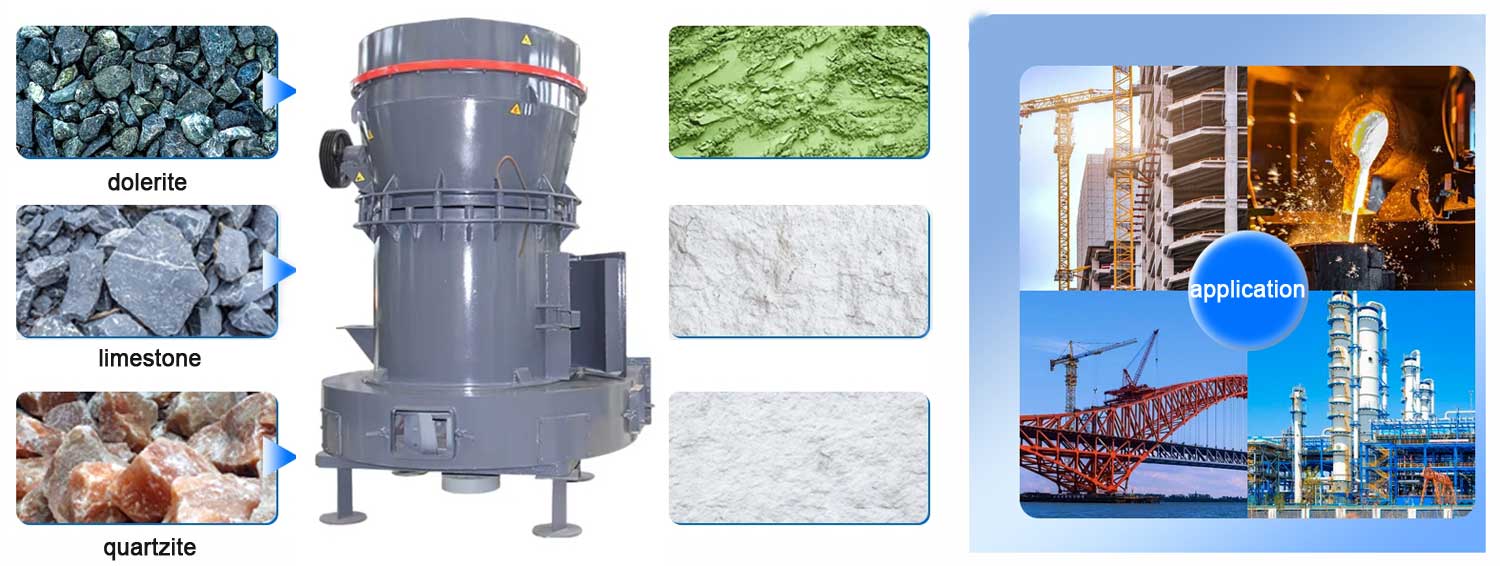
What is Raymond Roller Mill?
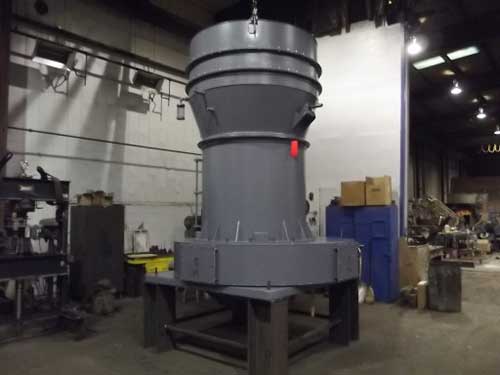
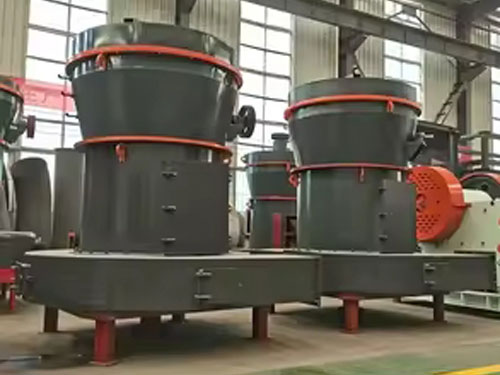
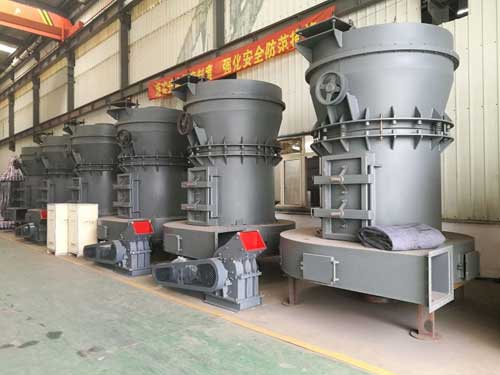
Raymond mill, also known as Raymond roller mill or Raymond grinding mill, has stable performance, high-cost performance, and strong adaptability. It is suitable for the preparation of various mineral powders and coal powders, such as raw material ore, gypsum ore, coal, and other materials. The structural characteristics are the use of a three-dimensional structure, uniform fineness of finished powder, high-quality steel for important parts, and centralized control of the electrical system.
The initial construction cost, operation cost, and maintenance cost of Raymond mill is relatively low compared with other grinding equipment, and it is suitable for small and medium-sized grinding. Ball mills and vertical mills must be equipped with drying equipment to grind materials with humidity below 10%, while Raymond mills can directly grind such materials without the need for drying equipment, so a lot of costs are also saved in supporting equipment.
Precautions for the Use and Maintenance of Raymond Mill
Pre-operation inspection
Before the installation of the Raymond mill, the operator must undergo necessary technical training to understand the principles and performance of the Raymond mill and be familiar with the Raymond mill operating procedures. During the use of the Raymond mill, there should be a fixed person in charge of the supervision, and the operator must have a certain technical level.
Regular inspection
Regularly check the various components of the Raymond mill, especially the transmission device, lubrication system, control system, grinding head, grinding wheel, and other key parts. The inspection includes:
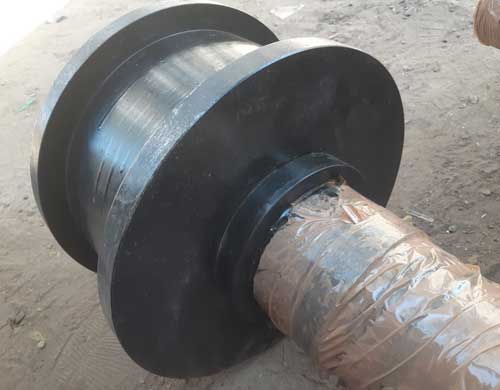
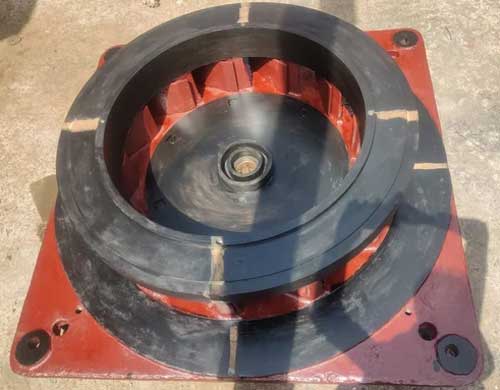
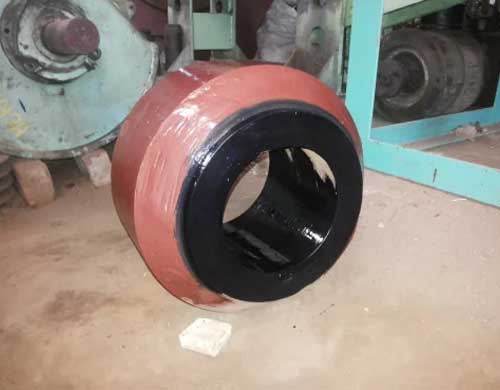
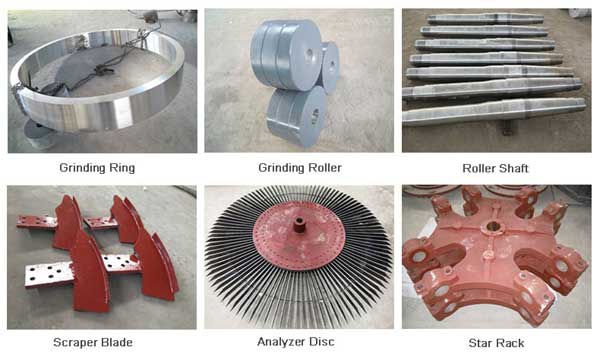
- Whether the parts have problems such as wear, deformation, and breakage. At the same time, the grinding roller, grinding ring, scraper, and other wearing parts should be inspected and replaced. The connecting bolts and nuts of the grinding roller device should be carefully checked before and after use to see if there is any looseness.
- Whether the lubrication system is unobstructed and the oil level is normal. The normal operation of the Raymond mill requires the lubrication of all components. Therefore, it is necessary to regularly add an appropriate amount of grease or lubricating oil to key parts such as the transmission system and grinding wheel. The type of lubricating oil should be adapted to the actual working conditions to avoid adverse chemical reactions.
- Whether the electrical system has leakage, short circuit, or other problems. When the Raymond mill roller device is used for more than 500 hours and the roller is replaced again, the rolling bearings in the roller sleeve must be cleaned and the damaged parts should be replaced in time.
- Whether the process parameters are reasonable, such as grinding pressure, fineness, etc.
Adjust the fitness
The Raymond mill needs to ensure the stability of the fineness, so the fineness needs to be adjusted regularly. The specific steps are as follows:
- According to the different materials being processed, adjust the angle and position of the feeder and feed pipe to make the coarse and small particles meet the requirements.
- Adjust the gap between the grinding wheel and the grinding head to ensure that the fineness meets the requirements.
- Adjust the feeding speed so that the material enters evenly under the action of the grinding wheel and the grinding head to ensure the stability of the fineness.
Keep clean
The Raymond mill must be kept clean to prevent materials and other debris from entering the equipment. When shutting down, stop feeding first, and the main machine continues to rotate to allow the remaining materials to continue to grind. After about one minute, the main machine motor can be turned off to stop the grinding work, and then the fan motor and analyzer motor can be stopped.
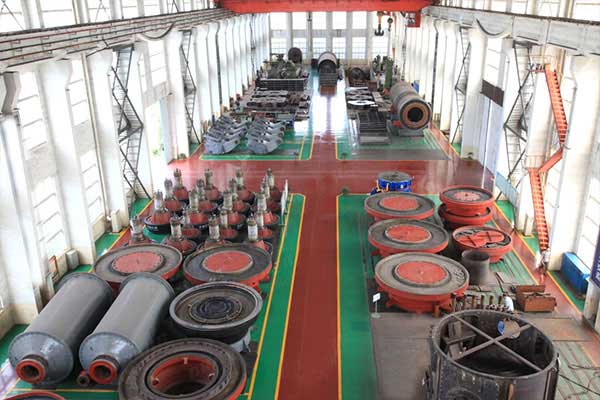
Raymond Grinding Mill Particle Size
The grinding particle size of Raymond mill varies according to different equipment and production requirements. Generally speaking, the finished particle size range of a conventional Raymond mill is between 30-325 mesh. In other words, the particle size after grinding is basically around 0.173-0.044 mm. Adjusting the gap between the grinding roller and the grinding ring can affect the particle size after grinding. Generally speaking, the smaller the gap, the higher the grinding pressure, the finer the material is ground, and the smaller the particle size of the material is, conversely, the larger the gap, the coarser the particle size of the material is.
In addition, Raymond mill has low energy consumption, is suitable for small, medium or large-scale production, occupies a small area, has low investment cost, is easy to operate, and is a commonly used dry grinding equipment. Raymond mill can be divided into a variety of specifications and models according to the output size.
AGICO Cement Raymond Mill Service Process
Contact us for more models and types of Raymond roller mills. We offer customized service!
Consult service
Just one phone call is enough, and we will take care of the rest.
Understand your needs
The sales manager will discuss with you in detail and tell us your needs.
Planning and design
Professional engineers will give you a reasonable solution based on your needs.
Manufacturing
We will complete the production within a reasonable time with guaranteed quality and quantity.
Installation
Professional installation team provides on-site guidance for installation and debugging until stable production.
Post-maintenance
If you have any questions, please contact our after-sales engineers.
Raymond Roller Mill Working Principle
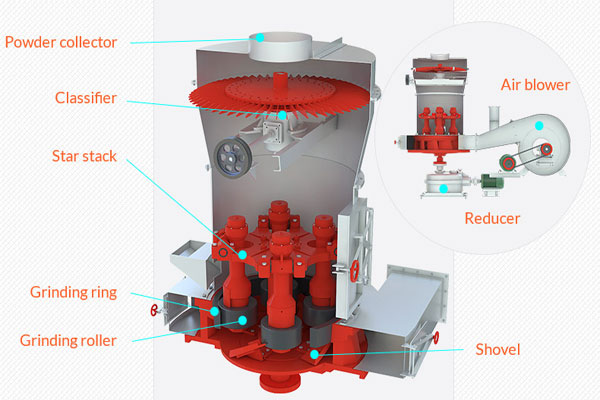
Raymond mill is mainly composed of main machine, analyzer, blower, finished product cyclone separator, pipeline device, motor, etc. It uses grinding roller to roll tightly on the grinding ring under centrifugal force, and the scraper scoops up the material and sends it to the middle of grinding roller and grinding ring. The material is crushed into powder under the action of grinding pressure, and then the powdered material is blown up by the blower and passes through the analyzer. The material that meets the fineness requirement passes through the analyzer, and the material that does not meet the requirement returns to the grinding chamber for further grinding.
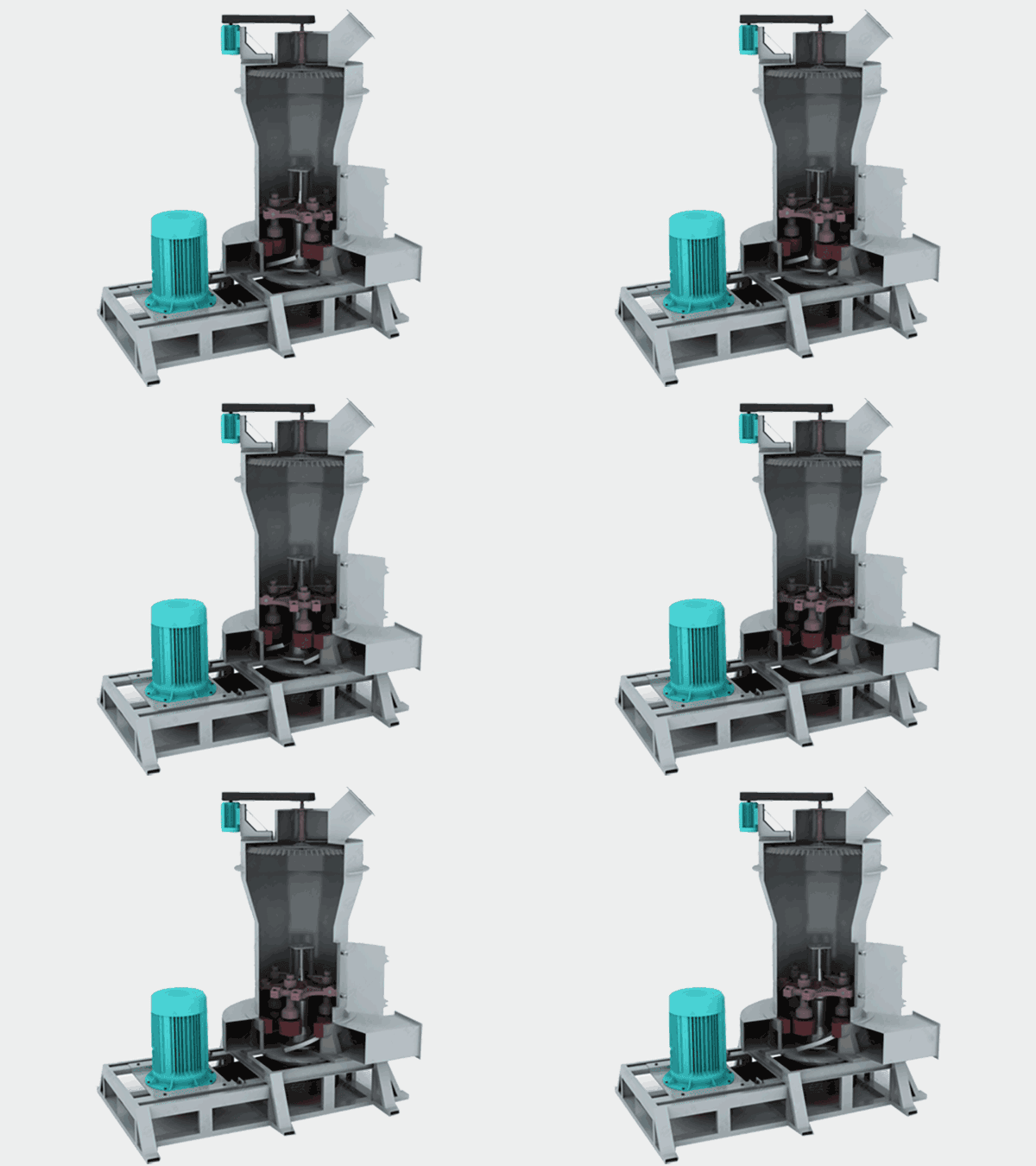
AGICO Cement Raymond Mill Specification
| Model | Grinding Roller | Grinding Ring | Maximum feed size(mm) | Discharging Size(mm) | Capacity(t/h) | Main Power(kw) | Weight(t) | Dimension(m3) | |||
| Numbers | Diameter(mm) | Height(mm) | Inner Diameter(mm) | Height(mm) | |||||||
| 3R2615 | 3 | 260 | 150 | 780 | 150 | 20 | 0.61-0.033 | 0.5-2.7 | 18.5 | 4.2 | 5.2×3.4×5.9 |
| 3R2715 | 3 | 270 | 150 | 830 | 150 | 20 | 0.7-3.1 | 22 | 4.8 | 5.6×3.4×5.9 | |
| 4R3016 | 4 | 300 | 160 | 880 | 160 | 20 | 1.0-4.0 | 30 | 8.5 | 7.1×5.9×7.9 | |
| 4R3216 | 4 | 320 | 160 | 970 | 160 | 25 | 2.5-6.0 | 45 | 14 | 8.8×5.9×9.5 | |
| 5R4121 | 5 | 410 | 210 | 1280 | 210 | 30 | 5.0-11.0 | 75 | 31.8 | 9.2×7.2×9.7 | |
| 6R4528 | 6 | 450 | 280 | 1770 | 280 | 35 | 9.0-15.0 | 132 | 52.5 | 12.5×8×10.5 | |
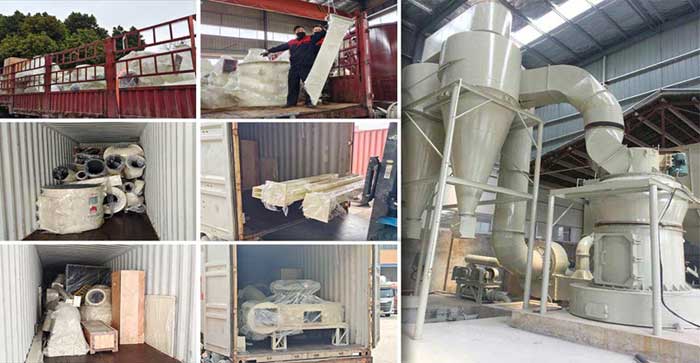
AGICO Cement Raymond Mill Projects