
External Fired Rotary Kiln introduction
Indirect rotary kiln, also called external fired rotary kiln, indirect fired rotary kiln, indirect heated kilns or external heating kiln, is a type of rotary kiln used for various thermal processes, such as calcination, drying, or pyrolysis, where heat is transferred to the material being processed indirectly through a metal shell. In an indirect rotary kiln, the material to be processed does not come into direct contact with the burner flame or combustion gases. Instead, heat is transferred to the material through the kiln shell, which is heated externally by combustion gases or other heating sources.
Get FREE Quotation!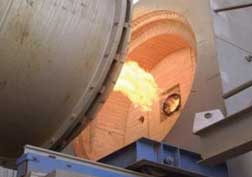
Indirect rotary kilns are often used for processing materials that are sensitive to direct contact with flames or combustion gases, or when strict control over the atmosphere and temperature within the kiln is required. These kilns are commonly used in industries such as cement production, lime production, and various thermal treatment processes for hazardous waste management.
Indirectly heated kilns are externally fired, requiring a separate cylinder known as the heating muffle. This muffle remains stationary and poses fewer challenges in terms of insulation work.

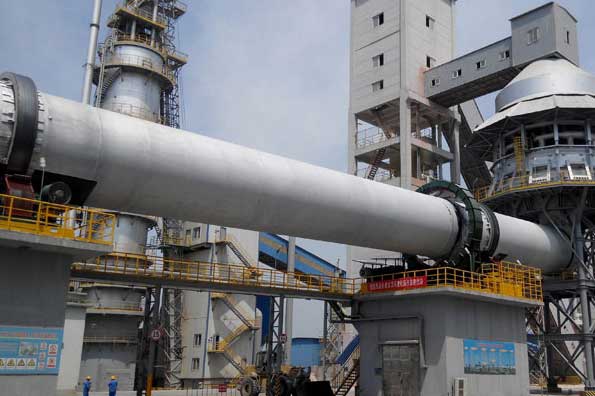
Heating methods include utilizing off-gas from an incineration chamber, gas or oil burners, or electricity. Typically, a lambda value of less than 1 is maintained during the process, often reaching a lambda value of 0. This allows for an oxygen-reduced or oxygen-free process atmosphere.
In this process, heat is transferred through the material of the steel drum. Therefore, specialized knowledge is necessary to select the appropriate material to prevent issues such as embrittlement and maintain stability at temperatures of up to 1,000°C.
For mechanical stress reasons, the maximum size of the kiln is approximately 3.0 meters in diameter, with a heated length of 22.0 meters to achieve lifetimes of up to 10 years. This limits the maximum input to 6 tons per hour (for refuse-derived fuel) to 10 tons per hour (for soil cleaning).

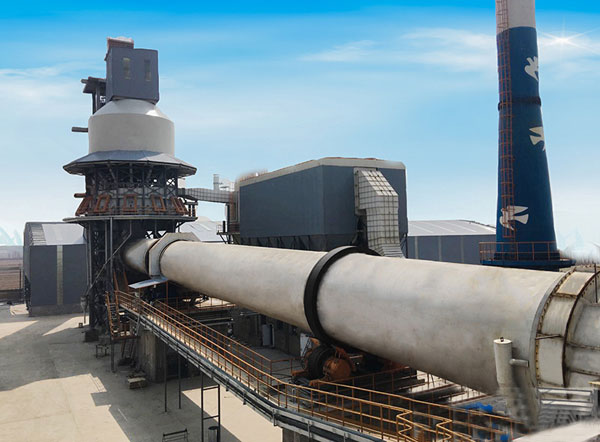
Working process of Indirect Rotary Kiln
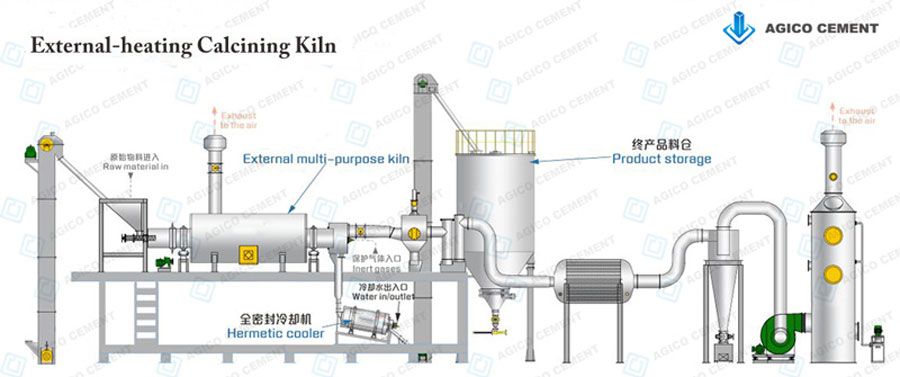
In an indirectly heated rotary kiln, the rotary drum is heated from the outside. This can be achieved through burners or electrical heating, especially when dealing with products that tend to generate strong dust, require different temperature gradients, or must be processed under special process conditions, such as inert or protective atmospheres. As for the material of the rotary drum, metal tubes can be used up to 1150°C depending on the process requirements for temperature, atmosphere, and strength of material handling. Ceramic rotary tubes are used to protect the product from contamination and allow for much higher temperatures than metal tubes (up to 1600°C).
The rotary drum is supported by two rollers mounted on trunnions and is driven by gears or chain wheels with chains. The product is fed from the left side through a screw conveyor or vibratory feeder. Mechanical seals are used at both ends of the rotary drum to isolate the atmosphere inside the kiln chamber from the surrounding air. The sealing system is installed between the rigid shell components (feed hood and discharge hood) and the rotary drum, and the choice of sealing materials helps reduce frictional forces during relative motion.
For rotary drums with inert gas or reacting gases, sealing gases are typically used to assist in sealing. For calcination with air only, radial packing seals are often used. Inside the rotating drum, different internal baffles are welded according to the process requirements of handling materials and product performance. These baffles not only assist in the advancement of the product but also improve heat transfer and mixing of the product flow, for example, by using additional baffle rings at the kiln outlet to improve the filling level of free-flowing bulk solids in the kiln. The heating equipment is installed in the external enclosed furnace of the rotary drum. Heating is done through burners or electric heaters, dividing the burners into several control groups according to process requirements, and then heating the rotary drum with flue gas to achieve a specific temperature distribution.
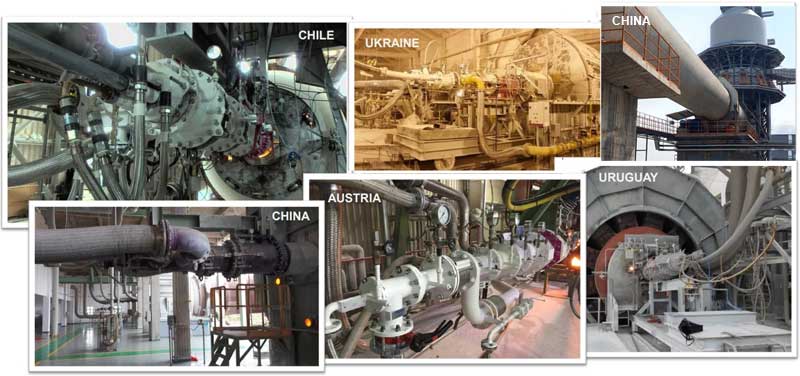
Indirect Rotary Kiln Cases
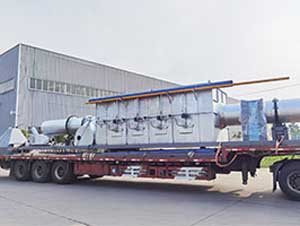
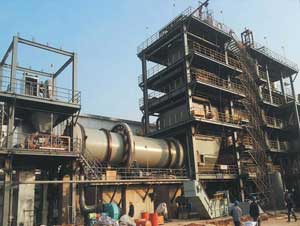
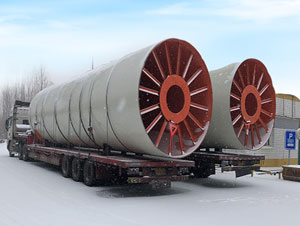
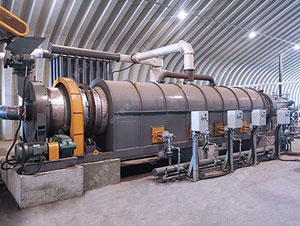
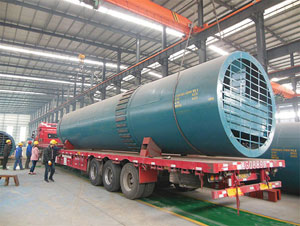
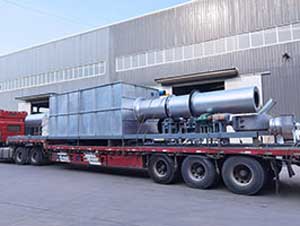
There are different kinds of external heating rotary kilns, mainly contains electrical external heating rotary kiln, small rotary kiln, gas external heating calcining rotary kiln, protective atmosphere external heating kiln and high temperature external heating kiln.
External Fired Rotary Kiln Advantages
- The combustion gases from the burner are completely isolated from the processed materials, reducing the risk of material contamination by the gases.
- It allows for more precise temperature control to meet specific process requirements.
- Due to external heating, there is less contact between the gases and the materials, reducing oxidation and pyrolysis of the materials by the gases.
- External combustion can provide higher heating efficiency, thereby reducing energy consumption and production costs.
- Externally fired rotary kilns can handle various types of materials, including flammable, explosive, or toxic substances, without contaminating the materials.
- Since the burner is located outside the rotary kiln, it is easier to maintain and clean, prolonging the lifespan of the equipment.
Specifications of Indirect Fired Rotary Kiln
| AG-DF | 0.3 | 0.4 | 0.6 | 0.8 | 1.0 | 1.2 | 1.5 |
| Diameter(Mm) | ø257/273/300 | ø350/370/400 | ø500/600/624 | ø800 | ø940/1000 | ø1100/1200 | ø1500 |
| Length(M) | 3-7 | 3-9 | 4-11 | 6-11 | 6-12 | 8-12 | 8-15 |
| Rated Temperature | ≤1100℃ | ||||||
| Heating Zone | 1-3 | 1-3 | 1-3 | 1-3 | 1-3 | 1-3 | 1-3 |
| Heating Power (KW) | 40-80 | 70-120 | 100-200 | 120-260 | 180-340 | 200-400 | 300-580 |
| Power | 380V 50HZ | ||||||
| Capacity | ~80L/h | 120L/h | 200L/h | 300L/h | 700L/h | 1000L/h | 1500L/h |
Main Technical Parameters of RQ Series Indirect Gas Heating Rotary Kiln
| Model | Rated operating temperature | Furnace pipe size | Rated heating power | Installation Angle | Capacity | Power | Dimensions | Weight |
| RQ20 | 1100℃ | φ0.2×4.5m | 80000kcal/h | 0.5~5.0° | ~15kg/h | 380VAC 50HZ | ~6.1×1.6×1.4m | ~4T |
| RQ35 | 1100℃ | φ0.35×9m | 110000kcal/h | 0.5~4.0° | ~120kg/h | 380VAC 50HZ | ~11×1.8×1.9m | ~8T |
| RQ40 | 1100℃ | φ0.4×9m | 180000kcal/h | 0.5~4.0° | ~150kg/h | 380VAC 50HZ | ~11×1.8×1.9m | ~10T |
| RQ50 | 1100℃ | φ0.5×9m | 300000kcal/h | 0.5~4.0° | ~250kg/h | 380VAC 50HZ | ~11×1.8×2.0m | ~12T |
| RQ62 | 1100℃ | φ0.62×10.5m | 450000kcal/h | 0.5~3.0° | ~300kg/h | 380VAC 50HZ | ~12.5×2.2×2.1m | ~15T |
| RQ70 | 1100℃ | φ0.7×10.5m | 480000kcal/h | 0.5~3.0° | ~360kg/h | 380VAC 50HZ | ~12.5×2.3×2.2m | ~18T |
| RQ80 | 1100℃ | φ0.8×10.5m | 600000kcal/h | 0.5~3.0° | ~480kg/h | 380VAC 50HZ | ~12.5×2.3×2.2m | ~20T |
| RQ94 | 1100℃ | φ0.94×12m | 680000kcal/h | 0.5~2.5° | ~650kg/h | 380VAC 50HZ | ~14×2.4×2.3m | ~25T |
| RQ100 | 1100℃ | φ1.0×12m | 700000kcal/h | 0.5~2.5° | ~750kg/h | 380VAC 50HZ | ~14×2.5×2.5m | ~28T |
| RQ110 | 1100℃ | φ1.1×12m | 800000kcal/h | 0.5~2.5° | ~900kg/h | 380VAC 50HZ | ~14×2.5×2.5m | ~30T |
| RQ125 | 1100℃ | φ1.25×12m | 860000kcal/h | 0.5~2.5° | ~1000kg/h | 380VAC 50HZ | ~14×2.6×2.6m | ~35T |
| RQ142 | 1100℃ | φ1.42×13.5m | 1000000kcal/h | 0.5~2.5° | ~1350kg/h | 380VAC 50HZ | ~15.5×2.7×2.7m | ~40T |
| RQ150 | 1100℃ | φ1.5×13.5m | 1300000kcal/h | 0.5~2.5° | ~1500kg/h | 380VAC 50HZ | ~15.5×2.8×2.9m | ~45T |
| RQ160 | 1100℃ | φ1.6×15m | 1500000kcal/h | 0.5~2.5° | ~1600kg/h | 380VAC 50HZ | ~15.5×2.9×3.0m | ~50T |
| RQ180 | 1100℃ | φ1.8×15m | 1700000kcal/h | 0.5~2.5° | ~1900kg/h | 380VAC 50HZ | ~17.5×3.1×3.2m | ~55T |
| RQ200 | 1100℃ | φ2.0×15m | 1800000kcal/h | 0.5~2.5° | ~2200kg/h | 380VAC 50HZ | ~17.5×3.3×3.4m | ~60T |
| RQ220 | 1100℃ | φ2.2×15m | 2200000kcal/h | 0.5~2.5° | ~2600kg/h | 380VAC 50HZ | ~18×3.5×3.6m | ~70T |
| RQ240 | 1100℃ | φ2.4×16.5m | 2500000kcal/h | 0.5~2.5° | ~3000kg/h | 380VAC 50HZ | ~18×3.8×3.9m | ~82T |