

Dolomite Processing Plant
Capacity: 700 – 10000 T/D
Calcining Kiln for Dolomite Calcination Plant: Mainly Rotary Kiln for Dolomite Calcination.
Necessary Equipment: Crushing Machine, Ball Mills, Filter Bag, etc.
Agico Cement Rotary Kiln Advantages and Characteristics
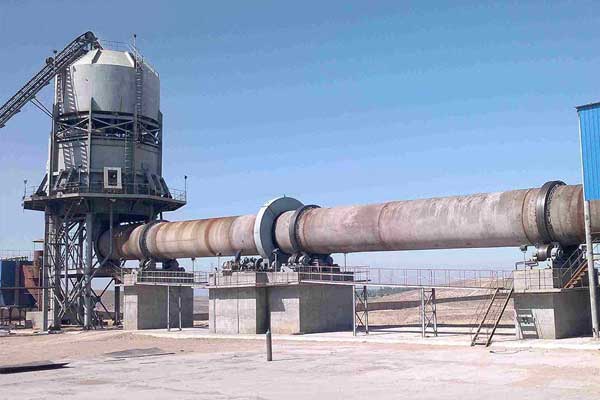
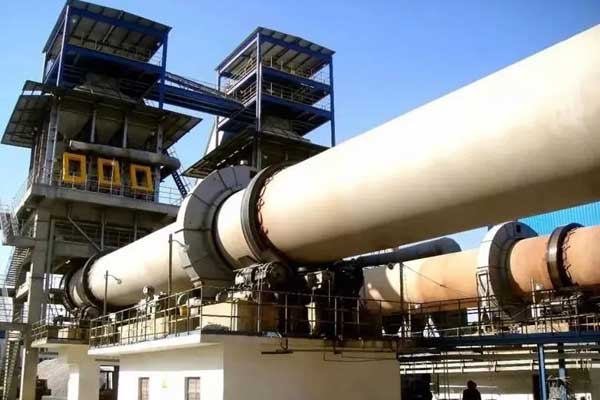
Dolomite rotary kiln is a special rotary kiln developed for the calcination characteristics of dolomite. It is the key equipment of the dolomite calcination plant. The calcined dolomite produced by the dolomite rotary kiln has the characteristics of stable and uniform quality, high activity and low ignition loss. It is an ideal equipment for calcining dolomite.
The rotary kiln consists of a cylinder, a supporting device, a transmission device, a kiln tail, and a kiln head seal. The raw material utilization rate is high. The material is heated evenly, the calcination is complete, and the calcination temperature is easy to control.
The aspect ratio of the rotary kiln is reduced from the traditional 20-25 to 14-15. The main cooling section is completed by the cooler, which reduces the heat loss on the surface of the rotary kiln. Save energy and reduce investment.
The transmission system adopts a variable frequency speed control motor, equipped with a frequency converter with a large speed range and heavy load start-up.
The dolomite rotary kiln head and kiln tail use heat-resistant steel flake seals to replace the original seals, which not only reduces the air leakage at the kiln head and kiln tail, but also is durable.
Large production capacity, high degree of mechanization, simple maintenance and operation.
The materials in the kiln tumble fully with the rotation of the kiln, which strengthens the radiation heat transfer process, separates the preheating, calcination and cooling of the kiln, and configures a vertical preheater to use the heat of the exhaust gas at the kiln tail for preheating and partial decomposition, thereby improving thermal efficiency and reducing energy consumption.

What is Dolomite?
Dolomite or “dolomitic limestones” is a common building material and decorative stone. It refers to rocks containing magnesium carbonate minerals. It is a sedimentary rock, mainly composed of calcium carbonate and magnesium carbonate, usually white or grayish white. It has the characteristics of moderate hardness, high density and good chemical stability. This rock is important in geology and some industrial applications, such as in the construction industry, decorative materials or as a raw material for cement production.
Natural rocks are the main raw materials for lime calcining plants. Limestone, chalk, dolomite limestone, etc. can be used to produce lime. One of the limes produced by high-temperature calcination is called high-magnesium metallurgical lime, and one of the raw materials for this lime is dolomite. Dolomite is a double carbonate containing 54% to 58% CaCO₃ and 40% to 44% MgCO₃.


Dolomite calcination
Dolomite calcination is one of the most important processes in the series of process steps before dolomite is used in the construction or decoration industry. Calcination of dolomite involves heating the raw material to a sufficient temperature to release carbon dioxide from its carbonate minerals. This dolomite calcination process is usually carried out in a rotary kiln. Dolomite calcination is an important step in processing dolomite into other higher-value materials.
Experimental studies have shown that the decomposition of dolomite is a single-step process with a starting temperature of 700°C and an end temperature of 900°C with an activation energy of 149.5kJ/mol to 162 kJ/mol. Studies have shown that the maximum conversion rate of dolomite reaches 80-90% at 900°C. Although laboratory-scale studies have shown that the conversion rate of dolomite can reach 99% at 900°C, commercial-scale rotary kilns operate at temperatures between 1100 °C
and 1200°C, indicating unnecessary energy losses. Therefore, in the dolomite calcining plant, it is very important to choose the right calcining kiln.
The rotary kiln provided by Agico Cement is specially used for dolomite calcining. We have rotary kilns with various outputs and various raw materials for customers to choose from. We can also provide customized services. According to the different needs of customers, we provide different dolomite calcining equipment. We look forward to enabling customers to have economically efficient and environmentally friendly dolomite calcining plants through our professional services and advanced technologies. By choosing our dolomite calcining plant, you can have customized product design, installation guidance, technical support, and other services. Welcome new and old customers to visit the factory.

Dolomite Calcining Process
First, dolomite is processed by a crusher and standardized into 30-40mm materials. Qualified dolomite is sent to the top silo of the preheater by conveying equipment and enters the preheating chamber through a discharge pipe. The discharge pipe is adjustable to meet the requirements of raw materials of different particle sizes. An independent preheating chamber is formed through a partition wall, which strengthens heat exchange and facilitates external maintenance. Then it is sent to a rotary kiln for high-temperature calcination. During this process, calcium carbonate and magnesium carbonate in dolomite decompose at high temperature to produce calcium oxide and magnesium oxide, while releasing carbon dioxide. The calcined dolomite is called “calcined dolomite”. The calcined dolomite enters a cooler, and after cooling and ball milling, it is powdered to prepare for subsequent processes. Usually, a rotary kiln is equipped with a preheater to preheat the raw materials with the flue gas of the rotary kiln combustion gas before the rotary kiln, and a cooler to reduce the temperature of the calcined material.

Factors Affecting Dolomite Calcination
The purpose of calcining dolomite is to change its color and improve its hardness and durability to meet the needs of construction or decoration. The experimental results show that dolomite calcination is closely related to the rotary kiln temperature, dolomite particle size, and dolomite residence time in the rotary kiln. Therefore, in the actual calcination of dolomite, factors such as kiln temperature and dolomite particle size should be taken into account.
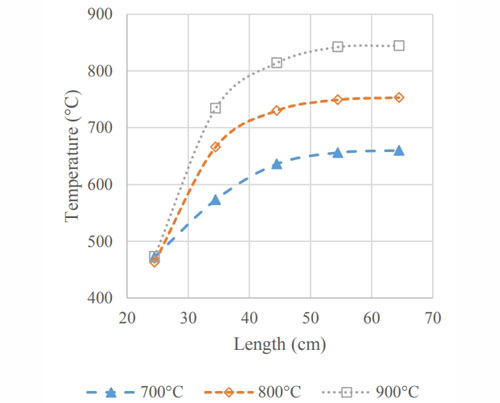
- Rotary kiln temperature: An experiment once showed that the recovery rate of dolomite at 700°C in the rotary kiln was low, only 20%. This may be because the material is still in the heating zone. After all, the feed material enters the rotary kiln at room temperature. Therefore, at a rotary kiln temperature of 700°C, a part of the rotary kiln only heats the feed, and when calcination begins to occur, the feed material has begun to enter the outlet of the rotary kiln. At higher temperatures, such as 900°C, the material feed is preheated faster, resulting in a higher calcination recovery rate. The higher the temperature of the calcination reaction, the higher the conversion rate of the reaction. As the temperature increases, the reaction rate also increases, thereby increasing the conversion rate of calcination. Calcination temperature is one of the key factors affecting the calcination effect of dolomite. An appropriate calcination temperature can promote the release of CaO and MgO in dolomite from the dolomite structure, thereby increasing its activity. Studies have shown that the optimal calcination temperature is generally between 1000 and 1200°C, at which time the activity of dolomite reaches the best state. When determining the calcination temperature, it is necessary to comprehensively consider quality requirements and economic benefits, and conduct experimental verification to determine the optimal temperature range.
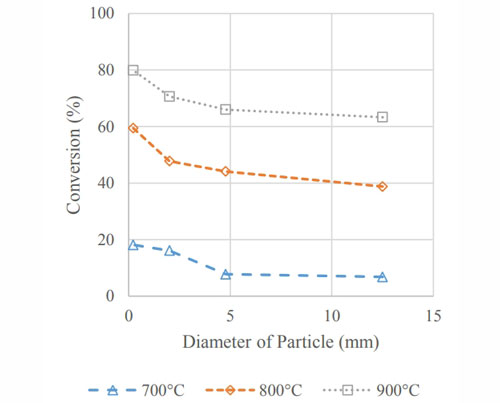
- Dolomite particle size: In the past, an experiment was conducted at a rotation frequency of 29.75 rpm, an inclination angle of 3°, and a temperature in the rotary kiln at 700°C, 800°C, and 900°C. It can be seen that as the particle size decreases, the conversion rate increases. This is consistent with the theory that a decrease in particle size of the same mass will increase the overall surface area of the dolomite particle. The increase in surface area leads to an increase in the heat transfer rate, resulting in a greater increase in heat for the same residence time. As the heat increases, more particles reach the required activation energy and are converted into calcium oxide and magnesium oxide. Compared with temperature, particle size has less effect on conversion rate because the rotation of the rotary kiln helps to evenly distribute the incoming heat to all particles in the kiln. However, it is undeniable that too large particle size of dolomite will lead to uneven calcination, while too small a particle size may increase the difficulty of calcination. The appropriate particle size can improve calcination efficiency while ensuring calcination uniformity. The recommended particle size range for the study is 15~30mm. The particle size within this range can not only ensure calcination uniformity but also improve calcination efficiency.
- Calcination time: Calcination time is also an important factor affecting the calcination effect of dolomite. Too long or too short calcination time will lead to a decrease in stone quality. Too short calcination time may lead to incomplete calcination, while too long calcination time may lead to over-calcination, the grain growth of oxides (CaO.MgO), and the surface will age and lose activity, affecting the quality of dolomite. The appropriate calcination time can fully release CaO and MgO while avoiding over-calcination. It is generally recommended to be between 1 and 4 hours. Therefore, in production, for the calcination of dolomite, whether it is a rotary kiln, a vertical kiln or other kilns, a slow heating and high-temperature rapid calcination method should be adopted. In addition, the calcination rate is also one of the factors affecting the calcination effect of dolomite. Too fast a calcination rate may cause uneven temperature inside the dolomite, resulting in cracking or other quality problems. Therefore, in order to ensure the quality and consistency of the stone, it is very important to control the calcination rate.
Finally, the factors affecting the calcination of dolomite also include the chemical composition, structural characteristics, initial state, etc. Dolomite of different types and regions has different chemical compositions and structural characteristics. Therefore, for different raw materials, the calcination process parameters may need to be adjusted. In addition, the initial state of dolomite (such as moisture content, particle size, etc.) will also affect the calcination effect.
The optimization of calcination process parameters is crucial to the quality and performance of the dolomite. By reasonably adjusting the calcination temperature, calcination time, and calcination rate, the color of dolomite can be changed, the hardness can be improved, and the durability can be increased. In practice, customers need to determine the best process parameter range according to their different needs. At the same time, it is also necessary to pay close attention to environmental protection and energy consumption issues during the calcination process to make the dolomite calcination process more sustainable and environmentally friendly.

Common Equipment in Dolomite Calcining Plants
Dolomite, as a common mineral, has a wide range of applications in many fields due to its unique rhombohedral morphology and crystal structure similar to calcite. In order to make full use of these characteristics of dolomite, a complete set of processing equipment is particularly important.
Crushing Equipment
In the processing of dolomite, crushing is the first and most important step. Commonly used crushing equipment includes a jaw crusher and a cone crusher. Jaw crusher plays an important role in the coarse crushing stage of dolomite with its large production capacity and high working efficiency. Cone crusher performs well in the fine crushing stage with its advantages of simple operation, stable operation, energy saving and environmental protection. These two levels of crushing can ensure that the dolomite raw materials are crushed into particles of appropriate size, laying a solid foundation for subsequent processing.
Grinding Equipment
Grinding is another important link in dolomite calcination processing. Raymond mill has become the preferred equipment for dolomite grinding with its reasonable structural design and high powder output accuracy. It not only occupies a small area, is easy to transport and install, but also can effectively avoid blockage and improve the utilization rate of materials. After grinding, dolomite powder can be graded according to different particle size requirements through grading equipment such as vibrating screens and airflow classifiers to meet the needs of different fields.
Packaging Equipment
In addition, packaging equipment is also an indispensable part of the dolomite calcination process. Automatic packaging machines, metering scales and other equipment can achieve fast and accurate packaging to ensure the quality and safety of the product. At the same time, in order to keep the product dry and ventilated, the dolomite powder needs to be stored in a suitable environment.
A complete set of dolomite processing equipment needs to include crushing equipment, calcining equipment, grinding equipment, grading equipment and packaging equipment. These equipment can achieve efficient and precise processing of dolomite through mutual cooperation, thereby meeting the needs of dolomite in different fields. With the continuous advancement of technology and changes in market demand, dolomite processing equipment is also constantly innovating and improving, providing a strong guarantee for the wide application of dolomite.
Equipment for Dolomite Calcination Plant

Rotary kiln for dolomite calcination

Preheater for rotary kiln

Jaw crusher for dolomite calcination
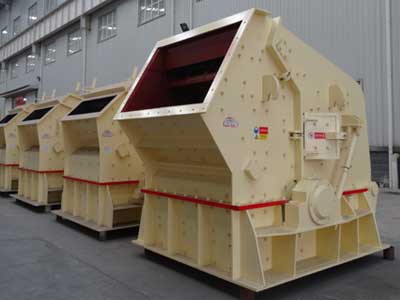
Impact crusher for dolomite calcination
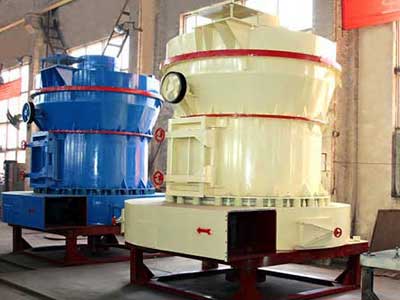
Ball mills for dolomite calcination
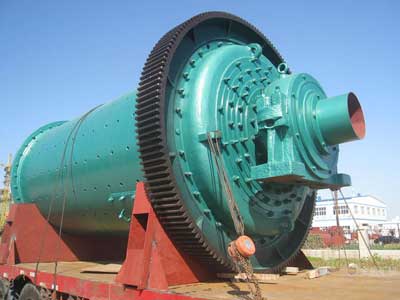
Large ball mills for dolomite calcination

Twin shaft kiln for dolomite calcination

Vertical kiln of dolomite calcination
Technical Specification Of Dolomite Rotary Kiln
| Capacity(t/d) | Rotary type | Dolomite content | Feed Particle Size(mm) | Kiln Temperature(°C) | Calcination Time(hour) | Gas Flow(m³/h) | Rotary Kiln Speed(rpm) | Gas Temperature | Emissions |
| 700-1200t/h | Small Rotary Kiln | 80% CaMg(CO₃)₂ | 10-50 | 900-1000 | 2-3 | 300-500 | 0.5-1.0 | 900-1000 | CO₂, minor SO₂ |
| 1300-4000 | Medium Rotary Kiln | 85% CaMg(CO₃)₂ | 5-30 | 950-1100 | 2.5-4 | 500-800 | 0.6-1.2 | 1000-1100 | CO₂, SO₂, minor NOx |
| 4500-6000 | Large Rotary Kiln | 90% CaMg(CO₃)₂ | 1-25 | 1000-1200 | 3-5 | 800-1200 | 0.7-1.5 | 1100-1200 | CO₂, SO₂, NOx |
| 7000-10000 | Continuous Rotary Kiln | 90% CaMg(CO₃)₂ | 1-20 | 1050-1250 | 4-6 | 1000-1500 | 0.8-2.0 | 1200-1300° | CO₂, SO₂, NOx |