
Annular shaft lime kilns introduction
Lime kiln project selection should comprehensively consider factors such as the utilization of raw and fuel resources, project static investment, product quality, and lime kiln operating costs. At the same time, it should also combine its own raw and fuel conditions, and consider the requirements of the local environmental protection department for low-carbon economy and sustainable development.
It is understood that lime production facilities in industrially developed countries are mainly new shaft kilns and rotary kilns. As far as the country is concerned, metallurgical enterprises have newly built lime kilns, which is forming a situation where rotary kilns and new vertical kilns keep pace with each other.
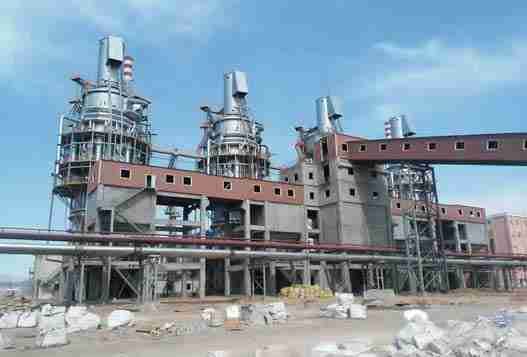


The annular shaft lime kiln is a relatively advanced lime production facility in China at present. It adopts an annular shaft lime kiln for co-current calcination. The lime fired by it has high activity, high thermal efficiency, and lower energy consumption than rotary kiln, Fukas kiln and other kiln types. The annular shaft lime kiln is easy to maintain, high operating rate, large size range of raw materials entering the kiln, small footprint, lime is calcined in the annular space, air distribution is more uniform, no cooling equipment in the kiln, low failure rate, easy to maintain. At the same time, the use of negative pressure operation in the whole process is beneficial to environmental protection, and has the advantages of low S content in burnt lime. In recent years, it has gradually been recognized by more and more users, especially domestic large and medium-sized metallurgical enterprises. Widely used in metallurgy, chemical industry, papermaking, building materials and other industries.
Considering that the annular lime kiln has the characteristics of simple control, convenient maintenance, full negative pressure operation and good environment, especially the annular shaft lime kiln has the characteristics of using converter gas alone as fuel, we believe that the annular lime kiln is one of the most advanced technology lime kilns at present .


Introduction to the process flow of annular shaft lime kiln
Taking the 500-ton annular shaft lime kiln as an example, the process flow is as follows:
The annular shaft lime kiln has upper and lower layers of burners, with 6 evenly distributed on each layer, and the distance between the center lines of the two layers of burners is 3.9 meters, with a difference of 30 degrees. The lower burner divides the annular shaft lime kiln into two calcination zones, namely the countercurrent calcination zone and the downstream calcination zone. The upper part is the countercurrent calcination zone and the lower part is the downstream calcination zone. The downstream calcination starts from the lower combustion chamber and ends at the inlet of the circulating gas.
Each combustion chamber of the annular shaft lime kiln has an arch bridge from the kiln shell to the lower inner sleeve made of refractory materials. After the gas is burned in the combustion chamber, the hot gas generated enters the material bed from the space under the arch bridge and is evenly distributed to the entire material bed.
The annular sleeve active lime kiln is composed of inner and outer cylinders. The inner cylinder and the outer cylinder are concentrically arranged to form an annular space, and the limestone is calcined in the annular area. The kiln body is divided into preheating zone, countercurrent calcination zone, cocurrent calcination zone and cooling zone from top to bottom.


In the co-current calcination zone, as the material flows downward, a CaO shell is gradually formed on the surface of the limestone, and its heat absorption becomes poor. However, at this time, the leaner fuel and air are contacted and burned, and the heat supply is relatively mild, so it will not overheat the CaO shell, but also make the raw core continue to decompose.
Annular active lime kiln is divided into upper and lower sleeves, the upper inner sleeve is suspended on the top of the kiln, and the lower inner sleeve is located in the middle and lower parts of the entire shaft kiln. The upper and lower inner cylinders are made of boiler steel plates, and there are two layers. An annular gap is formed between the two layers, and air is passed through the annular gap for forced cooling. The inner and outer sides of the inner cylinder are built with refractory materials.
Through the above design, the pressure, airflow and temperature in the annular lime kiln are evenly distributed in the annular section and the entire limestone layer, which ensures the uniformity of limestone calcination, improves the quality of the product, and reduces the unit consumption of the product at the same time. Compared with the traditional limestone kiln In comparison, the equipment is also more adaptable to raw materials.
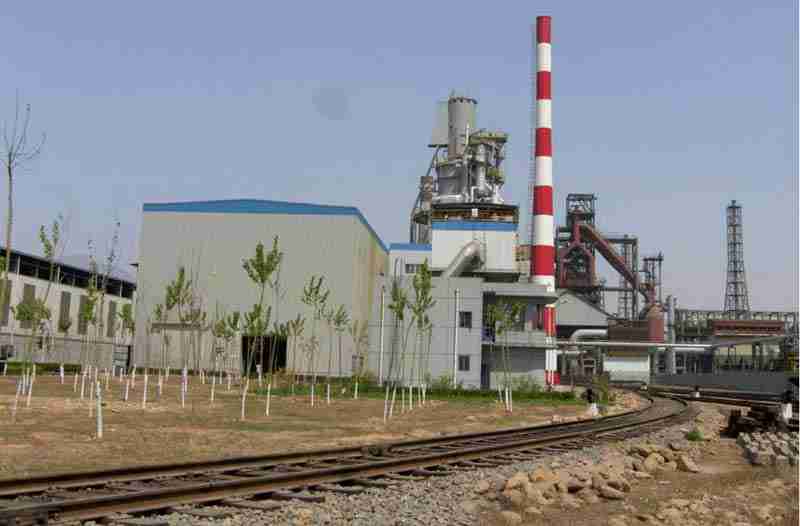

The division of the three zones of the annular shaft lime kiln: the preheating zone is about 9 meters, and the temperature range is from the top temperature of 90-140°C to the junction of preheating and calcination at 850-900°C; the calcining zone is about 11 meters, and the temperature range is from preheating , calcination junction 850-900 ℃ to calcination, cooling junction 900-950 ℃, the cooling zone is about 7 meters, the temperature range is 900-950 to 80-130 ℃.
In the preheating zone, the limestone is heated to its calcination temperature (850-900°C). If gas fuel with low calorific value (such as converter gas) or limestone containing more than 90% CaCO3 is used, there will always be waste heat in the preheating zone, so the upper inner sleeve and heat exchanger are designed in the lime preheating zone of the annular shaft lime kiln, and the waste heat in the preheating zone enters the heat exchanger through the upper inner to make the loss as small as possible and the exhaust gas temperature is as low as possible. The heated driving air is sent to the six ejectors through the upper ring pipe.
In the calcination zone, all the calcination processes are carried out here, of which 70-80% of the calcination process is carried out in the counter-current calcination zone, and the other 20-30% of the calcination process is carried out in the downstream calcination zone. The temperature of the limestone entering the calcining zone is about 850-900°C, and the temperature of the limestone entering the cooling zone at the bottom of the downstream calcining zone is about 900-950°C.
In the cooling zone, the hot lime is exchanged with the cold air drawn from the bottom of the kiln, and the temperature is lowered and then discharged out of the kiln body. The temperature is about 80-130°C.

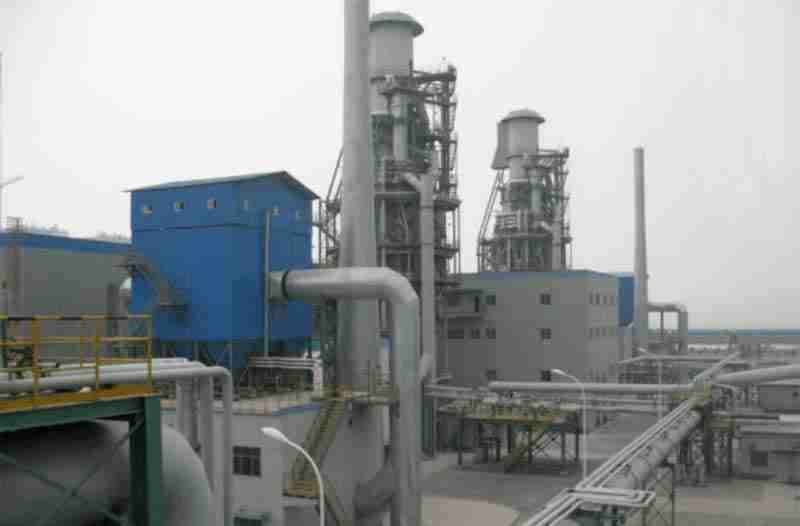
What is circulating gas?
The circulating gas is driven by the driving wind after heat exchange, and is formed by mixing the hot air from the downstream calcination and the lime cooling air inhaled under the kiln after heat exchange with hot lime. The circulating gas enters the inner space of the lower inner sleeve through the circulating gas inlet, and then comes out from the Φ650mm pipeline in the upper six arch bridges, mixes with the driving wind, and then enters the lower combustion chamber again.
The gas from the lower burner is mixed with secondary air, driving air, and circulating gas to form peroxygen combustion in the lower combustion chamber. The hot air generated after combustion enters the kiln and is divided into two parts. One part enters the downstream calcination zone, the other part is pumped up by the negative pressure generated by the exhaust gas fan and enters the countercurrent calcination zone to calcine the material. The gas entering the downstream zone transfers heat to the materials that have not been completely calcined and decomposed, and at the same time its own temperature continues to drop, and enters the circulating gas channel together with the gas after cooling the lime at the end of the downstream zone.
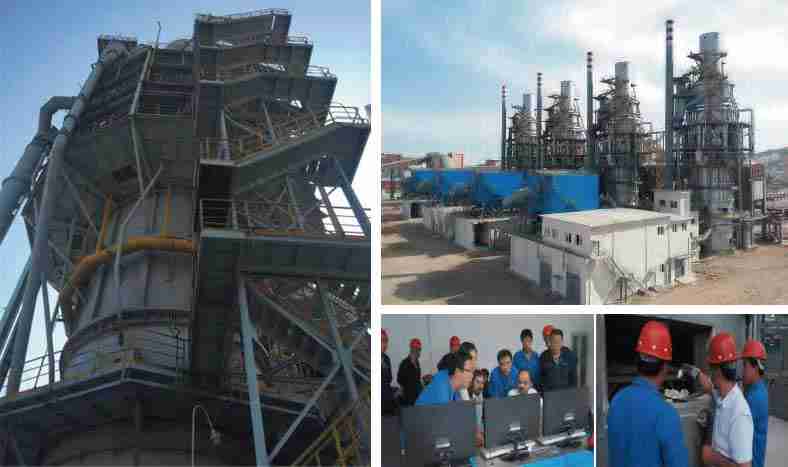
Technical characteristics of annular shaft lime kiln
- Production capacity: Our company provides the design and manufacture of 300t/d, 500t/d, and 600t/d annular active lime kilns. The production capacity can be adjusted within a certain range to achieve stable production without affecting quality and consumption indicators.
- Limestone particle size: 30-60mm, 40-80mm, particle size range ratio 1:2.
- Fuel type: This annular shaft lime kiln can use natural gas, coke oven gas, calcium carbide furnace tail gas, pulverized coal, etc. as fuel.
- Lime products: residual CO2 is not higher than 2% (24-hour average), activity is greater than 360ml (4N, HCL method for ten minutes).
- Heat consumption: maximum use of heat energy, the heat consumption of finished ash is not higher than 950kcal/kg.
- High operating rate: it can operate continuously for 48 weeks per year.
- Calcination method: Combination of countercurrent calcination and cocurrent calcination.
Successful Performance of Twin-shaft Lime Kilns
| S/N | NAME | CAPACTY | QUANTITY | REMARKS FUEL | KILN TYPE | COMPLETION DATE |
|---|---|---|---|---|---|---|
| 1 | Algeria | 80t | 2 annular lime kilns | Gas | Gas kiln | 2021.3 |
| 2 | Uzbekistan | 100t | 1 annular lime kilns | Gas | Gas kiln | 2020.11 |
| 3 | Srilanka Tang Dynasty Building Materials | 100t | 2 annular lime kilns | Producer gas | Gas kiln | 2019.5 |
| 4 | Thailand | 100t | 1 annular lime kilns | Producer gas | Gas kiln | 2018.1 |
| 5 | Liaoning Haoqi Calcium Industry | 300t | 1 annular lime kilns | Gas | Gas kiln | 2017.6 |
| 6 | Zimbabwe, Africa | 100t | 1 annular lime kilns | Producer gas | Gas kiln | 2016.12 |
| 7 | Tangshan Rongcheng Iron and Steel | 120t | 2 annular lime kilns | Blast furnace gas | Gas kiln | 2015.3 |
| 8 | Tangshan Ronghua Iron and Steel Works | 120t | 2 annular lime kilns | Blast furnace gas | Gas kiln | 2013.5 |
| 9 | Hongda Steel Works | 100t | 1 annular lime kilns | Blast furnace gas | Gas kiln | 2012.9 |
| 10 | Wenshui Jianrong Building Materials CO., Ltd. | 120t | 1 annular lime kilns | Producer gas | Gas kiln | 2012.7 |
| 11 | Wenshui Lecheng Building Materials Co.,Ltd. | 120t | 1 annular lime kilns | Producer gas | Gas kiln | 2012.6 |
| 12 | Yunnan Yuxi Dechang Industry and Trade | 125t | 2 annular lime kilns | Coke oven gas | Gas kiln | 2011.3 |
| 13 | Xiangfen Minyi Burden Co., Ltd. | 120t | 2 annular lime kilns | Coke oven gas | Gas kiln | 2011.10 |
| 14 | Hebei Tang County Heavy Yuan Calcium Industry | 200t | 2 annular lime kilns | Producer gas | Gas kiln | 2011.12 |
| 15 | Shanxi Shenghai Gas Burning Kiln | 90t | 3 annular lime kilns | Coke oven gas | Gas kiln | 2007.8 |