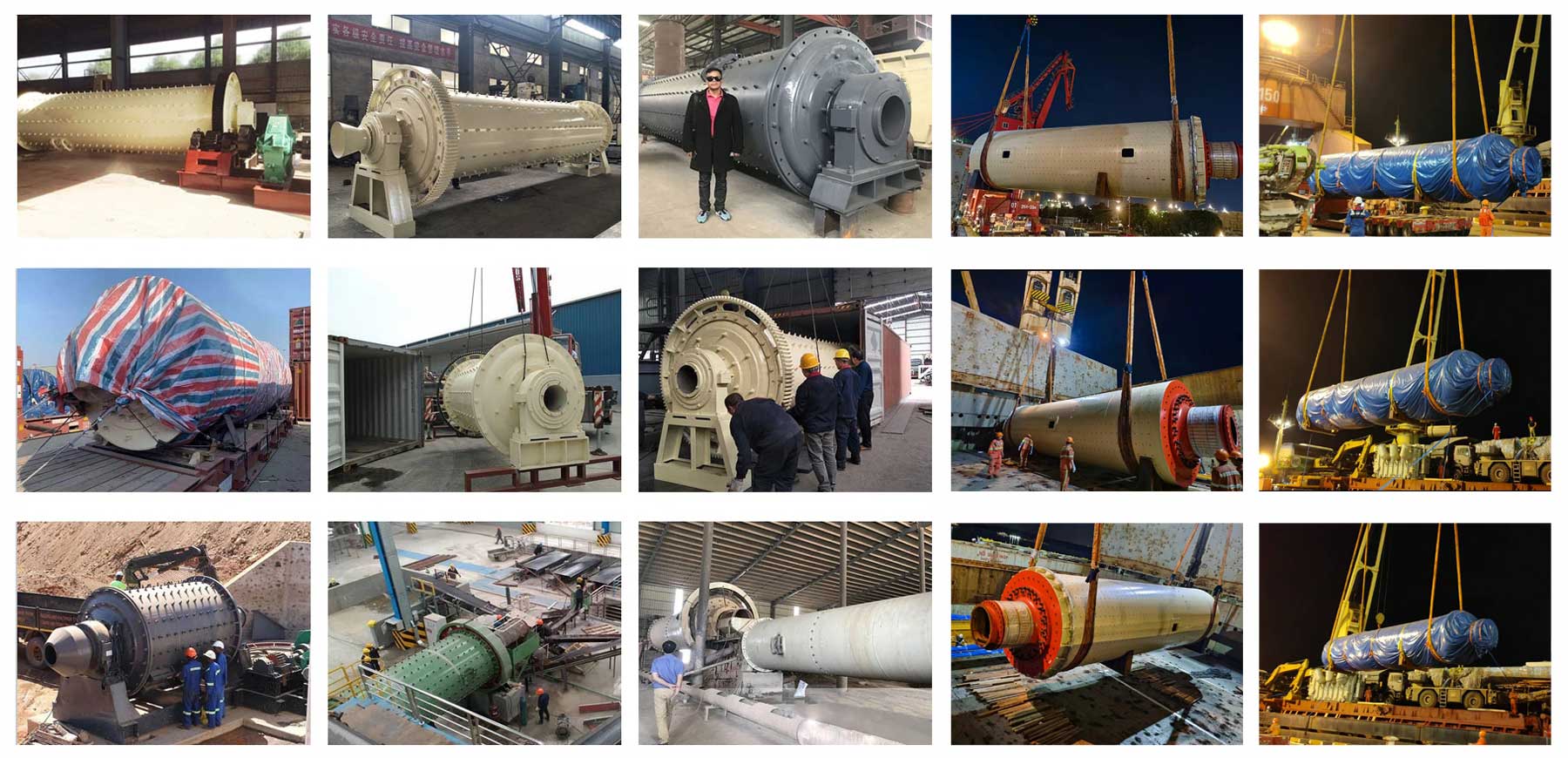

Product: Ball mill for limestone
Feed Size: ≤25 mm
Diameter: Φ1.5~Φ 4.2 m
Production Capacity: 15-100 t/h
Handle Material: Cement, limestone, slag, steel slag, coal, coal ash, and various mineral ores. etc.
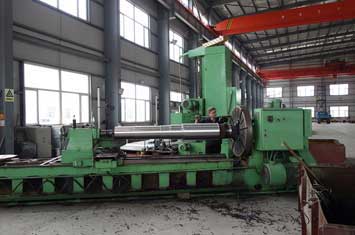
Ball Mill for Limestone
In the lime production line, the limestone ball mill is a very important piece of equipment. A ball mill for limestone helps to improve the quality and output of lime, especially when finer particles are required. Fly ash is the core raw material of the limestone ball mill. Limestone ball mill is widely used in building materials, mineral processing, chemical industry, power, and other fields.
The main application of the limestone ball mill in the lime production line is to grind limestone, ore, or other materials of a certain particle size into fine powder to improve its reactivity. It puts the material and grinding media (such as steel balls) into a cylinder and crushes them by centrifugal force and friction generated by rotation. Finally, the fine powder is graded and prepared for subsequent sintering or chemical reaction. In general, limestone ball mill is used for large-scale limestone grinding and is suitable for grinding various ores and chemical raw materials.


AGICO Cement Limestone Ball Mill Advantages
Good grinding effect
Through the impact and grinding of steel balls, limestone can be ground very finely, which can meet various production processes with high requirements for limestone powder fineness.
Wide range of applications
Ball mill for limestone can process limestone raw materials of different hardness and particle sizes, has good adaptability to the water content of the material, and can be dry or wet ground.
Strong processing capacity
A limestone ball mill can process a large amount of limestone. Depending on the model and specifications of the ball mill, the processing capacity per hour can range from several tons to tens of tons, which is suitable for large-scale production.
Good operating stability
With high-quality materials and reasonable design and processing, the limestone ball mill runs smoothly with less vibration and noise.
Easy maintenance
The structural design of the limestone ball mill is relatively simple, and some parts are easy to disassemble and replace, which is convenient for daily maintenance and overhaul.
Various powder particle sizes
The grinding particle size can be controlled by adjusting the parameters such as the speed of the ball mill, and the type and number of grinding bodies.
High-quality steel balls
The steel balls used in the ball mill of limestone have many specifications, have good wear resistance, accurate size, high hardness, and are not easy to deform and break, which improves the overall limestone grinding efficiency.
Rich experience
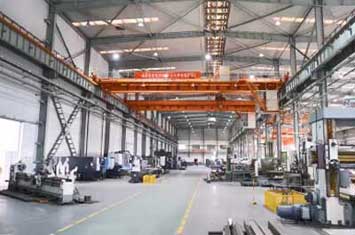
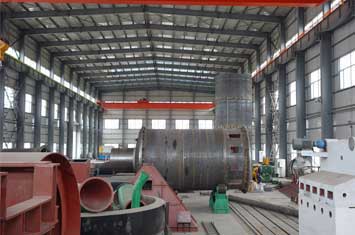
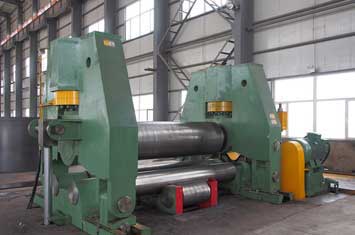
AGICO Cement has been engaged in ball mill manufacturing for more than 20 years and has accumulated rich experience in ball mill technology. This long-term experience accumulation has enabled us to have a deep understanding and mastery of the design, manufacture, and commissioning of ball mills, and to produce ball mill products with stable performance and reliable quality.

Limestone Ball Mill Working Principle
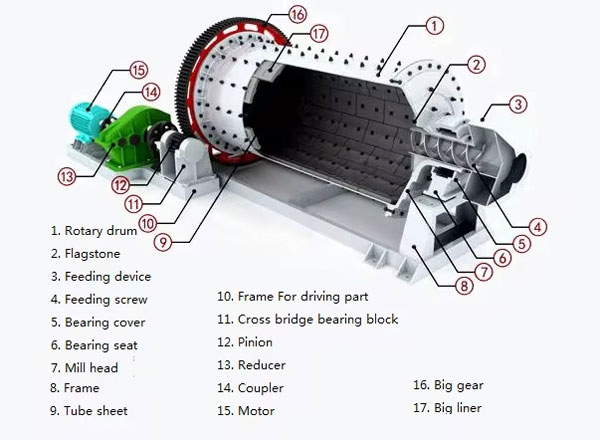
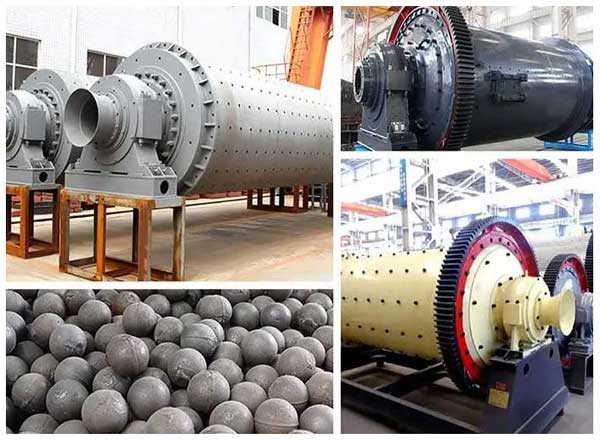
The limestone ball mill is a horizontal cylindrical rotating device with an outer gear transmission. The ball mill is composed of a horizontal cylinder, a hollow shaft for feeding and discharging, and a grinding head. The main spare parts are the cylinder, end cover, bearing, transmission large gear ring, pinion, motor, reducer, feeding part, discharging part, rotating part, etc. There are many types of limestone ball mills, such as the small 900×1800, etc. The cylinder size, ball loading, output, motor power and other parameters of different types of ball mills are different. For example, the ball loading capacity of the 900×1800 model ball mill is 1.5 tons, the output is 0.5-4 tons per hour (the specific output will also be affected by factors such as the feeding particle size and the discharge particle size requirements), and the motor power is 15 kilowatts. According to factors such as the diameter of the ball mill, the speed is generally around a few to twenty revolutions per minute. The feed particle size is usually smaller than a certain size, for example, the common feed particle size requirement is less than 25 mm, and the discharge particle size can range from tens of microns to several millimeters according to production requirements.

A certain number of steel balls are installed in the cylinder as grinding media. When the motor drives the cylinder to rotate through the reducer, the limestone raw materials and steel balls move with the cylinder inside the cylinder. Due to the centrifugal force and friction, the steel balls are brought to a certain height and then fall, which has an impact on the limestone. At the same time, the limestone is ground between the steel balls and the cylinder lining, and is gradually ground into powder. Generally, after the material is coarsely ground in the first bin, it enters the second bin through a single-layer partition plate for further grinding, and finally the powder is discharged through the discharge plate to complete the grinding operation.
Limestone Ball Mill Application
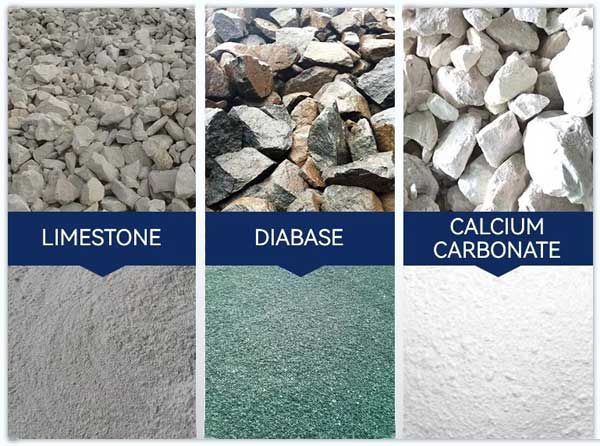
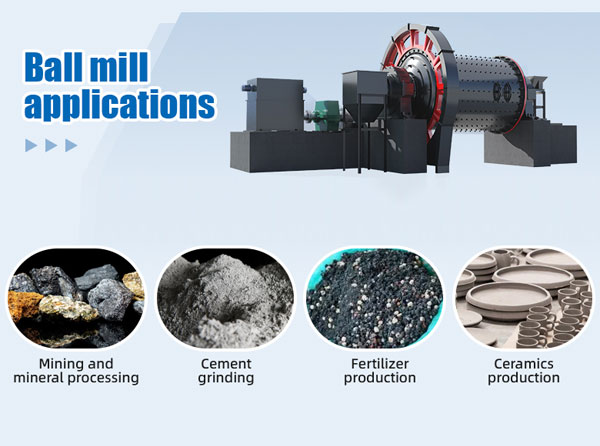
In lime production, limestone ball mills are used to grind limestone blocks into fine powder. These fine powders can be used in many fields such as building materials (such as cement production), chemical raw materials (such as calcium carbonate production, etc.), and environmental protection materials (such as flue gas desulfurization, etc.). For example, in the cement production process, limestone ball mills grind limestone into raw material powder, providing suitable raw materials for subsequent processes such as raw material calcination.
Limestone Ball Mill Operation and Maintenance
- Before starting the machine, check the mechanical and electrical parts of the limestone ball mill to ensure that everything is normal before starting.
- Add butter between the main bearing and the pinion bearing, and add oil to the reducer to ensure lubrication of all parts of the energy-saving ball mill.
- During operation, pay attention to checking whether the cylinder is leaking and whether current, voltage, feeding, and water supply are normal.
- Always observe the data of each instrument to ensure that the value is within the specified data and not too large or too small.
- Lubricate according to regulations, and regularly check the bearing temperature, bolt looseness, and abnormal sound of each part. The maintenance cycle is divided into maintenance (1 month), minor maintenance (1-3 months), medium maintenance (12-24 months), major maintenance (60-120 months), etc.
- When an unexpected situation occurs, stop the machine immediately for inspection to avoid major losses.
- Ensure that the temperature of each part is normal. If the temperature is abnormal, stop the limestone ball mill and check it in time. The abnormal temperature may be caused by the non-concentricity between the large bearing seat and the hollow shaft, the non-concentricity between the reducer and the pinion shaft, the non-concentricity between the transmission pinion shaft and the bearing seat, etc.
How to Choose a Limestone Ball Mill?
Choose high-quality spherical roller bearings
The choice of bearings involves the energy consumption of the ball mill. The limestone ball mill uses high-quality spherical roller bearings to improve the grinding efficiency and reduce the failure rate. The characteristics of this bearing are that it can withstand bidirectional loads, has a high radial load capacity, and has the function of aligning the heart. In addition, the roller bearing uses a thin oil lubrication device. The purpose of this is to improve the relative sliding of the bearing, increase the load capacity, and reduce the limit speed.


Reasonable grading of wear-resistant steel balls
Steel balls are important grinding media for limestone ball mills. Limestone ball mills rely on the impact of steel balls to grind limestone. Therefore, the material and design of steel balls directly affect the grinding effect. To improve the overall grinding efficiency, limestone ball mills should be equipped with multi-specification wear-resistant steel balls. The steel ball size should be precise and the hardness should be high so that the steel ball is not easy to deform and break. The manufacturing process of steel balls is divided into casting, forging, and rolling. The appropriate steel balls can be selected according to the characteristics of the grinding material. AGICO Cement uses steel balls with higher hardness, and the raw materials are ordinary carbon steel, stainless steel, or alloy steel. The sizes range from 20MM to 150MM in diameter, which can meet the needs of different limestone ball mills.
Technical Specification Of Limestone Ball Mill
| Specification Model | Cylinder Rotation Speed (r/min) | Ball Charge (t) | Feed Particle Size (mm) | Discharge Particle Size (mm) | Output (t/h) | Motor Power (kw) | Weight (kg) |
| φ900×1800 | 38 | 1.5 | ≤20 | 0.075-0.8 | 0.65-2 | 18.5 | 3600 |
| φ900×2100 | 38 | 1.3-1.4 | ≤15 | 0.075-0.83 | 0.7-3.5 | 18.5 | 3900 |
| φ900×3000 | 38 | 2.7 | ≤20 | 0.075-0.89 | 1.1-3.5 | 22 | 4500 |
| φ1200×2400 | 32 | 3.8 | ≤25 | 0.075-0.6 | 1.5-4.8 | 30 | 11500 |
| φ1200×3000 | 32 | 3.5 | ≤25 | 0.075-0.6 | 1.6-5 | 30 | 14300 |
| φ1200×4500 | 32 | 7 | ≤25 | 0.074-0.4 | 1.6-5.8 | 45 | 15600 |
| φ1500×3000 | 27 | 8 | ≤25 | 0.074-0.4 | 2-5 | 75 | 17000 |
| φ1500×3500 | 27 | 6.75-6.4 | ≤25 | 0.075-0.4 | 3-7 | 75 | 17500 |
| φ1500×4500 | 27 | 14 | ≤25 | 0.074-0.4 | 3.5-12 | 110 | 21000 |
| φ1500×5700 | 27 | 15 | ≤25 | 0.074-0.4 | 3.5-8 | 115 | 24700 |
| φ1830×3000 | 24 | 18 | ≤25 | 0.074-0.4 | 4-10 | 130 | 28000 |
| φ1830×4500 | 24 | 25 | ≤25 | 0.074-0.4 | 4.5-12 | 180 | 36000 |
| φ1830×7000 | 24 | 25 | ≤25 | 0.074-0.4 | 7.5-17 | 210 | 36000 |
| φ2100×3600 | 22 | 14-15.2 | ≤25 | 0.075-0.4 | 15-36 | 370 | 46800 |
| φ2200×5500 | 21 | 30 | ≤25 | 0.074-0.4 | 10-20 | 210 | 48500 |
| φ2200×6500 | 21 | 31 | ≤25 | 0.074-0.4 | 14-26 | 380 | 52800 |
| φ2200×7500 | 21 | 33 | ≤25 | 0.074-0.4 | 16-29 | 380 | 56000 |
| φ2400×3000 | 20.6 | 15.5-16.6 | ≤25 | 0.075-0.4 | 22-24 | 245 | 59000 |
| φ2400×4500 | 21 | 30 | ≤25 | 0.074-0.4 | 8.5-60 | 380 | 65000 |
| φ2700×3600 | 20.6 | 39 | ≤25 | 0.074-0.4 | 12-70 | 400 | 91300 |
| φ2700×4000 | 20.7 | 40 | ≤25 | 0.074-0.4 | 12-80 | 400 | 94000 |
| φ2700×4500 | 20.7 | 48 | ≤25 | 0.074-0.4 | 12-90 | 430 | 102000 |
| φ3200×4500 | 18 | 65 | ≤25 | 0.075-0.4 | 12-100 | 800 | 137000 |