
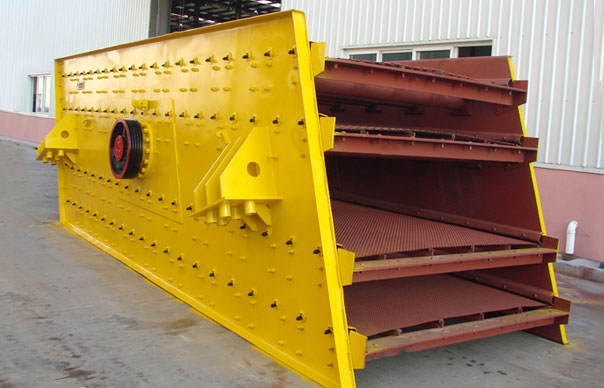
Industrial vibrating screens are essential screening equipment widely used in mining, concrete, and material processing industries. They are designed to efficiently separate materials of different sizes. What’s more, screening materials can ensure consistent product quality and high production efficiency.
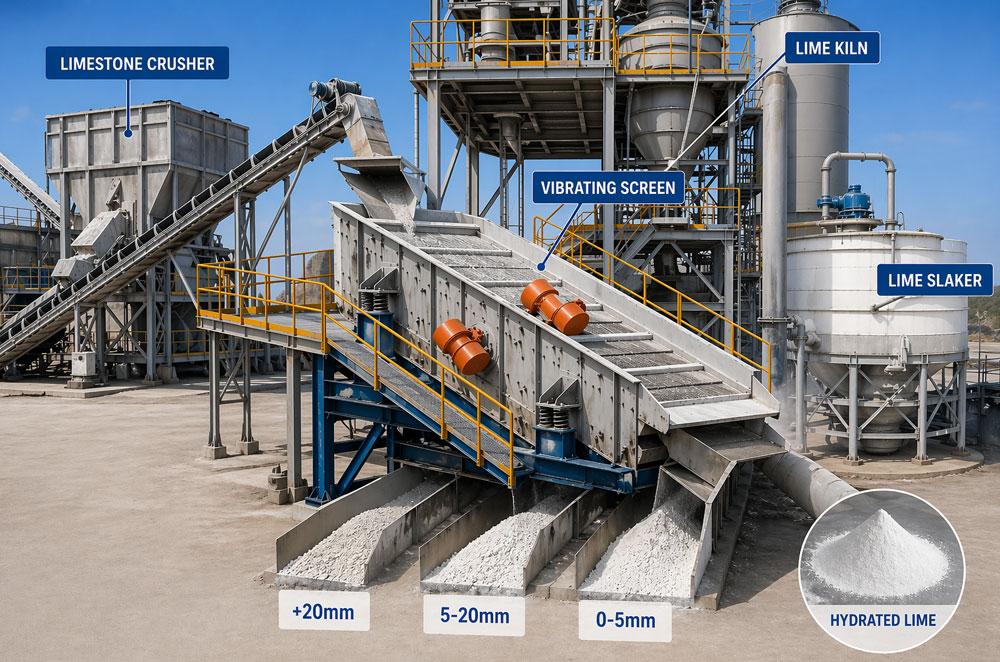
In mining operations, vibrating screens are commonly used for classifying ores, coal, and limestone. In particular, limestone screening plays a critical role in the lime production line, so vibrating screens become an important part of lime processing plants.
Vibrating Screen for Mining Industry
Vibrating Screen is a widely used screening equipment in industries such as mining, building materials, metallurgy, chemical processing, food, and paper production. It is designed to separate materials of different particle sizes through vibration, ensuring efficient classification and grading. For example, finer particles pass through the screen mesh, while coarse particles remain on the surface and are discharged.
In lime production lines, special attention is required due to the characteristics of lime. It is obvious that lime tends to agglomerate, hydrated lime is alkaline, and lime powder can be irritating. Therefore, it is important to select vibrating screens with properly designed anti-clogging screen meshes. Vibrating screens made of stainless steel with anti-corrosion coating are recommended. In addition, a sealed structure and dust control systems such as bag filters should be equipped to effectively prevent dust leakage.
Our vibrating screen has the features of high efficiency screening performance, anti-clogging screen design, dust-proof structure for powder handling, stable operation and low maintenance and customizable for different materials and capacities.
Types of Vibrating Screens in AGICO Cement
Linear Vibrating Screen
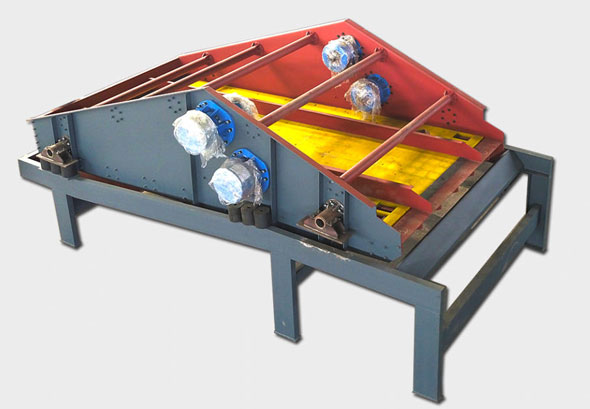
Application: Lime powder, hydrated lime, flour, chemical powder, fine ore, etc.
Linear vibrating screen is a type of screening equipment that uses two vibration motors to generate an excitation force, allowing materials to move forward in a straight line on the screen surface and be separated according to particle size. The linear vibrating screen is suitable for continuous and uniform screening. Generally, the linear vibrating screen is equipped with a horizontal shape, so we can call the linear vibrating screen as a horizontal vibrating screen.
Working Principle of Linear Vibrating Screen
The linear vibrating screen is usually driven by two vibration motors, which rotate synchronously in opposite directions to generate a combined excitation force. The working process is as follows:
- The vibration motors generate an excitation force.
- The screen box moves in a linear reciprocating motion.
- The material is thrown up and moves forward.
- Fine particles pass through the screen mesh.
- Coarse particles are discharged from the end.
Linear Vibrating Screen Structure Composition
A typical linear vibrating screen can be designed as a single-layer, double-layer, or multi-layer screen. At AGICO Cement, the number of layers can be customized according to your requirements. The main components of our linear vibrating screen include:
- Screen Box: supports the screen mesh and carries the material.
- Screen Mesh: determines the screening accuracy.
- Vibration Motor: provides the excitation force.
- Spring: reduces vibration transmission.
- Frame: supports the entire machine.
- Feed Inlet / Discharge Outlet.
Main Advantages of AGICO Cement Linear Vibrating Screen
- High screening efficiency: materials are evenly distributed and the passing rate is high.
- Simple structure: low maintenance cost and low failure rate.
- Sealed design available: especially suitable for dusty materials such as lime, prevents dust leakage and can be connected to a bag filter.
- High customization: screen layers, mesh size, and equipment dimensions can all be customized according to your needs.
Importance of Linear Vibrating Screen for the Lime Industry
The linear vibrating screen is widely used for screening powder and fine materials. Typical applications include hydrated lime and lime powder in the lime industry, fine ore and tailings in mining, powder classification in the chemical industry, flour and starch screening in the food industry, and pulp impurity removal in the paper industry.
Due to the characteristics of lime, such as easy agglomeration, high dust generation, and certain corrosiveness, the linear vibrating screen can be equipped with anti-clogging mesh, designed as a fully enclosed structure, and manufactured with stainless steel materials. These features allow it to effectively handle the challenges in lime processing. Therefore, the linear vibrating screen is one of the most commonly used screening equipment in the lime industry.
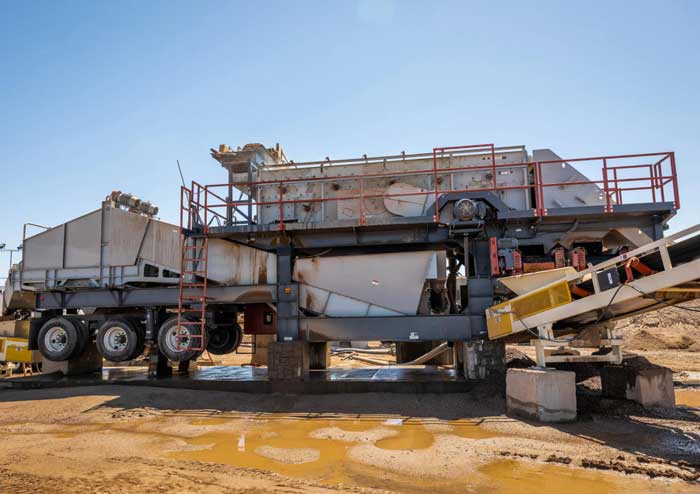
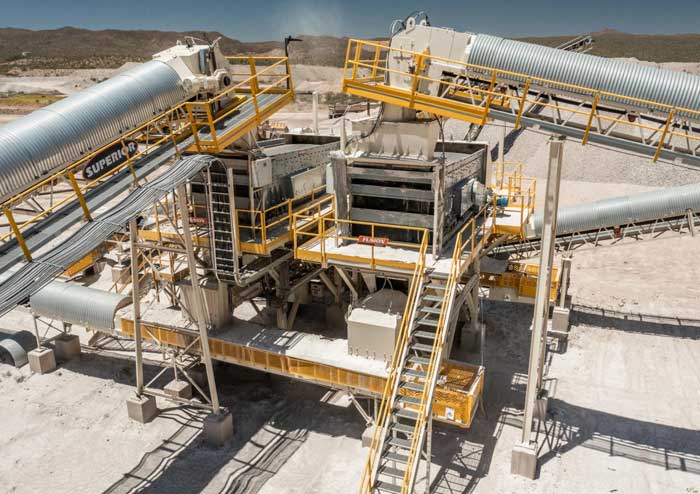
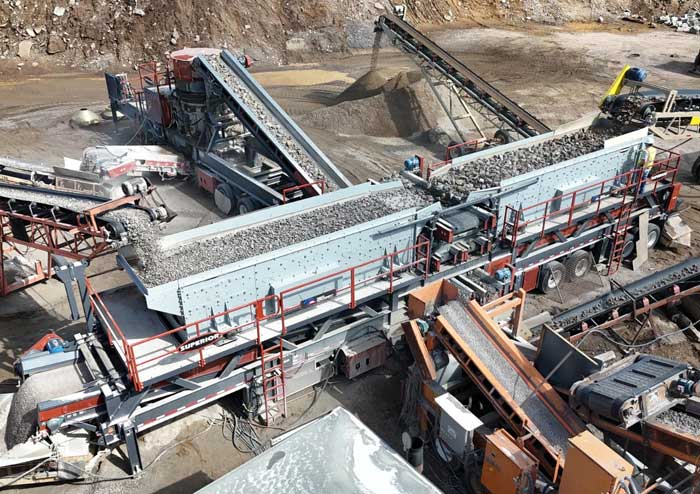
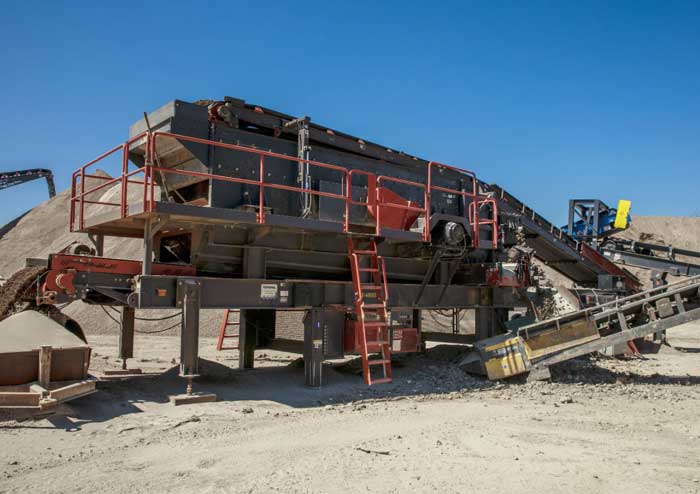
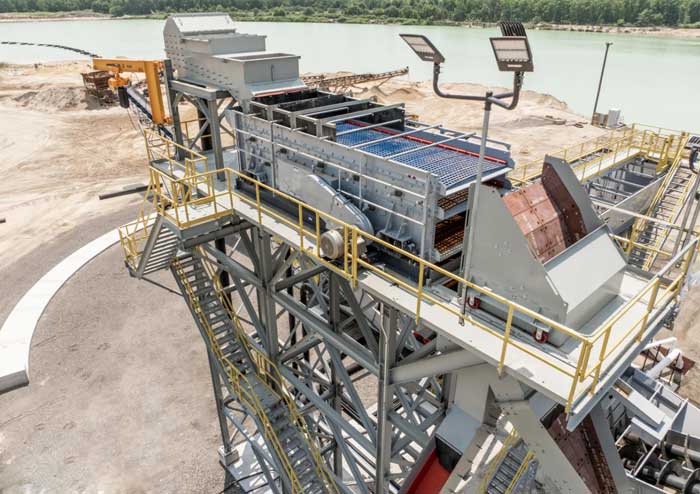
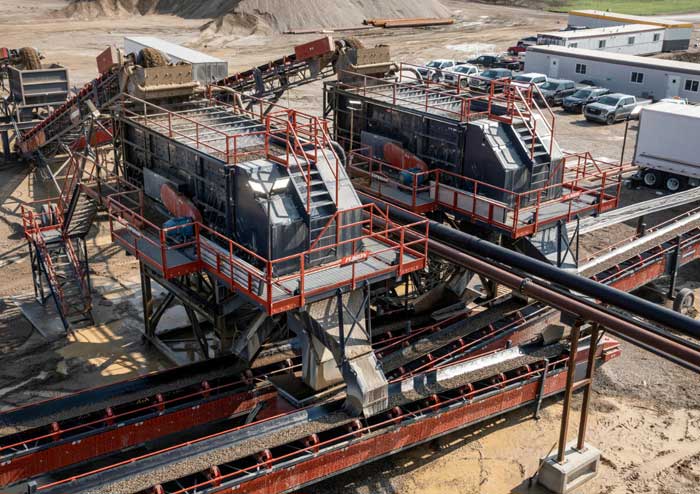
AGICO Cement | Linear Vibrating Screen Projects
Circular Vibrating Screen
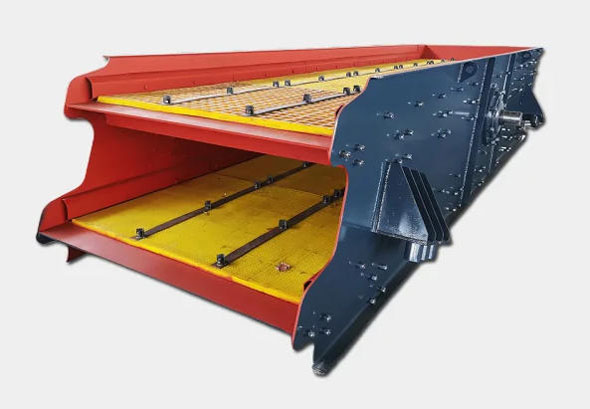
Application: Limestone, ore, quicklime, pebble, mineral, etc.
The circular vibrating screen is a type of screening equipment that generates centrifugal force through an exciter, causing the screen box to move in a near-circular motion trajectory. The screen surface is usually installed at an inclination of 15°–25°, so it is also known as an inclined screen. Materials move forward by the combined action of gravity and vibration.
The circular vibrating screen is a type of screening equipment that generates centrifugal force through an exciter, causing the screen box to move in a near-circular motion trajectory. The screen surface is usually installed at an inclination of 15°–25°, so it is also known as an inclined screen. Materials move forward by the combined action of gravity and vibration.
The circular vibrating screen features large processing capacity and a simple structure, and is widely used in mining, concrete, and limestone screening.
In the lime production process: Limestone → Crushing → Screening → Kiln feeding, the circular vibrating screen is used to control limestone particle size and improve calcination efficiency. Therefore, it is commonly applied for screening limestone before entering the lime kiln.
Working Principle of Circular Vibrating Screen
The circular vibrating screen typically uses an eccentric shaft exciter or a vibrating motor with eccentric blocks to generate vibration. The material moves in a circular or elliptical trajectory with a strong throwing force. The working process is as follows.
- The motor drives the eccentric block or eccentric shaft to rotate.
- Periodic centrifugal force is generated.
- The screen box moves in a circular or elliptical motion.
- The material is thrown up and rolls forward on the screen surface.
- Fine particles pass through the screen, while coarse particles are discharged.

Circular Vibrating Screen Structure Composition
A typical circular vibrating screen, similar to a linear vibrating screen, is usually designed with single-layer or multi-layer decks and installed at an inclined angle (commonly 15°–25°). It mainly consists of the following parts:
- Screen Box: carries the material and screen mesh.
- Screen Mesh: controls particle size.
- Exciter: core vibration source.
- Motor: provides power.
- Spring: for vibration isolation.
- Side Plate: enhances structural strength.
- Frame/Base: supports the equipment.
Main Advantages of Circular Vibrating Screen
- Large processing capacity: suitable for large-scale, high-output mining operations.
- Ideal for coarse material screening: especially suitable for limestone, ores, and aggregates.
- Robust and durable structure: heavy-duty design with strong impact resistance, wear-resistant materials extend service life.
- Low risk of screen clogging: material rolling improves self-cleaning performance.
- Stable operation: mature exciter design ensures continuous and reliable operation.
- Multi-deck design: enables multi-stage classification.
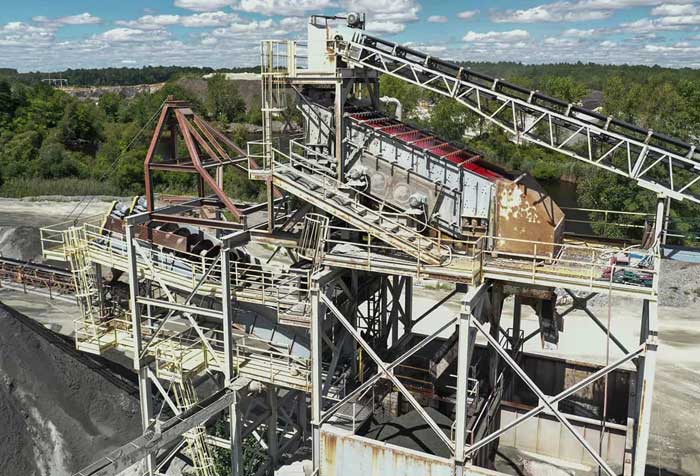
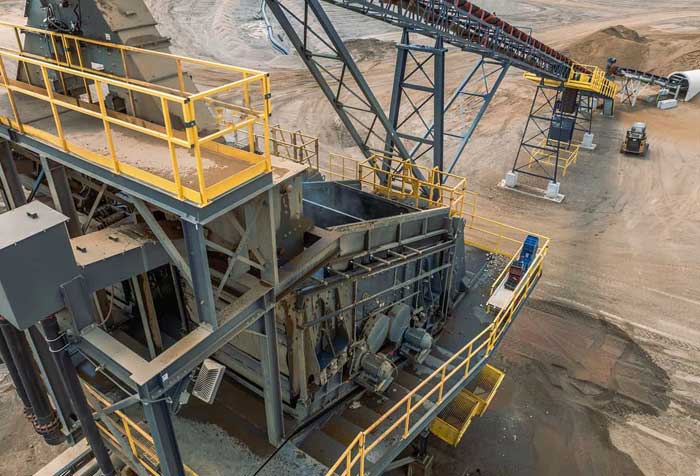
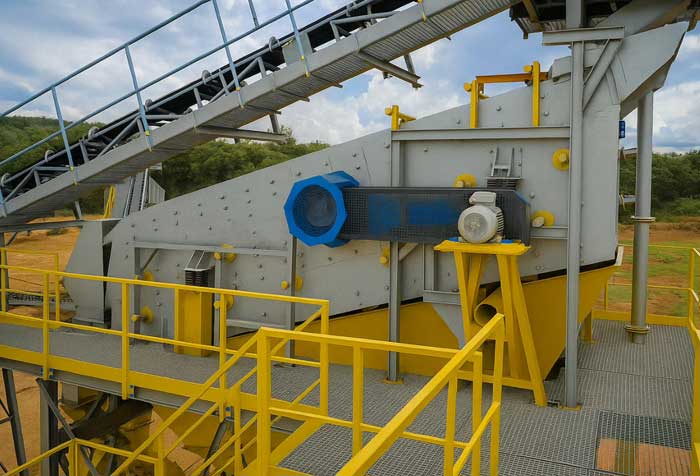
AGICO Cement | Circular Vibrating Screen Projects
AGICO Cement Linear Vibrating Screen Specification
| Models | Screen Face Size(length×width)(mm) | Screen layer | Screen size(mm) | Feeding size(mm) | Capacity(t/h) | Motor power(kw) | Total weight(kg) | Vibration frequency(hz) | Double- amplitude(mm) | Body size |
|---|---|---|---|---|---|---|---|---|---|---|
| ZSG1237 | 3700×1200 | 1 | 4-50 | ≤200 | 10-100 | 5.5×2 | 2250 | 16 | 6-8 | 3800×2050×1920 |
| 2ZSG1237 | 3700×1200 | 2 | 4-50 | ≤200 | 10-100 | 5.5×2 | 3345 | 16 | 6-8 | 3800×2050×2200 |
| ZSG1443 | 4300×1400 | 1 | 4-50 | ≤200 | 10-150 | 5.5×2 | 4100 | 16 | 6-8 | 4500×3040×2500 |
| 2ZSG1443 | 4300×1400 | 2 | 4-50 | ≤200 | 10-150 | 5.5×2 | 4900 | 16 | 6-8 | 4500×3040×2700 |
| 3ZSG1443 | 4300×1400 | 3 | 4-50 | ≤200 | 10-150 | 5.5×2 | 5870 | 16 | 6-8 | 4500×3040×2820 |
| 2ZSG1548 | 4800×1500 | 2 | 5-50 | ≤200 | 15-200 | 7.5×2 | 5836 | 16 | 8-10 | 4800×3140×2814 |
| 3ZSG1548 | 4800×1500 | 3 | 5-50 | ≤200 | 15-200 | 7.5×2 | 6900 | 16 | 8-10 | 4799×3140×3014 |
| 2ZSG1848 | 4800×1800 | 2 | 5-50 | ≤300 | 50-500 | 7.5×2 | 6489 | 16 | 8-10 | 4799×3440×2814 |
| 3ZSG1848 | 4800×1800 | 3 | 5-50 | ≤300 | 50-500 | 7.5×2 | 7750 | 16 | 8-10 | 4799×3440×3014 |
| 4ZSG1848 | 4800×1800 | 4 | 5-50 | ≤200 | 50-500 | 11×2 | 8300 | 16 | 8-10 | 4799×3440×3503 |
| 2ZSG1860 | 6000×1800 | 2 | 5-150 | ≤300 | 80-600 | 11×2 | 9950 | 16 | 8-10 | 6000×3440×3326 |
AGICO Cement Circular Vibrating Screen Specification
| Model | Screen layer | Screen area (m2) | Screen size (mm) | Largest feeding size (mm) | Capacity (m³/h) | Vibration power (r/min) | Double-amplitude (mm) | Motor power (kw) | Leaning angle of screen (°) | Screen face size (mm) | Body size(mm) |
|---|---|---|---|---|---|---|---|---|---|---|---|
| 2YK1225 | 2 | 6 | 4-50 | 200 | 8-60 | 800-970 | 8 | 6P 5.5KW | 20 | 1200×2500 | 2930×1860×870 |
| 3YK1225 | 3 | 9 | 4-50 | 200 | 10-70 | 800-970 | 8 | 6P 5.5KW | 20 | 1200×2500 | 3070×1860×1210 |
| 2YK1230 | 2 | 7.2 | 4-50 | 200 | 12-78 | 800-970 | 8 | 6P 7.5LW | 20 | 1200×3000 | 3430×1860×870 |
| 3YK1230 | 3 | 10.8 | 4-50 | 200 | 13-80 | 800-970 | 8 | 6P 7.5KW | 20 | 1200×3000 | 3570×1860×1210 |
| 2YK1237 | 2 | 8.88 | 4-50 | 200 | 15-86 | 800-970 | 8 | 6P 7.5KW | 20 | 1200×3700 | 4050×1860×870 |
| 3YK1237 | 3 | 13.32 | 4-50 | 200 | 16-90 | 800-970 | 8 | 6P 7.5KW | 20 | 1200×3700 | 4270×1860×1210 |
| 2YK1535 | 2 | 10.5 | 5-50 | 200 | 20-125 | 800-970 | 8 | 6P 11KW | 20 | 1500×3500 | 4120×2210×1230 |
| 3YK1535 | 3 | 15.75 | 5-50 | 200 | 21-125 | 800-970 | 8 | 6P 11KW | 20 | 1500×3500 | 4360×2210×1610 |
| 2YK1545 | 2 | 13.5 | 5-50 | 200 | 22-150 | 800-970 | 8 | 6P 11KW | 20 | 1500×4500 | 5120×2210×1230 |
| 3YK1545 | 3 | 20.25 | 5-50 | 200 | 22-150 | 800-970 | 8 | 6P 15KW | 20 | 1500×4500 | 5360×2210×1610 |
| 4YK1545 | 4 | 27 | 5-50 | 200 | 22-155 | 800-970 | 8 | 6P 15KW | 20 | 1500×4500 | 5930×2210×2060 |
How to Choose the Right Vibrating Screen for Lime Processing?
According to your material type(limestone, quicklime, hydrated lime), particle size and mesh requirement, moisture content, capacity and production needs, etc., to select the most reliable vibrating screen.
For fine powder such as hydrated lime, a linear vibrating screen with a sealed design is recommended. For coarse materials like limestone, a circular vibrating screen is more suitable.
| Lime Type | Recommended Vibrating Screen | Description |
|---|---|---|
| Quicklime (Lumps / Granules) | Linear Vibrating Screen / Circular Vibrating Screen | Used for grading |
| Hydrated Lime (Powder) | Sealed Linear Vibrating Screen | Dust-proof and fine screening |
| Lime Milk (Slurry) | High-frequency Screen / Wet Screen | Used for impurity removal |
| Lime Residue Treatment | Dewatering Screen | Solid-liquid separation |
FAQ about Vibrating Screen
Linear vibrating screens are best for fine lime powder, while circular vibrating screens are suitable for coarse limestone.
Using anti-clogging screen mesh and proper vibration settings can effectively reduce blockage.
Yes, with proper design and sealing, vibrating screens can efficiently process fine hydrated lime.
Hydrated lime is commonly screened to 100 mesh, 200 mesh, or 325 mesh, depending on the application. Among them, 200 mesh is one of the most widely used specifications for industrial and chemical processing.
Yes, besides linear and circular vibrating screens, there are also high-frequency screens, dewatering screens, horizontal screens, and grizzly screens, each used for different materials and screening requirements. We can customize various vibrating screens for you!