
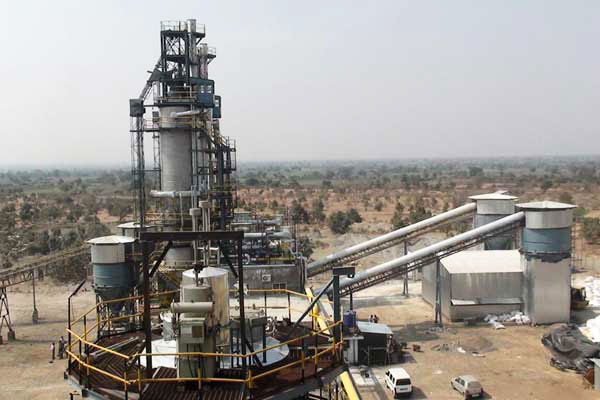
Product: Lime Calcination Plant
Capacity: 50 – 1200 T/D
FUEL: Coal Gas, Natural Gas, Oil Gas and Pulverized Coal
Application: Active Lime Production Line/ Quicklime Production Line/ Hydrated Lime Production Line/ Construction Industry/ Steel Industry/ Chemical Industry/ Agriculture
Calcining Kiln for Lime Calcination Plant: Rotary Lime Kiln, Vertical Lime Kiln, Double Beam Lime Kiln, Twin Shaft Lime Kiln, Annular Shaft Lime Kiln, etc.
AGICO Cement Lime Calcination Plant, Your Reliable Choice!
Advantages of AGICO Cement Lime Calcination Plant
The calcining kiln is a common equipment used for lime calcining plants and producing quicklime. Lime calcination is a process to calcinate limestone into quick lime through a rotary lime kiln or vertical lime kiln. Calcination or calcining is a thermal treatment process used to achieve thermal decomposition. This process occurs below the melting point of the product. Lime (CaO) is one of the oldest chemicals known to humanity, and the lime calcination plant process is one of the oldest chemical industries. There are many advantages of AGICO cement lime calcination plant as follows.
AGICO Cement has more than 20 years experience in producing lime calcination plants.
AGICO Cement offers customized EPC projects for lime calcination.
AGICO cement calcining kilns include both rotary lime kilns and a variety of lime vertical kilns, such as double beam lime kilns, twin shaft lime kilns, annular shaft lime kilns, etc.
We provide comprehensive services ranging from lime kiln design and refractory materials to kiln maintenance and upgrades.
AGICO Cement lime calcination plants offer cost-effective solutions, with engineers designing the most suitable calcination equipment to reduce expenses based on client requirements.
Our lime kilns feature advanced structures and stable operations, utilizing automated control systems, requiring minimal space, and having a low maintenance rate.
The quicklime produced by AGICO Cement lime calcination plants has an activity level exceeding 360 ml and CO2 emissions below 2%.
Our lime calcination plants are energy-efficient and environmentally friendly, capable of using various types of fuel.

Lime Calcination Plant Raw Materials
The main raw material for producing lime is natural rock. Any natural rock with calcium carbonate as the main component, such as limestone, chalk, dolomite limestone, etc., can be used to produce lime. The most common raw material for lime calcining plants is limestone. The main component of limestone is calcium carbonate, which is an important raw material for calcining lime. The content of limestone minerals determines the content of calcined lime, so the selection of limestone varieties greatly influences the calcination quality. High-quality limestone should have a high calcium carbonate content and less impurities, and the calcium carbonate content is generally required to be above 50%.
Limestone can be used for calcining lime and making cement, steel, glass, and chemicals. Limestone can also be used for fertilizers and food additives after grinding.
The different properties of limestone have a great influence on the processing method. Therefore, it is very important to understand the comprehensive information of limestone, such as physical and chemical properties, combustion characteristics, and kinetic parameters of calcination, for the optimal design and operation of lime kilns.


Agico Cement is a professional manufacturer of lime calcination plant. We provide all the equipment for lime calcination plant process with capacities ranging from 50 to 1200 T/D. We offer services of custom design, quality control, low cost, strong manufacturing ability and so on. If you have any needs, please feel free to contact us!
Energy Consumption of Different Lime Kilns
As we all know, various lime kilns are suitable for the lime production line, but how to choose the most proper lime kiln? Customers should consider so many factors, among them, energy consumption is one of the important factors to pay attention to. Based on the data from the Lime Association report, the energy consumption of various lime kiln processes is compared as follows:
| Lime Kiln Type | Mechanical Vertical Kiln | Shaft Kiln | Rotary Kiln | Maerz Kiln | Fuchs Kiln | Gas-fired Vertical Kiln |
| Process Energy Consumption (kg standard coal/t lime) | 130 | 137 | 149 | 127 | 160 | 195 |
It is evident that, except for the mechanical vertical kiln (which is not an active lime kiln) and the Maerz kiln, the energy consumption of other kiln types is higher than that of the shaft kiln. The rotary kiln is only suitable for producing small particle size lime (10-40mm). Therefore, after comparing advanced vertical kilns such as the shaft kiln, Maerz kiln, and Fuchs kiln, using a shaft kiln for lime production line is the optimal choice. Agico Cement offers all famous shaft lime kilns like twin shaft lime kilns, annular shaft lime kilns, double beam lime kilns, vertical lime kilns, and so on. So we are your reliable company when you begin your business with the lime production line.
Lime Production Process
Lime commonly contains different types, such as ordinary lime, which is primarily composed of calcium oxide, high-magnesium metallurgical lime containing higher levels of magnesium, and active lime. Lime calcination plants mainly produce active lime through high-temperature calcination. The calcined process involves heating limestone in a rotary lime kiln or vertical lime kiln at high temperatures to decompose it into quicklime and carbon dioxide.
1. Raw Materials Crushing & Screening
Generally, choose high-purity limestone, typically containing very few impurities. Break the limestone into suitable particle sizes for calcination and ensure uniform particle size through screening. During this step, the necessary equipment contains jaw crushers which are used for the initial crushing of limestone, impact crushers, or cone crushers which are used for further crushing of limestone. Vibrating screens, which are used for screening the crushed limestone to ensure uniform particle size, are also necessary.
2. Calcination Process
Take a rotary lime kiln as an example, limestone is preheated in a preheater by kiln gases at approximately 1150°C to around 900°C. It is then evenly fed into the rotary kiln, where it rotates clockwise and remains for about 20-30 minutes. The entire calcination process occurs at high temperatures, typically between 1300-1450°C. At these high temperatures, calcium carbonate in the limestone decomposes to release carbon dioxide and produce calcium oxide, while the limestone is sintered into quicklime.
3. Cooling and Grinding
The calcined quicklime is rapidly cooled to prevent it from reacting with carbon dioxide in the air to form calcium carbonate. Typically, rotary coolers or vertical coolers are used to quickly cool the calcined quicklime. The grinding stage involves grinding the cooled quicklime into a fine powder to meet the requirements of specific applications.
4. Screening and Classification
Screening and classifying the quicklime powder ensures product purity and uniform particle size distribution to meet market demands. Vibrating screens are used to screen the ground quicklime powder. Air classifiers are used for fine classification of quicklime powder, ensuring uniform particle size.
Successful Cases of Lime Calcination Plant
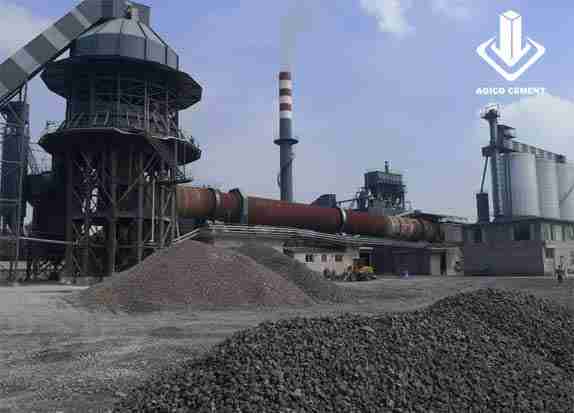


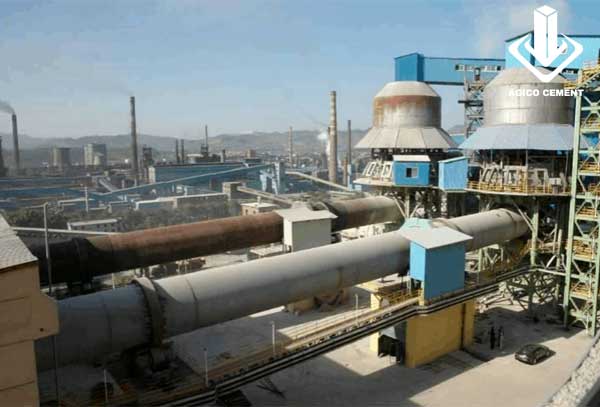
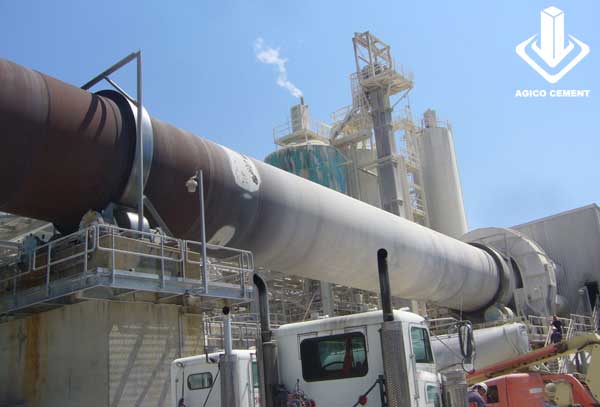


Factors Affecting Lime Kiln Calcination Processes
- Calcination Temperature: The calcination speed of limestone is closely related to temperature. The appropriate kiln temperature depends on limestone density, particle size, and purity. Limestone decomposes at around 898°C, with rapid decomposition occurring above 925°C. At 900°C, the decomposition rate is 3.3 mm/h, at 1000°C, it is 6.6 mm/h, and at 1100°C, it is 14 mm/h. Increasing the temperature accelerates decomposition, but temperatures above 1100°C can cause over-burning, enlarging lime crystals and reducing activity. So, the temperature is typically controlled around 1050°C.
- Particle Size: The decomposition speed depends on the particle size of the limestone. Larger particles burn more slowly because calcination starts at the surface and diffuses inward. Particle size affects both the calcination time and the occurrence of issues like under-burning or over-burning. Limestone particles should generally be between 25-55 mm, with fluctuations not exceeding 10%.
- Calcination Time: Extended calcination time increases the degree of limestone decomposition, but excessive time reduces lime activity due to crystal growth and reduced porosity. Therefore, calcination time should be optimized based on temperature, with each temperature having an ideal residence time.
- Fuel Particle Size and Ratio: The fuel ratio critically impacts limestone calcination. Insufficient fuel leads to inadequate temperature and incomplete calcination, causing under-burning. Excessive fuel can cause clumping. The fuel ratio must be appropriate, and measurement should be accurate, adjusting based on limestone and fuel particle sizes, moisture content, kiln downtime, and variations in lime quality and production.
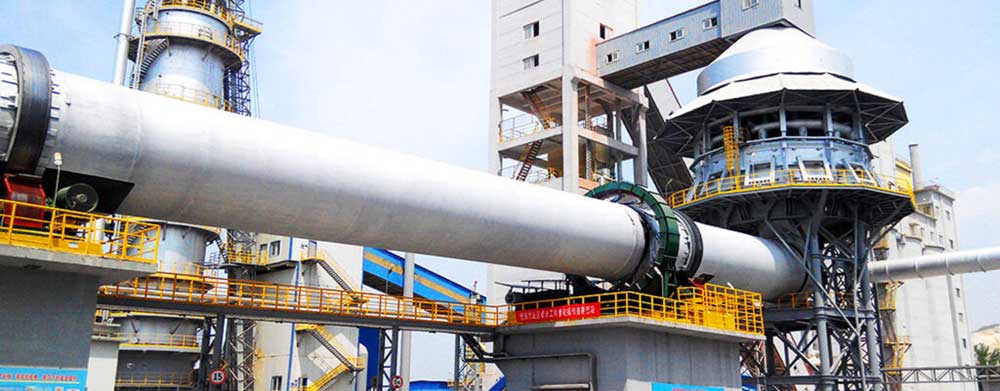
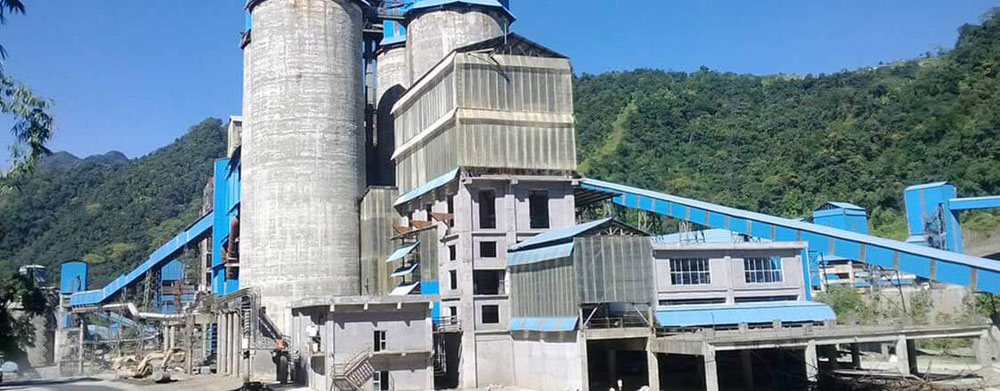
Generally speaking, the most common calcinating equipment is vertical lime kilns and rotary lime kilns, let’s look at the comprehensive comparison of different vertical lime calcination kilns. Please note this table is just for reference, please choose your suitable lime calcination equipment according to your real situation.
| Comprehensive Comparison Of Different Lime Calcination Kilns | ||||
| Item | Twin Shaft Lime Kiln | Annular Shaft Lime Kiln | Double-beam Lime Kiln | Chinese Annular Shaft Kiln |
| Capacity(t/d) | 600 | 600 | 300 | 300 |
| Unit Heat Consumption(KCal/kg) | 850-900 | 900 | 1050 | 1020 |
| Fuel Consumption(Nm³) | 1000-1058 | 1058 | 1235 | 1200 |
| Power Consumption(kw/t) | 38 | 38 | 40 | 35 |
| Gas Pressure Requirement(Kpa) | -50 | -17 | -17 | -15 |
| Kiln Chamber Working Pressure | positive pressure 40Kpa | negative pressure | calcination zone with negative pressure on the upper part and positive pressure on the lower part | positive pressure |
| Raw Material Minimum Size(mm) | 25 | 30 | 30 | 20 |
| Lime Activity(ml) | ≥360-400 | ≥360 | ≥320 | ≥320 |
| Overheat Rate(%) | ≤5 | ≤5 | 8-10 | ≤10 |
| Annual Working Days | 340 | 335 | 330 | 330 |
| Complexity of Refractory Material | complex connection structure | complex arch structure | simple | simple |
| Staffing(three shifts) | 21 | 21 | 21 | 16 |
| Control Degree of Exhaust Gas Oxygen Content | easy | more difficult | difficult | easier |
| Automation Degree | high | high | middle | high |
| Investment Cost | $5,469,487 | $4,785,801 | $2,392,901 | $1,640,846 |
The cost is only for reference. When involved in the lime calcination plant process, there are many factors, like equipment configuration, lime capacity, different technology, various fuels, etc. Please get in touch with us if you need a customization service.