
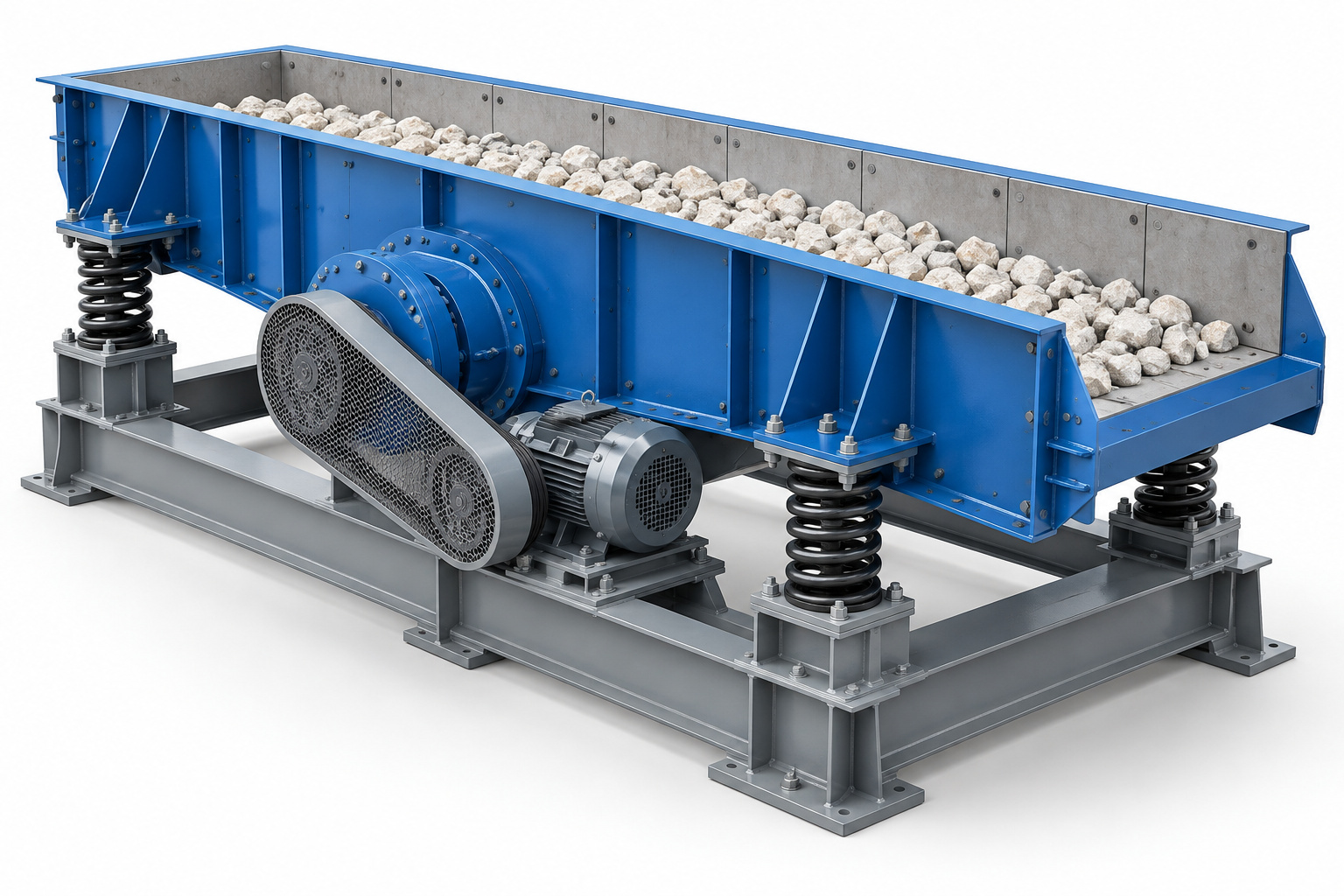
Vibrating Feeder Machine for Lime Production
An uneven supply of limestone can leave a crusher running nearly empty one minute and overloaded the next. A vibrating feeder machine controls the transfer from a receiving hopper or storage bin, keeping material moving at a rate the next machine can handle. For a lime plant, this is a practical way to organize the raw-material preparation section before stone reaches the kiln feed system.
AGICO Cement supplies vibrating feeding equipment during the solutions of lime production line. Discuss your limestone size, required hourly throughput and existing hopper arrangement with our team. Our engineers will offer you the most suitable vibrating feeder. Please note that the feeder, discharge opening, supporting structure and downstream equipment need to work as one installation, whether you are building a new plant or replacing an unreliable feeding station.
Get a Quote!Issues Should Know about Feeding in Daily Operation
A steadier load on downstream equipment
The aim is a manageable material stream across the operating range. During selection, compare the feeder output with the crusher or conveyor capacity, not just the largest number in a catalogue. Leave enough control range to reduce feed when the receiving equipment approaches its limit.
Wear protection suited to limestone
The loading zone and discharge end face different wear conditions. Specify replaceable liners where practical and confirm how they will be removed. For abrasive stone or a high drop height, ask for the proposed liner material and thickness, fastening arrangement and access requirements rather than assuming that every model uses the same wear package.
A drive configuration matched to the duty
AGICO offers mechanical vibrating feeders with exciter drives. Where adjustable feeding is required, specify the control arrangement in the quotation. A variable-frequency drive must operate within the feeder manufacturer’s approved range; changing frequency without regard to the machine dynamics is not an acceptable commissioning method.
Dust control at the actual release points
Dust often escapes where limestone leaves the hopper or drops onto the next conveyor. An enclosure or extraction connection can be included in the layout, with flexible connections that allow the feeder to move. Access doors should remain usable after ducting, cable trays and nearby structures have been installed.
Service access designed before installation
A compact layout still needs room for inspection and component removal. Check access to the exciter, motor, springs and liners on the general arrangement drawing. Providing this space before fabrication is usually easier than modifying a working feeding station later.
How the Vibrating Feeder Works
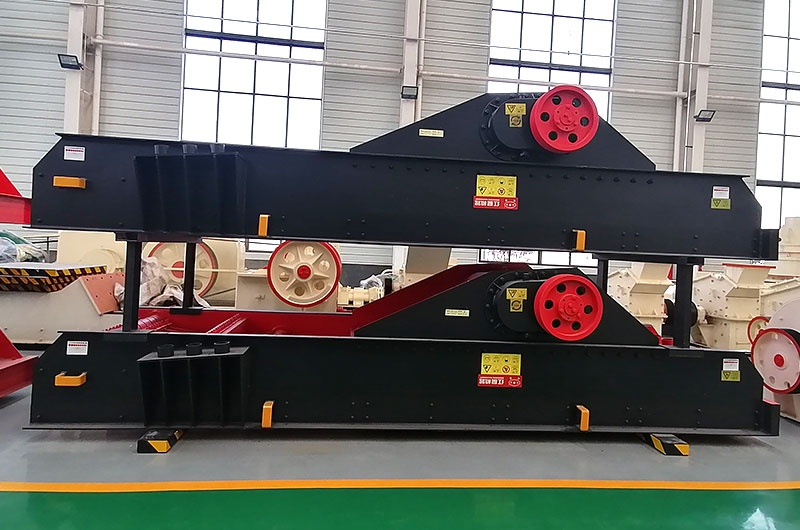
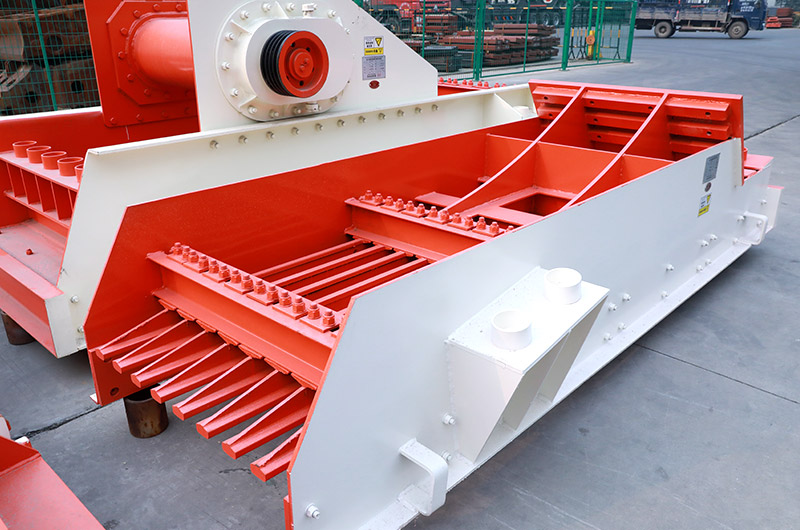
The drive creates a repeating directional force that moves the trough on its isolation springs. In a twin-shaft mechanical arrangement, synchronized counter-rotating eccentric shafts generate the excitation. Limestone advances along the trough through successive short movements and leaves the discharge end as a continuous stream.
For projects specifying a vibrating screen feeder, a grizzly-section configuration can be considered within the feeding station. The quotation should define the trough arrangement and the route for any material passing through the bars. Our starting point remains the required limestone feed rate and the equipment receiving it.
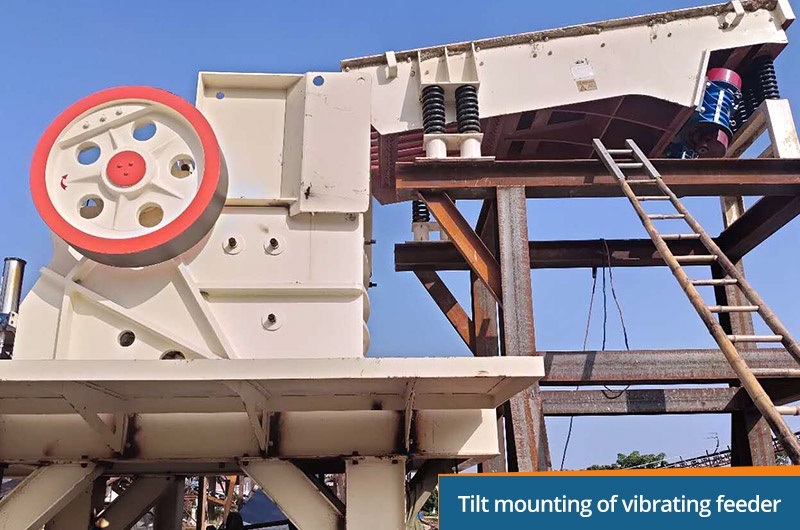
The installation angle, material bed depth and drive settings influence how much stone moves forward. The springs and supporting frame are part of the engineered system. They should not be altered simply to increase output. The final arrangement also needs clearance between the moving feeder and stationary hopper skirts, covers and discharge chutes.
Design the Vibrating Feeder Hopper Together with the Machine
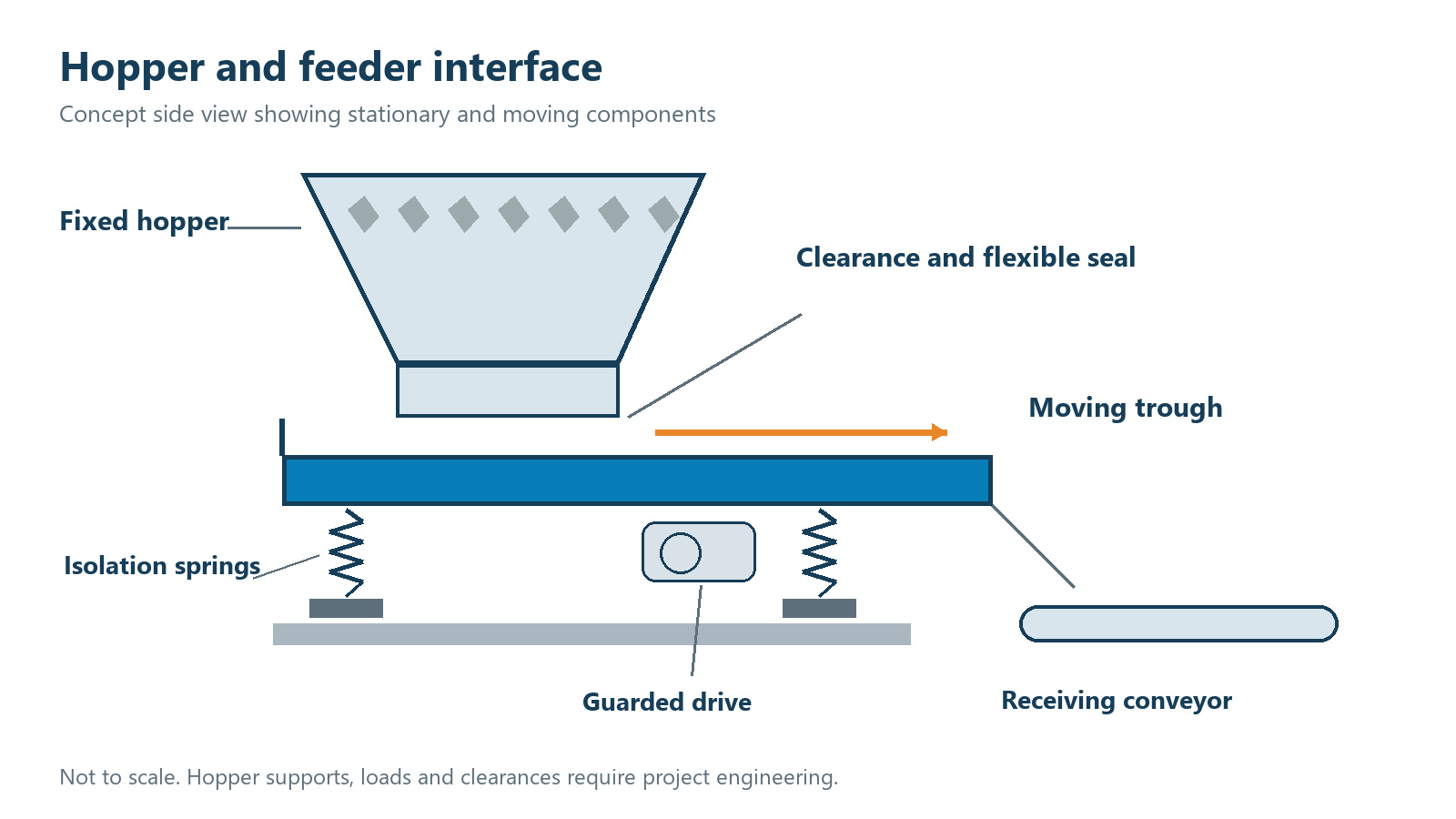
The vibrating feeder hopper is more than a storage volume above the trough. Its outlet determines how the feeder receives material. A narrow opening can starve part of the tray; an unsuitable transition can allow material to hang up or place excessive load on the feeder. Send the hopper drawing with your enquiry, even when you only intend to replace the machine beneath it.
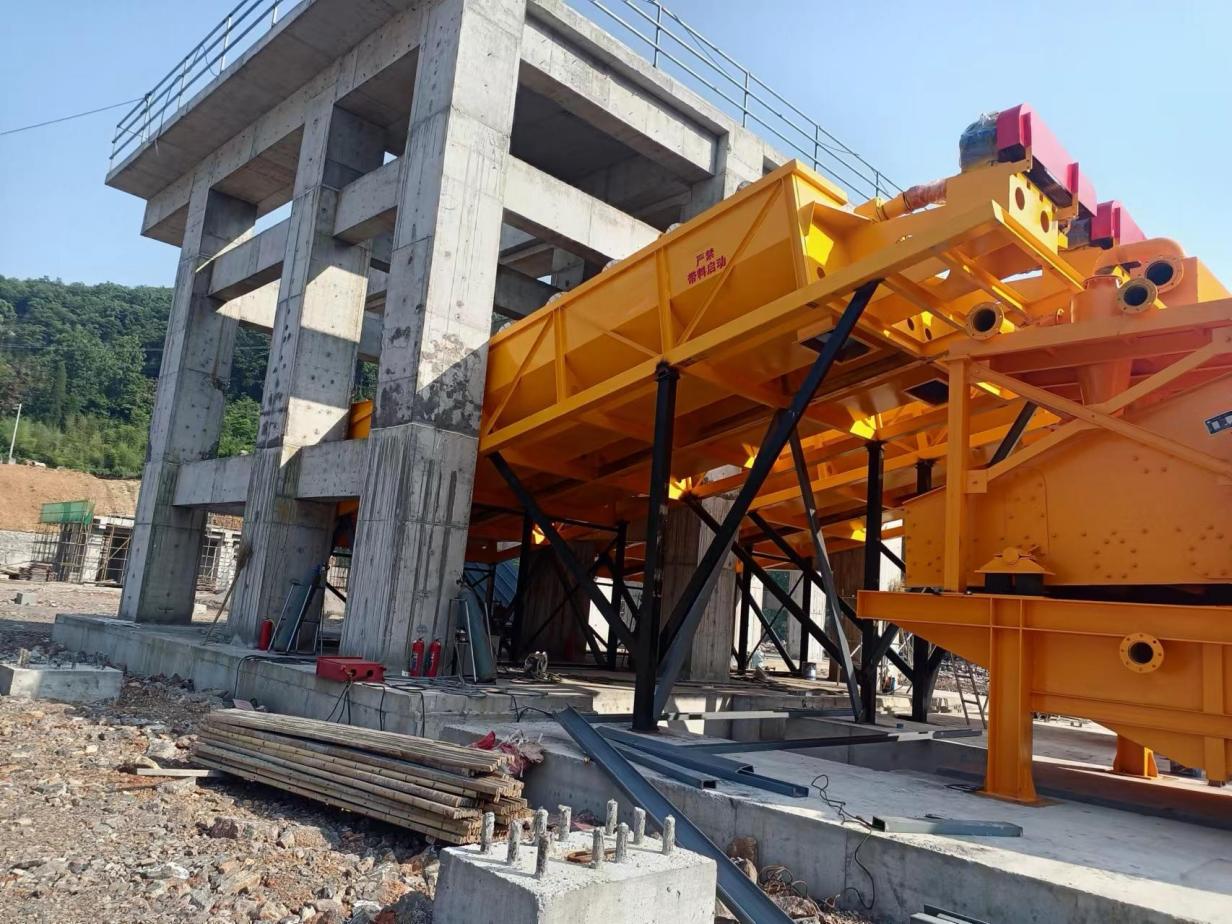
For a new installation, confirm the usable storage capacity, loading method, outlet dimensions and material head above the feeder. For a retrofit, include photographs of the outlet, existing supports and discharge connection. Note whether stoppages occur with wet stone, at low hopper level or immediately after a fresh load. These details help identify whether the difficulty lies in feeder selection, material flow or the surrounding layout.
Hopper supports and feeder supports require a coordinated structural design. Flexible skirts or seals must not bind the moving trough. Where a maintenance isolation gate is required, its operation and access should be defined separately from normal feed-rate control. Do not depend on the feeder alone to hold back stored material during maintenance.
Consistent Limestone Feeding Where Your Plant Needs It
Receiving hopper to primary crusher
At the front of the plant, loaders or trucks deliver stone in batches. The feeder withdraws limestone from the receiving hopper and supplies the limestone crusher continuously. Selection should account for the largest lumps, the impact at the loading point and the crusher inlet geometry. A generous headline capacity is of little use if the hopper throat restricts the actual flow.
Buffer storage to the preparation line
A buffer hopper allows the preparation section to operate between deliveries. A feeder beneath it gives operators a controllable discharge point instead of relying on an unrestricted gravity chute. This arrangement is useful when a conveyor or another process needs a steady supply despite irregular loading upstream. The feeder duty should be specified for both a nearly full hopper and a low material level.
Transfer toward kiln feed storage
After crushing and sizing, a suitable feeder can transfer prepared stone from intermediate storage to the conveying system. Match this duty to the receiving belt and the kiln feed storage arrangement. In a rotary lime line, that storage and conveying system must fit the requirements of the vertical preheater. A feeder selected for coarse raw stone should not automatically be reused for every transfer point in the plant.
Typical material route
Receiving hopper → vibrating feeder → crushing and sizing → prepared stone storage → transfer feeder and conveyor → kiln feed system.
AGICO Vibrating Feeder Specifications
The following ZSW models provide a starting point for coarse limestone feeding before crushing. Smaller transfer duties require a separate selection; these models should not be treated as a universal range for every lime plant.
| Model | Maximum feed size mm | Catalogue capacity t/h | Motor power kW | Trough L × W mm |
|---|---|---|---|---|
| ZSW-280×85 | 450 | 100–160 | 7.5 | 2800 × 850 |
| ZSW-380×95 | 500 | 160–230 | 11 | 3800 × 950 |
| ZSW-490×110 | 580 | 200–300 | 15 | 4900 × 1100 |
| ZSW-590×110 | 600 | 200–300 | 22 | 5900 × 1100 |
| ZSW-490×130 | 750 | 400–560 | 22 | 4900 × 1300 |
| ZSW-600×130 | 750 | 400–560 | 22 | 6000 × 1300 |
Parameter note: These are catalogue reference values, not a guaranteed limestone duty. Final capacity depends on bulk density, particle distribution, moisture, hopper loading, installation geometry and the selected drive. Confirm the maximum lump size, operating range, dimensions and power in the project quotation. Feeder capacity in t/h refers to handled material, not finished quicklime output in tonnes per day.
Materials the Vibrating Feeder Can Handle
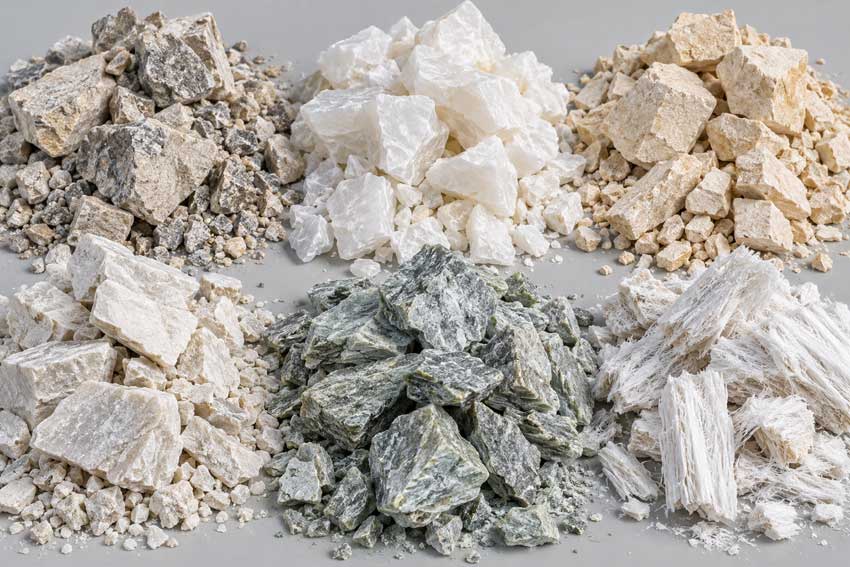
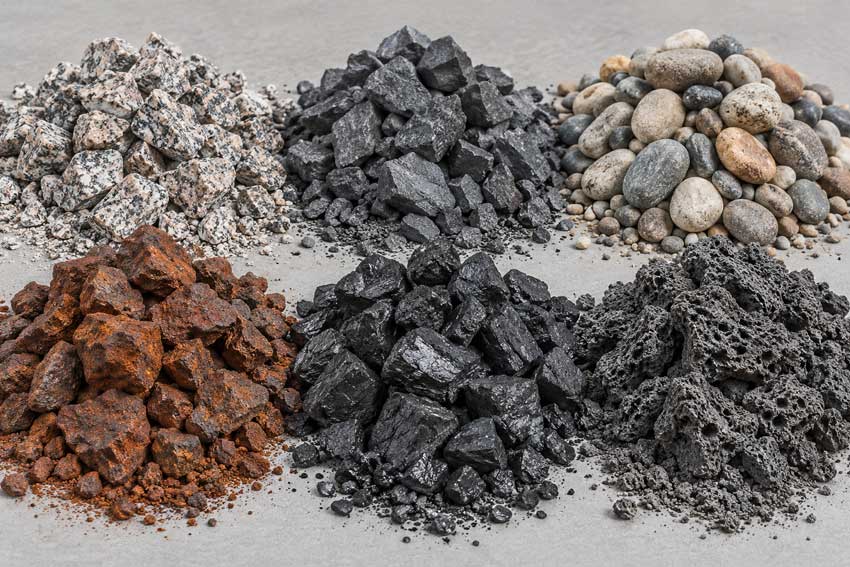
The vibrating feeder, also called a vibratory feeder, can handle bulk and granular materials, including limestone, calcite, dolomite, barite, talc, gypsum, quartz stone, river pebbles, granite, basalt, construction waste, iron ore, coal, and slag.
It is widely used in crushing and screening systems at steel plants, coal plants, foundries, and sand and gravel plants. It is also used in cement and aggregate production, glass and ceramics manufacturing, construction waste recycling, building materials, chemicals, and mineral processing.
Choose the Feeding Arrangement Around the Material
For coarse limestone ahead of a primary crusher, the review should emphasize impact loading, trough strength and compatibility with the crusher opening. For already-sized stone beneath a buffer hopper, the priorities shift toward reliable withdrawal, the required flow range and a clean transfer to the conveyor. These duties may need different feeder sizes even within one plant.
A belt or apron feeder may deserve evaluation where material characteristics or loading conditions make a vibrating arrangement unsuitable. Ask for the technical reason behind the recommendation and compare the complete installed scope, including supports, drives, access and dust control. The lowest machine price alone does not establish the lowest cost of a reliable feeding station.
For cooled quicklime, disclose the actual material temperature and expected fines. For fine hydrated lime, request a dedicated powder-feeding assessment. Do not apply a coarse-limestone feeder’s published rating to a different material without checking its behaviour and the required containment.
Controls and Commissioning
Define what the feeder must respond to. Useful signals may include downstream equipment availability, conveyor motion, hopper level and crusher load. The control sequence should stop upstream delivery when the receiving route is unavailable. Where the plant requires a measured mass flow, specify the weighing device and feedback loop as part of the package; vibration settings alone are not a mass-flow measurement.
Commissioning should include no-load checks followed by controlled material trials. Record the approved settings, motor current, material condition and observed throughput. Check for contact between moving and stationary parts, unusual vibration and accumulation at transfer points. Use the manufacturer’s operating and maintenance instructions for tightening, lubrication and inspection intervals.
Engineering Support and Lifecycle Service
AGICO Cement can discuss the feeder as part of the wider limestone handling system, including the connection to crushing, storage and conveying equipment. For an existing plant, a useful first review combines the layout with operating observations: where the material accumulates, when feed becomes irregular and which downstream machine sets the production limit.
Ask the proposal to identify the supply boundary clearly. The feeder, hopper, gate, supports, electrical controls, extraction interfaces and installation work may not all be included in a machine-only price. Agree the drawing approval process, commissioning assistance, operator training and initial spare-parts list before ordering. Delivery timing and service arrangements should be confirmed in the commercial offer.
For inspection, request a project-specific quality plan covering agreed material grades, fabrication, dimensions, drive assembly and trial running. Electrical protection, guarding and site compliance requirements should be reviewed for the destination. Avoid leaving these matters to a generic catalogue statement.
Cleaner Operation and Practical Cost Control
Controlled feeding can help avoid repeated overload stops and unnecessary spillage. Those benefits depend on the complete handling route and the way it is operated. Compare electricity use, lost operating hours, cleanup work and wear-part replacement against the existing station when assessing an upgrade. A fixed energy-saving percentage would not describe every installation accurately.
Dust containment should suit the material and site conditions. For quicklime duties, the dust-control method must account for its reaction with water. Plan safe access and isolation for clearing blockages; personnel should never reach into an operating feeder or enter a loaded hopper to restore flow. Operating procedures and protective equipment need to follow the site’s risk assessment.
Frequently Asked Questions
Send the material name, minimum and maximum required feed rates, bulk density, largest lump, size distribution and moisture range. Add the hopper drawing, loading method, available installation space and details of the receiving machine. An existing equipment nameplate is helpful but does not replace the process information.
An appropriate drive and controller can provide adjustment within the approved operating range. Specify the required minimum and maximum rates and whether adjustment will be manual or linked to plant signals. Confirm the achievable range with the proposed feeder rather than assuming that one machine can cover every output.
Often it can be considered, but the outlet and supports need review. Provide drawings or measured dimensions and photographs. If flow problems originate in the hopper transition, replacing only the feeder may leave the original difficulty unresolved.
Yes, a correctly selected feeder can serve the limestone preparation and transfer stages of the line. Its location must fit the storage and conveying arrangement. Final kiln charging, sealing and weighing requirements remain part of the kiln-system design.
Capacity and feed size are only part of the cost. Hopper and support steelwork, liner specification, controls, enclosure, instrumentation and installation scope also matter. A quote based on the actual duty gives a more useful comparison than a price attached to an unspecified model.
Send your required limestone throughput, feed-size range and hopper layout to AGICO Cement. Include photographs if this is a replacement project. Ask for a feeder recommendation, preliminary arrangement and itemized supply scope so your engineering team can evaluate the installation and budget together.