

Product: Ultra fine powder grinding machine
Feed Size: ≤40 mm
Output Size: 0.015–0.25 mm (60–800 mesh)
Capacity: 0.4-40 t/h
Agico Cement Ultra Fine Grinding Mill Advantages
In today’s industrial field, ultra fine grinding mills have become an important tool for many key processes. It is the update of Raymond Mill. This advanced powder grinding machine has won the favor of the industry with its excellent performance and wide range of applications. Ultra fine grinding mills are mainly divided into wet ultra fine grinding mills and dry ultra fine grinding mills according to different grinding methods. They impact and grind the materials through the hard balls installed inside to achieve the refinement of the materials. Ultra fine grinding mill is widely used in the grinding of various ores and metals, the preparation of cement and ceramic materials, etc. AGICO Cement Ultra fine grinding mill is a new type of efficient fine powder and ultrafine powder processing equipment developed by our company’s technology research and development center after years of concentrated research and development with foreign technology. It is mainly suitable for non-flammable and explosive brittle materials with medium and low hardness (Mohs hardness <6) and moisture content less than 5%, such as calcite, limestone, kaolin, chalk, talc, mica, magnesite, alum stone, graphite, phosphate rock, potash ore, etc. It is currently the better choice for ultrafine grinding of non-metallic minerals.
AGICO Cement ultrafine grinding mill can greatly improve grinding efficiency and energy utilization while ensuring product quality. It can grind large pieces of materials into ultrafine powder in a short time, improve the crushing ratio, and thus increase production.
According to different needs, the fineness of the grinding can be adjusted, the particle size is uniform and fine, and the fineness of the finished product can be easily adjusted between 5-38μm. Products of different fineness can better meet market demand and improve corporate competitiveness.
The grinding roller and grinding ring are made of special wear-resistant steel, and the service life is increased. The main engine base adopts an integral casting structure, which not only ensures the structural strength, but also has good shock absorption performance. Compared with traditional mills, ultra fine grinding mills have lower energy consumption and generate less dust.
The ultra fine grinding mill has a simple structure, a high degree of automation, and is easy to operate. Regular maintenance can significantly increase the service life of the grinding mill. It can handle a variety of materials, including ores, chemical products, food, etc.
About Ultra Fine Grinding Mill
The ultrafine grinding mill is an upgraded version of the Raymond mill, mainly used to produce ultrafine powder, which can usually grind materials to smaller particle sizes. It is suitable for materials that require high fineness and uniformity.
Ultrafine grinding mill usually grinds materials through high-speed rotating grinding discs or grinding rods. After the material enters the feed port, it undergoes multiple collisions, shearing, and friction, and is finally ground into ultrafine powder. Grinding is generally carried out by airflow, mechanical, or wet methods.


Ultra Fine Grinding Mill Working Process
Material pretreatment
Crushing: Before entering the ultrafine mill, large pieces of material need to be crushed to reduce their particle size to a size suitable for the ultrafine mill feed port. Generally, jaw crushers, hammer crushers, and other equipment are used for primary crushing to break the material into smaller blocks or particles25.
Impurity removal: Remove impurities in the material, such as iron blocks and stones, to prevent these impurities from entering the mill and damaging the equipment. Magnetic separators, vibrating screens, and other equipment are usually used for impurity removal.
Drying: If the humidity of the material is high, it needs to be dried to reduce the moisture content of the material. Because materials with too high humidity are easy to adhere to the inside of the equipment during the grinding process, affecting the grinding effect and the normal operation of the equipment. Commonly used drying equipment includes dryers, hot air furnaces, etc.
Material feeding
Feeding: The pretreated material is evenly fed into the grinding chamber of the ultrafine mill through the feeding device. The feeding device needs to ensure a continuous and stable supply of materials. Common feeding equipment includes electromagnetic vibrating feeders, screw feeders, etc. For example, the electromagnetic vibrating feeder can accurately deliver the materials to the grinding mill according to the set frequency and amplitude.
Distribution: The materials entering the grinding chamber need to be evenly distributed on the grinding disc or grinding roller so that they can be fully ground. Some ultrafine grinding mills are equipped with distribution devices at the feed inlet, such as distribution plates, distribution discs, etc., which can make the materials fall evenly on the grinding disc or grinding roller.
Grinding
Grinding: In the grinding chamber of the grinding mill, the materials are crushed by the grinding and friction of the grinding roller or grinding disc. The grinding roller or grinding disc rotates at high speed driven by the motor, generating strong centrifugal force and extrusion force so that the materials are repeatedly squeezed, sheared, and ground between them.
Layered grinding: For some ultrafine grinding mills with multiple layers of grinding rollers or grinding discs, the materials will be ground multiple times between different layers, thereby improving the fineness and uniformity of the grinding. The speed and gap of each layer of the grinding roller or grinding disc can be adjusted according to the characteristics of the material and the grinding requirements.
Circulation grinding: If the fineness of the material after one grinding does not meet the requirements, it will return to the grinding chamber for re-grinding under the action of airflow or mechanical device until the specified fineness is reached.
Classification
Wind classification: Use airflow to blow up the ground material and pass it through the classifier. The classifier is equipped with a rotating impeller or blade, which generates different centrifugal forces and buoyancy under the action of airflow according to the size and weight of the material particles. The material particles with qualified fineness can be carried by the airflow and enter the subsequent collection device, while the material particles with unqualified fineness fall back to the grinding chamber due to gravity and continue to be ground.
Mechanical classification: Some ultrafine grinding machines use mechanical screening to classify, screen the material through screens with different apertures, screen out the material that meets the fineness requirements, and return the unqualified material to the grinding chamber.

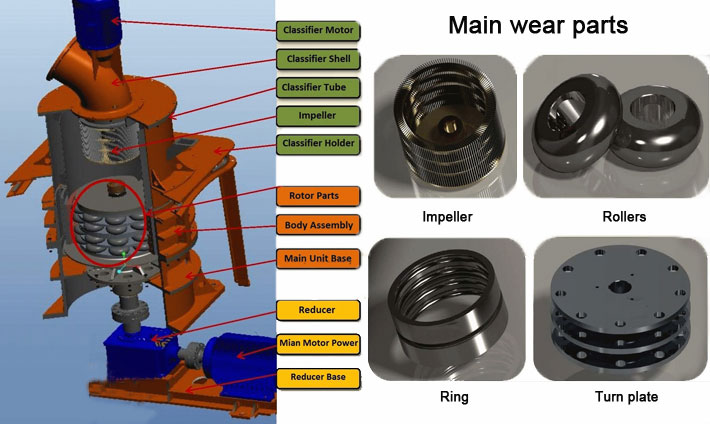
AGICO Cement ultrafine grinding mill can easily handle materials with high hardness, such as iron ore, granite, etc. Whether it is a large or small production scale, the ultrafine grinding mill can meet the needs. The ultrafine grinding mill can grind materials to the nanometer level to meet the production needs of various fine products. Welcome customers come to visit AGICO Cement!
How to Choose Ultra Fine Grinding Mill?
Clarify production needs
- Output requirements: Determining the output you need is the basis for selection. If it is large-scale production, you need to choose large equipment with high output. If the output requirement is relatively small, you can consider a small or medium-sized ultrafine grinding mill. For example, some large non-metallic mineral processing plants require high-output equipment to meet production needs and may choose large ultrafine grinding mills with an output of tens of tons per hour, while small processing plants or laboratories have lower output requirements, and equipment with a few kilograms to several tons per hour can meet the needs.
- Fineness requirements: Different application scenarios have different requirements for the fineness of materials. Understand how fine a particle size you need to grind the material to choose a suitable grinding mill model. Generally speaking, the fineness that an ultrafine grinding mill can achieve is between a few microns and tens of microns. For example, for some high-end ceramic material production, it may be necessary to grind the material to a very fine particle size, which requires the selection of a high-precision ultrafine grinding mill that can meet the fineness requirements.
Consider the material characteristics
- Hardness: The hardness of the material has a great influence on the selection of the grinding mill. Materials with high hardness need to choose a grinding mill with good wear resistance and high power to ensure the service life and grinding effect of the equipment. For example, when grinding hard ores, it is necessary to choose an ultrafine grinding mill with high-strength grinding parts, while for materials with lower hardness, such as limestone, gypsum, etc., ordinary ultrafine grinding mills can be selected.
- Humidity: If the humidity of the material is high, it is easy to adhere to the inside of the equipment during the grinding process, affecting the grinding effect and the normal operation of the equipment. Therefore, for materials with high humidity, it is necessary to choose a grinding mill with good moisture resistance or capable of adapting to high humidity environments and consider whether the equipment is equipped with an effective drying device.
- Viscosity: Some materials have high viscosity and are easy to agglomerate in the grinding mill, resulting in poor material discharge. For such materials, it is necessary to choose a grinding mill with a special structural design or one that can prevent material adhesion, such as equipment with a stirring device or a scraper.
- Chemical composition: The chemical composition of some materials may corrode the parts of the mill. When choosing a mill, consider whether the material of the equipment can resist the corrosion of the material. For example, for some corrosive chemical raw materials, it is necessary to choose a mill made of corrosion-resistant stainless steel or other special alloys.
Evaluate grinding machine performance
- Energy consumption: Energy consumption is an important part of long-term operating costs. Choosing an ultrafine mill with low energy consumption can reduce production costs. When selecting, you can refer to the energy consumption parameters of the equipment and compare them with other models of equipment. Generally speaking, equipment using advanced technology and high-efficiency motors has lower energy consumption.
- Noise and vibration: The noise and vibration levels of the ultrafine grinding mill not only affect the working environment, but may also affect the stability and service life of the equipment. Choosing a mill with low noise and vibration can improve work efficiency and equipment reliability. When actually choosing, you can test the machine on-site to feel the noise and vibration of the equipment.
- Reliability and maintainability: The reliability of ultrafine grinding mills is the key to ensuring continuous production. Choosing a mill with reliable quality, simple structure, and easy maintenance can reduce equipment failures and downtime. You can learn about the manufacturing process, brand reputation, and after-sales service of the equipment to evaluate the reliability and maintainability of the equipment.
Refer to the grinding mill manufacturer and brand
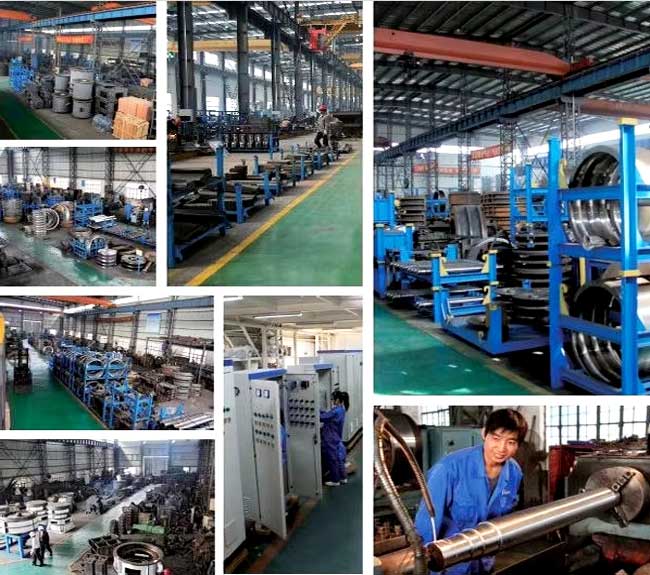
- Manufacturer strength: Choosing a manufacturer with a certain scale and strength can guarantee the quality and after-sales service of the grinding mill. You can understand the strength of the manufacturer by checking the manufacturer’s qualification certificate, production equipment, technical research and development capabilities, etc.
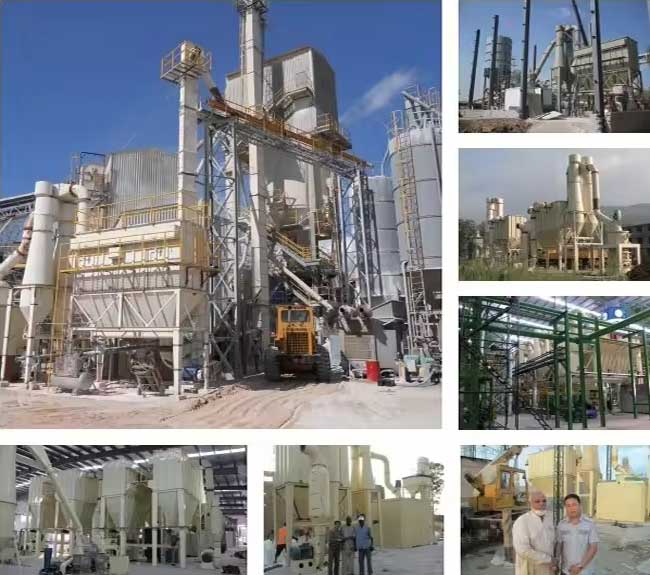
- Brand reputation: Understanding the brand’s reputation and user evaluation in the market can help choose a grinding mill with reliable quality and excellent performance. You can understand the brand’s reputation through online searches, consulting peers, or visiting actual production sites.
- Technical support and after-sales service: Good technical support and after-sales service can promptly solve problems that arise during the use of the grinding mill and ensure the normal operation of the equipment. When choosing an ultrafine grinding mill, you should understand the manufacturer’s after-sales service system, response speed, and whether it provides equipment installation, commissioning, training, and other services.
Ultra Fine Grinding Mill Specifications
| Model | Grinding Disc Diameter (mm) | Grinding Roller Diameter (mm) | Feed Size (MM) | Capacity (t/h) | Power (kW) | Rotation speed (r/min) |
| LM0301 | 320 | 150 | 10 | 0.03-0.1 | 7.5 | 88 |
| LM0806 | 800 | 600 | 30 | 2-54 | 75 | 62 |
| LM1311 | 1300 | 1100 | 40 | 9-15 | 200 | 43 |
| LM1714 | 1700 | 1400 | 42 | 13-32 | 400 | 40 |
| LM2820 | 2800 | 2000 | 65 | 35-80 | 960 | 32 |
| LM3424 | 3450 | 2400 | 70 | 60-100 | 1350 | 30 |