How to solve evcironmental problem of lime kiln
The dust emitted during lime calcination contains a large amount of harmful gas and dust below 10 microns, and the dust contains SO2, F2O3, AIO3 and so on. These harmful gases and dust are very harmful to the human body. If people inhale them for a long time, they will cause respiratory diseases such as bronchus and lungs, especially for young children. Moreover, the dust floating in the air also contains carcinogens. If the average concentration of 24-hour breath Harmful dust exceeding 150mg/m3 will cause fatal harm to human body. The main advantages of the new technology lime kiln are low energy consumption, high output and good quality, and the biggest advantage is that it is convenient for dust removal. Because its entire calcination process is equivalent to being carried out in a sealed container, its flue gas can be discharged from the flue gas pipe on the top of the kiln, purified by dust removal, and then discharged in a harmless and non-polluting standard.
Automatic control is an important feature of the new technology lime kiln. Its feeding, batching, air supply, air supply, and ash unloading are all completed through computer automatic control. However, national conditions, factory conditions and value costs should also be considered. The higher the degree of automation, the better. The final effect should be the principle.
To promote the new technology lime kiln, we must first solve the problem of concept and understanding. It is the need of form, the need of society, and the need of enterprise benefit.
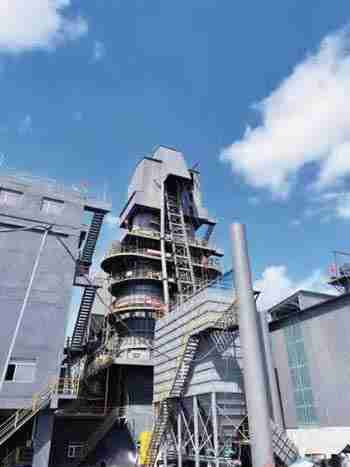
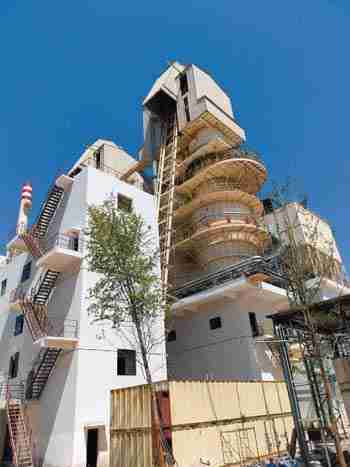
Reducing Power Consumption of Lime Kiln and Improving Environmental Protection
The lime kiln industry has always given people the impression that it is an industry with relatively serious pollution. Therefore, the lime kiln technology continues to develop to improve this perception, develop environmentally friendly and energy-saving products, improve the environment, and let more friends accept that it is no longer a source of pollution.
The environmental protection of lime kilns can be realized in many ways. The first important point is to start from the machinery itself and take improvement measures. Judging from the environment-friendly lime kilns currently in use, this has been done, and the effect is remarkable. Secondly, by reducing the power consumption of the lime kiln, the environmental protection ability is improved, which not only saves energy, but also achieves environmental protection, killing two birds with one stone. In addition, there is a method similar to this, which can also play the same role in the recovery and utilization of kiln gas.
No matter which of the above methods is adopted, the ultimate goal is to realize the environmental protection of the lime kiln, contribute to the improvement of the environment, and thus reflect its own value.
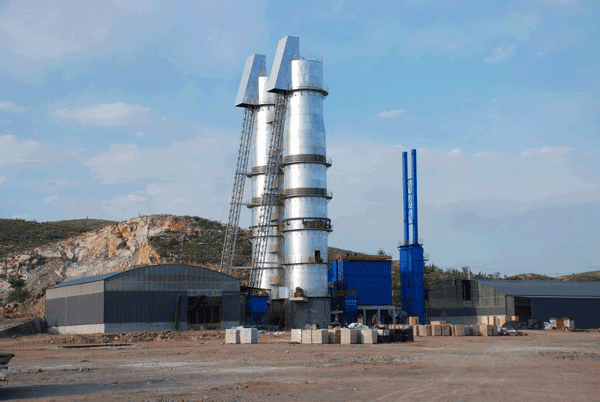
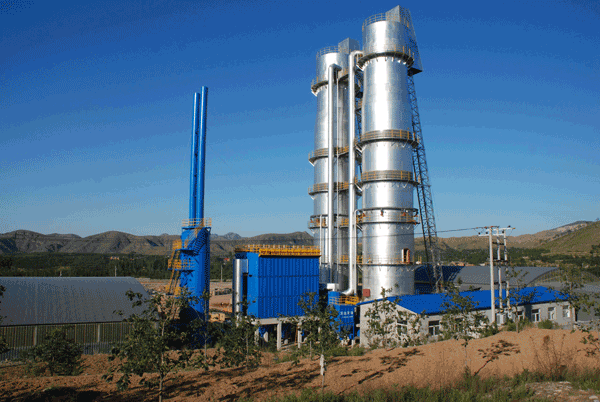
The main task of regular sewage discharge of lime kiln is to discharge the water slag deposited in the kiln, so the regular sewage discharge point should be selected at the part with the highest concentration of water slag, that is, the lowest part of the kiln, such as the following header or the mud drum of the old kiln place.
The amount of regular sewage discharge mainly depends on the quality of the water supply, generally once every 24 hours, but if the kiln feed water is clean condensed water, when the supplementary water is chemically demineralized water or a small amount of softened water, the interval of regular sewage discharge can be greatly extended . The specific interval and operation duration of regular blowdown are determined by the chemical workshop according to the quality of the furnace water.
In actual production, the calcination of lime in the kiln is not ideal. The surface layer of limestone starts to decompose at 810-850°C, and the pores of the inner layer are filled with decomposed CO2 due to the decomposition of CaO on the surface layer. The CO2 content of the inner layer of limestone The pressure is higher than that of the kiln gas, and the decomposition temperature is correspondingly higher. Therefore, the kiln gas can be continuously extracted by the induced draft fan, and the negative pressure operation can be adopted to speed up the decomposition rate of CaCO3, which can shorten the residence time of limestone in the firing zone of the kiln.