Impact Crushers: A Detailed Comparison
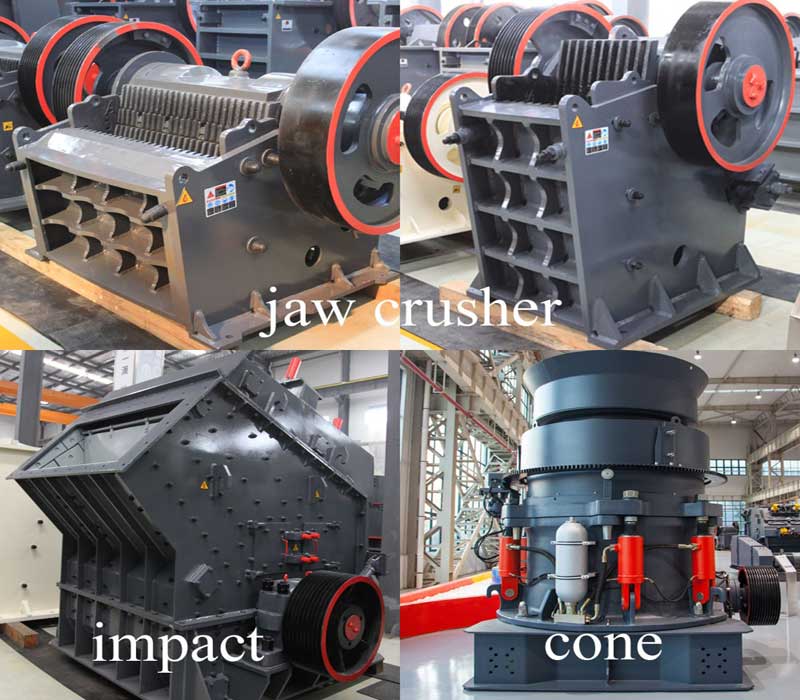
We all know that in lime production lines, limestone crushers are crucial. Among them, the impact stone crusher plays a key role. Depending on the rotor shaft’s position and orientation, impact crushers can be divided into two types: Vertical Shaft Impact Crusher (VSI) and Horizontal Shaft Impact Crusher (HSI).
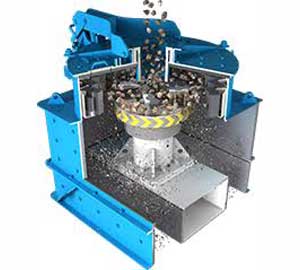
For a vertical shaft impact crusher (VSI), the rotor is vertically installed. Raw materials typically enter the crusher from the top, are accelerated on high-speed rotating blades, and are flung outward along the circular path to collide with fixed materials or liners in the crushing chamber. VSI crushers are mainly used for fine or superfine crushing stages.
While for horizontal shaft impactors, the rotor is horizontally installed. Materials usually enter the crusher from the side. After colliding with the high-speed rotor, the materials are broken and further impacted by the breaker plate in the crushing chamber. Repeated impacts break the materials into smaller particles, which are discharged. HSI crushers are suitable for medium and coarse crushing stages, handling larger material blocks and producing high-yield, uniformly sized products.

Working Principles Comparison
Vertical Shaft Impact Crusher (VSI)
- Stone-on-stone operation
Materials vertically fall into the high-speed rotating impeller. Under centrifugal force, they collide with other materials dispersed around the impeller. After mutual impacts, the materials are crushed multiple times as they form vortices between the impeller and the chamber, finally being discharged in a closed circuit controlled by screening equipment to achieve the desired particle size. - Stone-on-iron operation
Materials enter the crusher through the feed hopper and fall onto the rotating impeller. Accelerated by the impeller, the materials strike the impact liners at high speed, breaking on contact. Rebounding materials collide with those ejected from the impeller for repeated crushing until the qualified products are discharged.
Horizontal Shaft Impactor (HSI)
Driven by a motor, the rotor rotates at high speed. When materials enter the hammering zone, they collide with hammers attached to the rotor and break. The broken materials are thrown against impact plates for further crushing and rebound into the hammering zone for reprocessing. This process repeats through primary, secondary, and tertiary impact chambers until the desired size is achieved and discharged.


Structural Features Comparison
Vertical Shaft Impact Crusher (VSI)
Deep-cavity rotor: Designed to increase throughput by around 30%, significantly boosting production capacity.
Wear-resistant parts: Key components like the impeller, distribution cone, and surrounding protective plates are made of highly durable materials. These parts can be reversed for extended service life, reducing operational costs.
Multi-functional distributor plate: Simple operation enables switching between central feed with cascading feed and fully centralized feed, catering to different production needs.
Ease of maintenance: Equipped with a hydraulic opening mechanism, making inspections and maintenance efficient and cost-effective.
Horizontal Shaft Impactor (HSI)
Rotor structure: Usually cast from integrated steel for durability and easy hammer installation. Lighter or smaller rotors can be welded from steel plates.
Varied impact plates: Common designs include zigzag and arc-shaped plates. Zigzag impact surfaces promote near-perpendicular impacts for efficient crushing, while arc-shaped surfaces enhance rebound impacts for better crushing results.
Diverse hammer materials and shapes: Made from high-chromium cast iron, high-manganese steel, or other wear-resistant alloys. Hammer shapes include strip, T-shape, S-shape, and grooved types, prioritizing reliability, easy installation, and increased metal utilization.


Performance Advantages Comparison
Vertical Shaft Impact Crusher (VSI)
- High crushing ratio
Efficiently reduces larger materials into smaller particles, minimizing post-processing workload. - Uniform product size
Precise designs and adjustments ensure evenly sized outputs, reducing over- or under-crushing and improving product quality. Products are cubical, with low needle content and ideal grading, meeting stringent construction sand standards. - Low wear and long lifespan
Protective material layers reduce wear, with parts made of high-durability alloy materials lasting 6–8 times longer than traditional manganese steel. - Eco-friendly design
A closed system minimizes dust pollution. A unique internal air circulation system reduces environmental impact. - Multi-functionality
A unique feed-crushing structure allows easy transitions between “stone-on-stone” and “stone-on-iron” crushing, making it versatile for artificial sand production, shaping, and abrasive material processing.
Horizontal Shaft Impactor (HSI)
- Product shape and size
Produces cubical particles with uniform sizes, enhancing quality and usability for construction and road projects. - Energy efficiency
It utilizes impact crushing, which is more energy-efficient compared to traditional compressive crushers. - Crushing ratio
Handles materials up to 500mm in size with compressive strengths of up to 350 MPa. Its high crushing ratio reduces the need for additional processing stages.
Applications Comparison
Vertical Shaft Impact Crusher (VSI)
Metal and non-metal processing: Ideal for iron ore, copper ore, quartz, feldspar, mica, and other ores, improving grade and recovery.
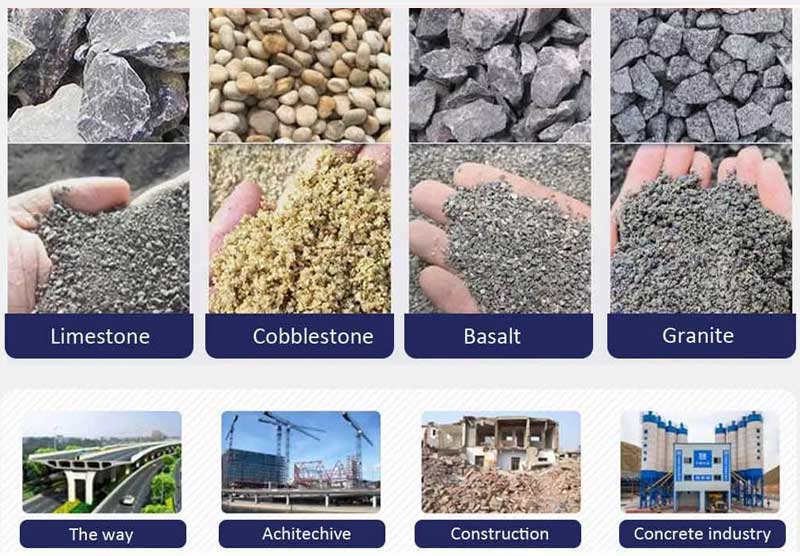
Building materials: Used for crushing limestone, granite, basalt, river pebbles, and more to produce high-quality aggregates for infrastructure projects.
Artificial sand production: Processes various stones into building-grade sand, meeting market demands for quality aggregates.
Metallurgical slag recycling: Crushes slag for reuse, reducing waste and environmental impact.
Horizontal Shaft Impactor (HSI)
Mining: Crushes various ores, including iron, copper, limestone, and granite, preparing them for further processing.
Building materials: Ideal for cement clinker or limestone crushing in cement production and producing aggregates for concrete.
Transportation: Supplies aggregates for highways, railways, and other construction projects.
Hydropower projects: Processes aggregates needed for dam construction and other water infrastructure projects.