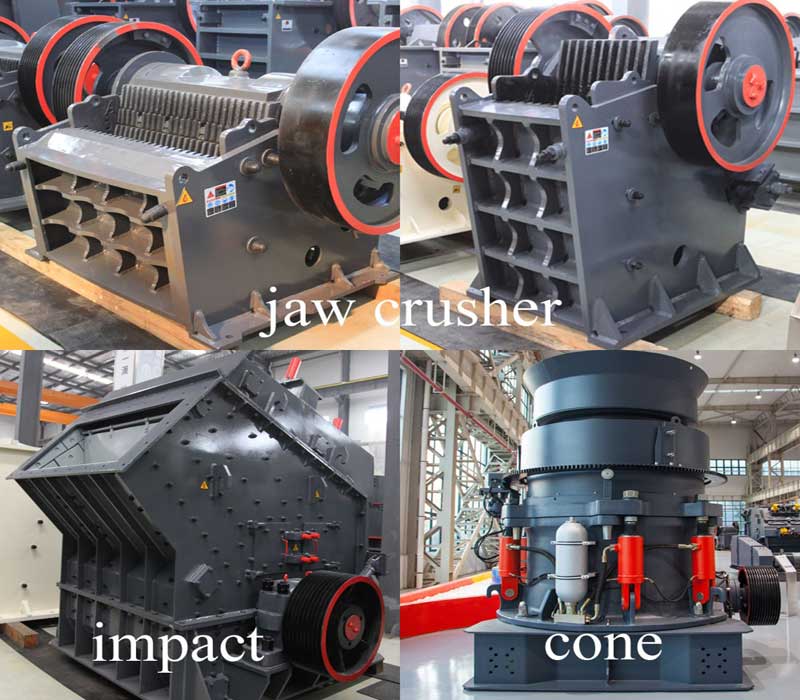
The main causes of ball formation in the rotary kiln are: fluctuations in raw material composition and excessive liquid phase content, unstable feeding leading to fluctuating temperatures in the kiln and decomposition furnace, making it difficult to control, high equipment failure rate and frequent shutdowns, high harmful content such as sulfur, chlorine, and alkali in raw and fuel materials, large fluctuations in coal powder quality and poor homogenization effect, uneven mixing of kiln ash; operator negligence, improper temperature control, or prolonged slow driving. The following measures can be taken to prevent and treat ball formation in the rotary kiln.
Measures to Prevent and Treat Ball Formation in the Rotary Kiln
Preventive Measures of Rotary Kiln
First, an appropriate raw material mixing scheme should be chosen to stabilize the raw material composition. Generally, raw materials with high lime saturation coefficient and high silica ratio are less likely to form balls, and the quality of clinker is better, but such raw materials are more refractory and require higher operating standards. Raw materials with low lime saturation coefficient and low aluminum content have a narrow sintering range and a high liquid phase content, resulting in large clumps and easy ball formation if not carefully managed. Therefore, it is recommended to choose a mixing scheme of two high and one medium, that is, high KH, high SM, and medium IM, which is easy to operate and relatively stable in terms of clinker quality. Second, raw and fuel materials with lower levels of harmful substances should be selected, especially coal. Coal homogenization should be strengthened, and the fineness of coal powder should be reduced as much as possible while meeting production requirements. During the calcination process, the wind should be mixed with coal as much as possible to avoid incomplete combustion caused by excessively coarse coal powder. If low-volatile coal powder is used, its slow ignition speed, long combustion time, and dispersed firepower intensity require reducing the fineness and moisture content of the coal powder as much as possible.
Treatment Measures of Rotary Kiln
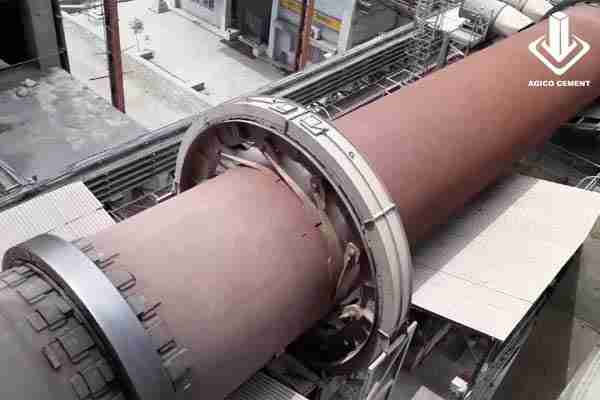
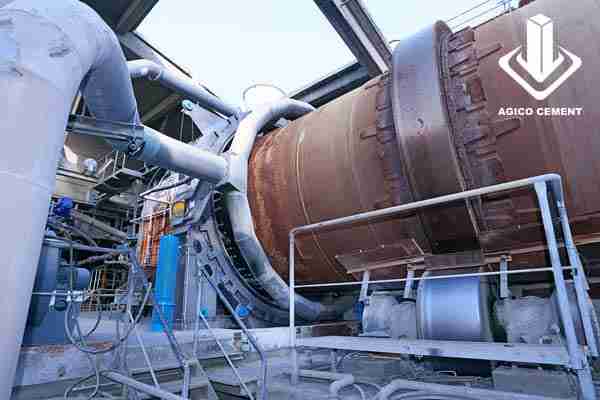
Treatment measures. If material balls have formed in the kiln, the causes should be analyzed comprehensively, and samples should be taken and chemically analyzed for the ball nucleus and shell to find the specific cause and take targeted measures. If the material balls are relatively small, the ventilation in the kiln should be appropriately increased to make the flame smoother, but the temperature at the kiln tail should be controlled to avoid it becoming too high. The coal feeding at the kiln head can be slightly reduced, but the complete combustion of coal powder must be ensured. The feeding amount should be slightly reduced, and the kiln speed should be slightly lowered to allow the material balls to roll into the calcination zone. After the material balls have entered the calcination zone, the kiln speed should be reduced further, and strong flames should be used to burn them down quickly to prevent them from entering the cooler and causing blockages or damaging the grate. At this time, special attention should be paid to the condition of the kiln skin.
If the material balls are larger, the hot-cold alternation method can be used for treatment. When the material balls are difficult to enter the calcination zone while in the transition zone, the coal injection pipe can be inserted, and the feeding amount can be appropriately reduced. After burning for 1-2 hours, the coal pipe can be pulled out and burned for another 1-2 hours, repeating the process until the material balls burst. If the material balls cannot be broken, the kiln can be cooled for 1-2 hours before ignition and heating, causing the material balls to break due to the large temperature difference. During the treatment process, large material balls should not be allowed to roll into the cooler to avoid causing significant damage.
Analysis and Solutions for Safety Accidents in Rotary Kiln Production
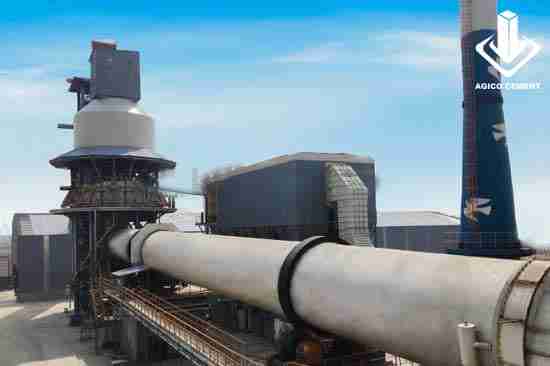
Rotary kiln equipment is a common building material equipment. During the initial installation of the rotary kiln, whether the installation is scientific or not is related to the safety of the rotary kiln. Only correct installation by the manufacturer can avoid safety hazards in the rotary kiln. Safety accidents in the rotary kiln are divided into equipment safety and personal safety. To help users solve safety accidents in the rotary kiln, today we will share safety accidents and solutions in the rotary kiln.
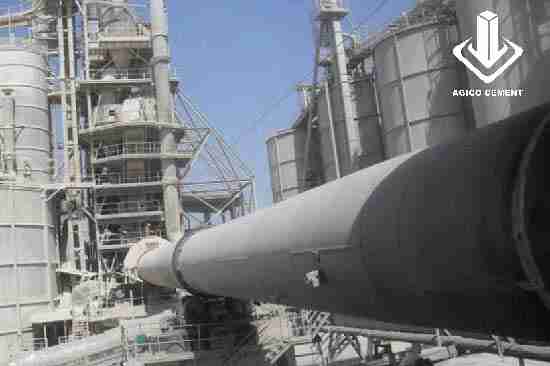
Analysis of Safety Accidents in Rotary Kiln
Analysis of Equipment Safety Accidents
Equipment safety accidents involve various problems. Operators should promptly inspect and repair equipment, and take corresponding measures for places where equipment is flammable and explosive. Therefore, we must first analyze and identify the causes of equipment safety accidents. Safety accidents usually originate from the following points:
- If bag collectors are used for coal grinding and kiln tail collectors, some combustibles, when they reach a certain concentration, have an open flame or high temperature, which can cause an explosion.
- When coal grinding is placed at the kiln head, the particles of clinker are easily sucked into the coal grinding system, and the stability of the clinker can meet the conditions for open flame explosions.
- If the dustbin of the collector for the rotary kiln is covered with dust for a long time, operators should be alerted, and once it reaches a certain level, it will slowly start to spontaneously ignite. Once it becomes serious, it will cause an explosion.
Analysis of Personal Safety Accidents
Safety accidents in the rotary kiln, especially personal safety, are very important. The burning system of the rotary kiln poses a great threat to personal safety. In order to avoid personal safety accidents, we should pay attention to the following points: preheater scaling and feeding, bricks falling in the kiln, and ignition and combustion during heating at the kiln head can cause injuries to personnel.
Solutions for Safety Accidents in Rotary Kiln
- Operators can control the temperature of hot air into the mill to prevent accidents.
- Measures to control the dust of clinker in the rotary kiln can reduce hidden dangers that may cause safety accidents.
- Prevent coal grinding from feeding and coal dust accumulation.
- Set effective coal dust explosion-proof valves.
- Place the coal grinding system as much as possible at the kiln tail.
- Alarming systems and fire extinguishing systems can be set up, such as in the inlet of the mill air duct, coal grinding, bag collector outlet, and coal powder bin.
- Operators should be vigilant if the temperature of the ash hopper of the bag collector is low for a long time to prevent spontaneous combustion caused by scaling. Therefore, users need to monitor the temperature at coal grinding, coal powder bin, bag collector, and ash hopper locations, and set up an alarm system.
- After the rotary kiln stops, coal powder should not be stored in the coal powder bin.
- In order to effectively prevent dust friction and static electricity from causing fires and explosions, the coal powder conveying, metering, and other processes should be connected by wires and well grounded.
- Operators can clean the coal grinding feed port, coal grinding system, bag collector and ash hopper, coal powder bin, and other locations to prevent spontaneous combustion caused by accumulation.
AGICO Cement has been selling rotary kilns for many years and has extensive experience in installing them. The installation of the rotary kiln is not done once, which eliminates safety hazards from the beginning. However, in daily operations, operators need to develop good habits, such as regularly cleaning and maintaining the rotary kiln, and performing periodic maintenance, to effectively avoid potential safety hazards.