The process of producing lime requires the use of a lime kiln, which plays a vital role in the production of high-quality lime. Choosing the right lime kiln is crucial to ensure that the final product meets the required standards and specifications, while also optimizing production efficiency and minimizing costs.
The Importance of Choosing the Right Lime Kiln
Selecting the right lime kiln is essential to achieve the desired level of production capacity, fuel efficiency, temperature requirements, maintenance needs, and quality of the final product. A poorly chosen lime kiln can lead to lower-quality lime, increased operating costs, and lower productivity, which can negatively impact the bottom line.
What is a Lime Kiln?
A lime kiln is a type of industrial furnace used for the production of lime, a material used in construction, agriculture, and other industries. Lime kilns are typically made of steel or stone and can be heated by various fuel sources, such as coal, natural gas, or oil.
Types of Lime Kilns
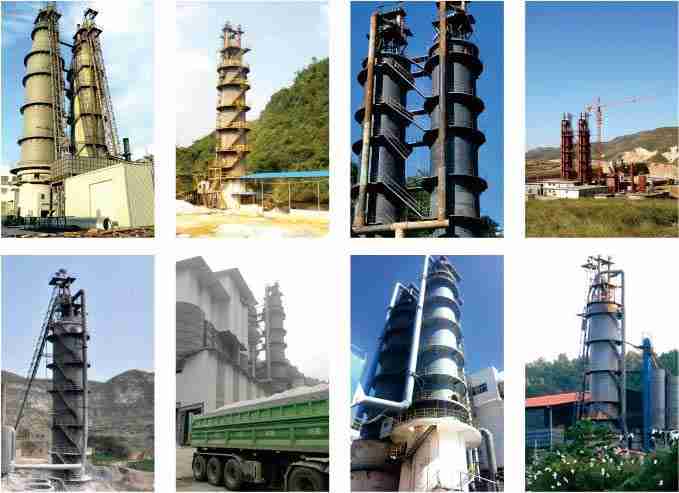
There are several types of lime kilns, the types of kilns used in metallurgical lime production in China are basically the same as those used in other major steel-producing countries around the world. The main types include rotary kilns, double-chamber vertical kilns or called twin-shaft lime kiln, sleeve vertical kilns or called annular shaft lime kiln, and vertical kilns etc.
Differences between Main Types of Lime Kilns
Vertical shaft kilns are smaller in size and have a lower production capacity than rotary kilns. They are also less fuel-efficient, but they can produce a higher-quality lime product. Rotary kilns are larger and more energy-efficient, but they can be more expensive to operate and maintain. Mixed-feed kilns combine the advantages of both vertical shaft and rotary kilns.

Factors to Consider When Choosing a Type of Lime Kiln
When choosing a type of lime kiln, several factors should be considered, including the required production capacity, the quality of the final product, the availability and cost of fuel, and the environmental regulations in the area. The initial investment cost and the long-term operating costs should also be taken into account.
- Capacity Needs: When choosing a lime kiln, it is essential to consider the required production capacity to meet the demand for the final product. The capacity needs depend on several factors, including the size of the operation, the customer demand, and the availability of raw materials. It is crucial to choose a lime kiln that can meet the capacity needs while ensuring that the final product’s quality is not compromised.
- Production Requirements: The production requirements for a lime kiln include the desired quality of the final product and the production rate. The production rate depends on the kiln’s size, design, and fuel efficiency. It is important to choose a kiln that can produce the required amount of lime while maintaining the desired quality standards.
- Kiln Size and Production Capacity: The size of the kiln and its production capacity are closely related. The kiln’s size depends on the required production capacity, which in turn is determined by the demand for the final product. The larger the kiln, the higher the production capacity, but also the higher the operating costs. It is essential to strike a balance between the kiln’s size and the production capacity to ensure that the operation is cost-effective while meeting the demand for the final product.
Types of Fuel for Lime Kilns
The type of fuel used in a lime kiln can affect the lime kiln’s efficiency, operating costs, and environmental impact. The most common types of fuel used in lime kilns are coal, natural gas, and oil. However, alternative fuels such as biomass, waste oil, and tire-derived fuel can also be used.
- Fuel Efficiency: Fuel efficiency is a critical factor to consider when selecting a lime kiln. The efficiency of the kiln can affect the production rate and the operating costs. For instance, a kiln that is fuel-efficient can produce more lime while using less fuel, resulting in lower operating costs. It is essential to choose a kiln that is fuel-efficient and can produce the required amount of lime without compromising quality.
- Environmental Considerations: The choice of fuel can also have an impact on the environment. For instance, coal combustion emits more pollutants than natural gas combustion, which can cause air pollution and contribute to climate change. Therefore, it is essential to consider the environmental impact of the fuel choice when selecting a kiln. Some kilns are designed to be more environmentally friendly, such as those that use alternative fuels or incorporate emissions control technology. It is essential to choose a kiln that balances fuel efficiency and environmental impact.
Maintenance and Upkeep:
Regular Maintenance Needs: Like any industrial equipment, lime kilns require regular maintenance to operate efficiently and reliably. Routine maintenance tasks may include cleaning, lubrication, and inspection of critical components such as the refractory lining and burners. It is crucial to follow the manufacturer’s recommended maintenance schedule to ensure that the kiln operates safely and efficiently.
Cost Considerations: Maintenance and repairs can add to the operating costs of a lime kiln. It is important to factor in these costs when selecting a kiln and to choose a kiln that has a good track record of reliability and requires minimal maintenance.
Installation and Operation
Installation Process: The installation process for a lime kiln involves site preparation, foundation construction, kiln assembly, and commissioning. The installation process can be complex and time-consuming, so it is important to work with a qualified contractor or supplier who has experience with lime kiln installations.
- Kiln Operation: The operation of a lime kiln involves fuel delivery, combustion, limestone feed, and lime product discharge. It is essential to operate the kiln according to the manufacturer’s instructions and to monitor critical parameters such as temperature and fuel consumption to ensure that the kiln operates safely and efficiently.
- Employee Training: Employees who operate and maintain the lime kiln should receive proper training to ensure that they understand the kiln’s operation and safety procedures. It is the employer’s responsibility to provide training and ensure that employees are competent to perform their duties.
- Cost Considerations: The cost of installation and operation can vary depending on the type and size of the kiln. It is important to consider both the initial investment costs and the operating costs when selecting a kiln.
- Initial Investment Costs: The initial investment cost of a lime kiln includes the cost of the kiln, installation, and commissioning. The cost can vary depending on the size, type, and manufacturer of the kiln. It is important to choose a kiln that meets the production capacity needs while also being cost-effective.
- Operating Costs: The operating costs of a lime kiln include fuel, maintenance, repairs, and labor. It is important to choose a kiln that has low operating costs and is energy-efficient to ensure that the production costs remain competitive.
Principles for selecting kiln types
As different kiln types have their own characteristics and cost differently, the principles for selecting kiln types are as follows:
Comprehensive utilization of resources
Traditional vertical kilns require raw materials with a particle size of over 40mm. However, the particle size of limestone ore is generally less than 40mm, which accounts for about one-third of the total. From the perspective of comprehensive utilization of resources, rotary kilns have great advantages (particle size above 10mm), and twin-chamber vertical kilns can calcine limestone raw materials with a particle size above 20mm. Therefore, rotary kilns and twin-chamber vertical kilns are conducive to improving the comprehensive utilization of resources.
Consideration of energy conservation and emission reduction
The unique design structure of twin-chamber vertical kilns enables their thermal efficiency to reach over 85%. Lower thermal consumption means lower energy consumption and lower emissions of waste gas pollutants. Due to design defects and the use of low-calorific-value fuel, some gas-fired vertical kilns have high energy consumption compared to other kiln types due to high waste gas temperatures at the top of the kiln.
Reasonable selection based on production scale
In the lime industry, equipment scaling is a development direction, which is conducive to production management, improving labor productivity, and reducing fuel consumption. From the perspective of mature technology and practical application, rotary kilns currently have the conditions for scaling up.
Production quality
Lime kilns can be divided into three categories according to product quality (activity): first-class kilns include rotary kilns, twin-chamber vertical kilns, and sleeve vertical kilns, with an activity of around 350ml; second-class kilns include Faks vertical kilns and domestic gas-fired vertical kilns, with an activity of around 320ml; third-class kilns include coke vertical kilns and energy-saving upright kilns, with an activity of around 280ml. Therefore, kiln types for producing active lime should be selected from the first two categories.
Consideration of fuel adaptability
Rotary kilns must use high-calorific-value gas, mainly coke oven gas, and can also use coal powder. Import vertical kilns such as twin-chamber kilns, sleeve kilns, and twin-beam kilns can use mixed gas mainly composed of converter gas. When the specifications of the vertical kiln are large, the calorific value of the gas should be appropriately increased; otherwise, it will affect the utilization coefficient of the lime kiln.
In addition to process technology factors, the determination of new lime kiln types should also consider external factors such as enterprise site conditions, capital status, and fuel conditions. The principle is to select kiln types and specifications as uniformly as possible. The uniformity of equipment is conducive to production management, staff training, and reducing inventory of spare parts, thereby reducing production costs.