If you are in the lime manufacturing industry, you must have come across the terms ‘vertical lime kiln’ and ‘rotary lime kiln.’ These two types of kilns are commonly used in the production of lime. However, they differ in various aspects, such as design, production capacity, energy consumption, and product quality.
Lime kilns are an important component of the lime manufacturing process. They are used for the calcination of limestone, which is the process of heating the limestone to a high temperature to remove impurities and produce lime. There are two main types of lime kilns: vertical and rotary kilns. In this article, we will provide a brief overview of these two types of kilns and discuss their differences in terms of design, production capacity, energy consumption, and product quality, and which one is best suited for your lime production needs.
Vertical Lime Kiln and Rotary Lime Kiln Differences
Design Difference between Vertical and Rotary Lime Kiln
Vertical Lime Kiln Design
Vertical lime kilns are also known as shaft kilns. They are designed as vertical chambers, with a height of about 30-40 meters and a diameter of about 2-3 meters. The limestone is fed into the top of the kiln and gradually moves downwards due to the rotation of the kiln. The fuel is injected through the kiln walls and burns to provide the heat required for the calcination process. The vertical design of the kiln ensures that the limestone remains in the kiln for a longer period, allowing for more complete calcination.
Rotary Lime Kiln Design
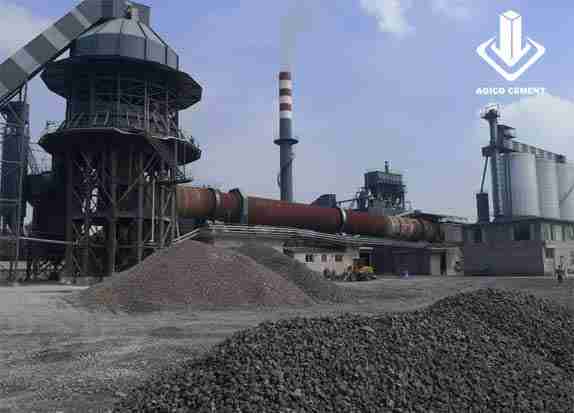
Rotary lime kilns are cylindrical in shape and are inclined slightly towards the discharge end. The kiln rotates slowly, and the limestone is fed into the higher end of the kiln. The fuel is injected into the lower end of the kiln, and the combustion gases move upwards, heating the limestone as it moves towards the discharge end. The rotary design of the kiln ensures that the limestone is constantly in motion, which allows for more uniform calcination.
Comparison of the Two Designs
The main difference between the two designs is the method of limestone movement. In a vertical kiln, the limestone moves downwards due to gravity, while in a rotary kiln, the limestone moves due to the rotation of the kiln. This fundamental difference affects the way in which the heat is transferred to the limestone, the duration of the calcination process, and the uniformity of the lime product. Additionally, the vertical design of the kiln allows for a smaller footprint and lower capital costs, while the rotary design allows for larger production capacity.

Production Capacity Difference between Vertical and Rotary Lime Kiln
Vertical Lime Kilns
Vertical kilns have a smaller production capacity compared to rotary kilns. The capacity of a vertical kiln ranges from 50-500 tons per day, depending on the size and type of kiln. Vertical kilns are suitable for small-scale production, making them ideal for small lime producers or for research and development purposes.
Rotary Lime Kilns
Rotary kilns have a much larger production capacity compared to vertical kilns. The capacity of a rotary kiln ranges from 100-5000 tons per day, depending on the size and type of kiln. Rotary kilns are suitable for large-scale production and are commonly used in the lime industry for mass production of lime products.
Comparison of the Production Capacities of the Two Types of Kilns
The production capacity of a rotary kiln is much higher than that of a vertical kiln due to the larger size and constant motion of the limestone in the kiln. Rotary kilns are also able to produce a higher quality of lime compared to vertical kilns due to the more uniform and complete calcination process. However, vertical kilns have a lower capital cost and are more suitable for small-scale production or for research and development purposes.
Energy Consumption Difference between Vertical and Rotary Lime Kiln
Vertical Lime Kilns
Vertical kilns have a relatively higher energy consumption compared to rotary kilns. The main reason for this is that the calcination process in vertical kilns is less efficient due to the larger particle size of the limestone and the slower rate of calcination. Vertical lime kilns also require a larger amount of fuel to maintain the required temperatures, as the limestone does not move as much as it does in a rotary kiln.
Rotary Lime Kilns
Rotary kilns have a relatively lower energy consumption compared to vertical kilns. The main reason for this is the high efficiency of the calcination process, as the limestone particles are constantly in motion and the combustion gases are in direct contact with the limestone, resulting in a more complete calcination process. Rotary kilns also have a higher thermal efficiency, which means that less fuel is required to maintain the required temperatures.
Comparison of the Energy Consumption of the Two Types of Kilns
In terms of energy consumption, rotary kilns are more efficient than vertical kilns. The constant motion of the limestone in the rotary kiln allows for a more efficient and complete calcination process, which results in lower energy consumption. Additionally, the higher thermal efficiency of rotary kilns means that less fuel is required to maintain the required temperatures. However, it should be noted that the energy consumption of both types of kilns can be optimized through the use of modern technologies and techniques, such as improved insulation and fuel injection systems.
Product Quality Difference between Vertical and Rotary Lime Kiln
Vertical Lime Kilns
The quality of lime produced in vertical kilns is generally lower compared to lime produced in rotary kilns. This is because the calcination process in vertical kilns is less efficient, resulting in lower purity and less uniformity in the resulting lime product. Vertical kilns also produce a higher amount of fines (smaller particles), which can result in lower product quality and reduced market value.
Rotary Lime Kilns
Rotary kilns produce a higher quality of lime compared to vertical kilns. This is due to the constant motion of the limestone particles in the kiln, which results in a more uniform and complete calcination process. The resulting lime product is of higher purity and has a more consistent particle size distribution, which makes it more desirable for certain applications such as steel manufacturing, water treatment, and soil stabilization.
Comparison of the Lime Product Quality of the Two Types of Kilns
In terms of lime product quality, rotary kilns have a significant advantage over vertical kilns. The more efficient and complete calcination process in rotary kilns results in a higher purity and more uniform lime product, which is desirable for many industrial applications. However, it should be noted that the lime product quality of both types of kilns can be improved through the use of modern technologies and techniques, such as improved combustion systems and raw material preparation.

Vertical Lime Kilns Advantages
- Lower capital investment costs compared to rotary kilns.
- Smaller physical footprint, making them suitable for areas with limited space.
- Simpler design, requiring less maintenance and repair.
- Easier to operate and control, with a lower risk of process fluctuations.
Rotary Lime Kilns Advantages
- Higher production capacity compared to vertical kilns.
- Higher lime product quality, with higher purity and more uniformity.
- Lower energy consumption compared to vertical kilns, especially with modern designs.
- Lower emissions of pollutants, due to improved combustion and emission control systems.
Overall, the choice between a vertical or rotary lime kiln depends on a variety of factors, including production requirements, available space and resources, and environmental considerations. While vertical kilns may be more suitable for smaller-scale operations with limited space and resources, rotary kilns are generally more efficient and produce higher quality lime products, making them a more attractive option for larger-scale industrial operations. However, it is important to note that modern technologies and techniques can improve the performance and efficiency of both types of kilns, and may make them more competitive in certain applications.
Which One to Choose?
When considering whether to use a vertical or rotary lime kiln, there are several important factors to consider:
Production capacity: If high production capacity is required, a rotary kiln may be the better choice due to its larger size and higher output. However, for smaller operations with lower production requirements, a vertical kiln may be more suitable.
Lime product quality: If high-quality lime products are required, a rotary kiln may be the better option due to its ability to produce more uniform and pure lime products. However, if lower quality lime products are acceptable, a vertical kiln may be sufficient.
Capital investment costs: A vertical kiln typically requires a lower initial investment than a rotary kiln due to its simpler design and smaller physical footprint. However, over the long term, a rotary kiln may be more cost-effective due to its higher efficiency and larger production capacity.
Energy consumption: Rotary kilns generally have lower energy consumption than vertical kilns, especially with modern designs that incorporate energy-efficient technologies.
Space availability: Vertical kilns have a smaller physical footprint than rotary kilns and may be more suitable for operations with limited space availability.
In general, if high production capacity and high-quality lime products are required, a rotary kiln may be the better choice. However, for smaller-scale operations with limited space and resources, a vertical kiln may be more suitable. Ultimately, it is important to carefully evaluate the specific needs and constraints of the operation before making a decision.