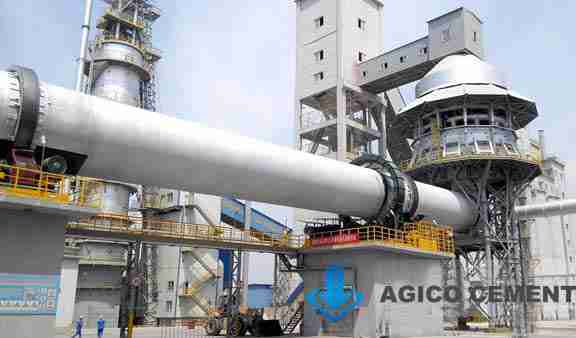
Lime kiln, also known as a lime rotary kiln, is a high-temperature furnace used to produce lime by calcining limestone. It can directly calcine fine-grained limestone with a particle size of 10-50mm. In the production line of active lime, this lime rotary kiln serves as the main force due to its scientifically sound calcination mechanism and high thermal efficiency. The use of sealing devices ensures complete processing and calcination of lime, and it has been widely promoted in many processing enterprises. The lime rotary kiln is a key rotary kiln in the lime calcination production process. Its main feature is a wide combustion space and thermal field, which can fully burn fuel and uniformly distribute temperature. It can meet the requirements for limestone calcination and can act as a reactor to meet the heat, temperature, and time requirements for lime formation.
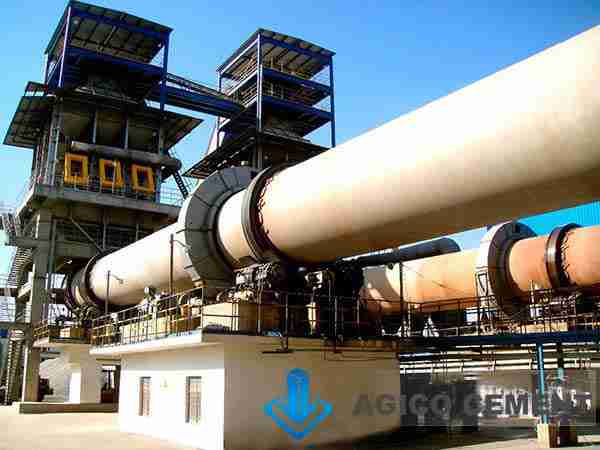
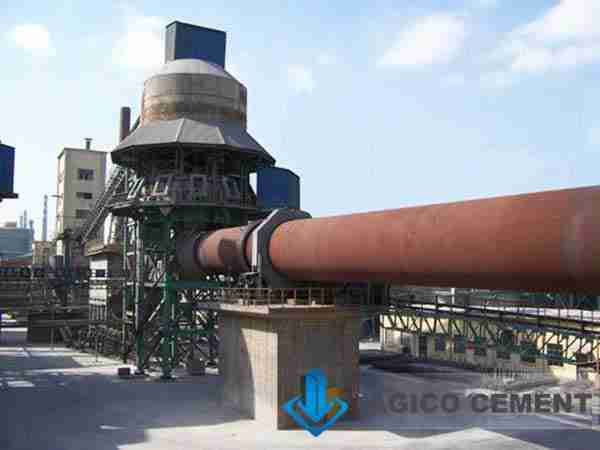
The lime rotary kiln is a vertical preheater rotary kiln, and its cylinder is made of high-quality carbon steel plate rolled into shape. The cylinder is supported by a wheel support device, and the rotation of the cylinder is achieved through a frequency-conversion speed-regulating motor driving a reducer, a small gear, and a large gear fixed to the transmission part of the cylinder.
Working principle of the lime rotary kiln
The working principle of the lime rotary kiln is that limestone particles are preheated by high-temperature flue gas in the preheater and then transported through the transfer chute into the cylinder of the rotary kiln. Fuel is injected into the kiln body from the kiln head through a burner. Due to the inclination and slow rotation of the rotary kiln cylinder, the material rolls along the circumference of the cylinder while moving towards the lower end of the kiln head. In the kiln, the material undergoes further preheating, decomposition, and high-temperature calcination to produce quicklime, which is then discharged from the lower part of the discharge device at the kiln head and enters the vertical cooler.
The lime rotary kiln mainly consists of supporting device, transmission device, sealing device, cylinder head protective plate, cylinder, kiln tail, etc.
- The supporting device supports the cylinder, and there is a certain gap between the wheel and the cylinder lining plate to ensure that the wheel clamps the cylinder tightly after thermal expansion. The lime rotary kiln uses replaceable lining plates, which can be easily replaced with new ones during maintenance if severe wear occurs, making maintenance easy and operation simple.
- The transmission device adopts a frequency-conversion speed-regulating motor with a large speed regulation range, which is convenient for increasing production in the later stage. The auxiliary transmission mechanism consists of an oil pump, reducer, etc. It can make the rotary kiln cylinder run normally in the event of power failure, prevent deformation of the cylinder due to sudden power failure, and facilitate maintenance and repair operations.
- The sealing device uses heat-resistant steel scale sealing to reduce the amount of air leakage at the kiln head and kiln tail. To ensure sealing effectiveness, the scale wear condition should be regularly checked, adjusted and replaced in a timely manner to ensure tight friction fit between the scale and cylinder lining.
- The cylinder head protective plate is made of heat-resistant cast iron, which can withstand high temperatures of around 800℃ and has strong heat resistance and long service life.
What are the factors affect the production of lime rotary kilns?
In addition to the design and operation of the lime rotary kiln itself, the raw material used, which is usually limestone, also has a significant impact on lime kiln production. Many people think that producing lime is simply a matter of filling the kiln with limestone and burning it, but in order to produce high-quality lime, certain requirements must be met regarding the limestone used. These requirements include:
- The limestone should have small grain size, as smaller grains have looser crystal structures which facilitate the separation of carbon dioxide during the burning process, particularly when organic matter is present.
- The limestone should have a high calcium carbonate content, typically 97% or more.
- The limestone should have minimal impurities, particularly harmful substances such as silica, magnesium oxide, alumina, iron oxide, sulfur, and phosphorus.
Even trace amounts of these substances in the limestone can result in significant levels in the resulting lime. Therefore, selecting limestone that meets these requirements is crucial for producing lime that meets standards and requirements in terms of both quality and quantity.
How to extend the service life of a rotary kiln?
Rotary kilns have significant industrial value as they can be used to calcine and process various materials. The rotary kiln has many advantages, including simple operation, stable operation, high efficiency, energy-saving, and environmental protection, which can create considerable economic benefits for users. However, users are concerned about how to extend its service life. Here are some ways to improve the service life of rotary kilns:
Rotary kiln quality factors
If the quality of the rotary kiln itself is excellent, its service life will be extended. Therefore, improving the quality of the rotary kiln is the key factor in extending its service life. AGICO Cement is a domestically strong comprehensive rotary kiln manufacturer. We attach great importance to quality in order to develop high-quality rotary kiln. Therefore, the rotary kiln produced by AGICO Cement has a longer service life than that of many other manufacturers. It is essential to choose the right manufacturer to extend the service life of the rotary kiln.
Rotary kiln operation factors
Users play a leading role in extending the service life of the rotary kiln by strictly following the operating standards during use. Only when the rotary kiln’s various parameters are normal and the operating status is stable can the rotary kiln’s working efficiency be improved, and its service life can be extended. Therefore, before using the rotary kiln formally, it is necessary to conduct pre-job training for the operator. This can enhance the rotary kiln’s safety and ensure its longer service life.
After-sales service
The after-sales service provided by the manufacturer can also extend the service life of the rotary kiln. Some manufacturers have a complete service system. If the rotary kiln encounters any problems or faults during use, they will promptly arrive on-site to solve the problem and minimize economic losses for users. Therefore, it is essential to conduct comprehensive research on the manufacturer before purchasing rotary kiln. This way, you can buy high-quality and longer-lasting rotary kiln.
How to select a site for a lime rotary kiln?
The construction of a lime rotary kiln production line can not only fully utilize high-quality limestone resources but also comply with the sustainable development policy of the lime industry. However, several issues need to be considered during the construction of the lime kiln, especially the site selection:
Principle of site selection for lime rotary kiln: safety, environmental protection, and no pollution.
The basic principle of the lime kiln rotary calcination process is to use high temperature to decompose calcium carbonate in limestone into quicklime and carbon dioxide. This process generates some pollution, so the selection of a suitable location for building a lime rotary kiln should be based on the principles of energy conservation, environmental protection, and no pollution, with a focus on protecting the environment, safety, and fire prevention.
Site selection criteria: where to build?
a. The lime rotary kiln should be built near areas with sufficient power supply, convenient transportation, and good factory building conditions.
b. The selected site should have abundant limestone resources, providing adequate raw material supply for the enterprise’s production.
c. The project site should be flat, with complete facilities for electricity, transportation, water supply, and drainage.
d. The construction conditions of the selected site should be convenient, and the main materials such as sand, cement, and steel needed for the project can be procured from nearby areas, with easy transportation and not in remote areas.
e. The construction of the lime rotary kiln should be far from residential areas, and it should not be built above the water flow or downwind of residential areas.
Installation requirements for the lime rotary kiln
Before installing the lime kiln, the relevant technical personnel should understand the structure of the rotary kiln and the installation drawings and be familiar with the work before installation. After surveying the construction site, an installation plan should be formulated, and the installation should be carried out in sequence with planned installation methods and tools.